Because the ABC game is part Scavenger Hunt, we make up our own rules as we go along. On our ABC Adventure to Grayling, Gaylord and Petoskey, we were nearing the completion of our alphabet. As usual, we didn’t have an X. We racked our brains for the X words we knew. Often we resort to using the X in words like eXcite or eXcellent. Today, in the pouring rain, we saw a sign, which matched our letter.
An ABC Adventure doesn’t have to be difficult, our only rules (for ourselves) are to have fun, to discover and to explore the world purposefully.
As I watched my husband get drenched to get this photo, I was having fun. It makes me laugh to think of the antics we get up to.
I “discovered” we were under surveillance because there was a security camera on the caboose parked alongside this railroad crossing. I wonder if it left them scratching their heads to observe us.
I had found the caboose, now turned restaurant, in my online study of the area. We were trying to purposefully explore, but sadly the restaurant had been closed.
All was not lost though, we decided to eXclaim that we were declaring this our “X”. Thus Xing it off our list!
Have you ever dreamed of walking through Hobbiton featured in the Lord of the Rings?
Believe it or not, you don’t need to travel to New Zealand to find Hobbit houses, the USA has our own charming town which attracts tourists from around the world.
Charlevoix is a tiny Northern Michigan town located just 4 hours north of Detroit.
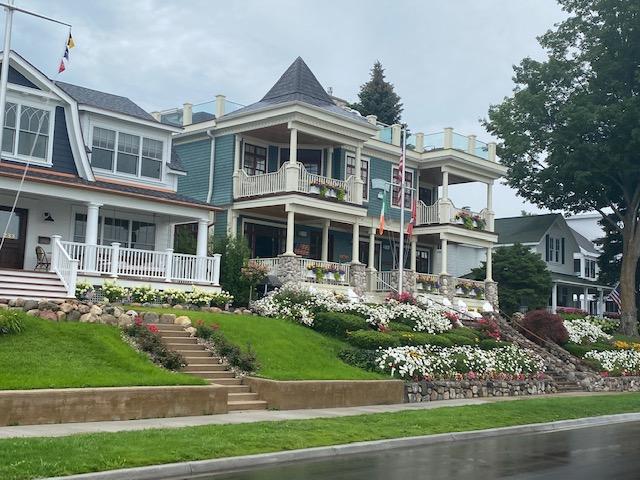
Self taught builder, Earl Young built the eleven homes during the depression era, these buildings are creatively known as Gnome Homes, Mushroom Houses, or Hobbit Houses and they stand ready to transport you to middle earth.
Earl Young’s houses feature his signature designs which include wide, wavy eaves, exposed rafter tails; cedar-shake roofs; and a horizontal emphasis in design.
As an architect, Young fashioned his structures, using indigenous materials. His works are made mostly of stone, using limestone, fieldstone, and boulders that he found throughout Northern Michigan.
In all, Earl Young designed 30 unique homes over a 54 year period, 28 buildings are still standing in Charlevoix and in recent years, visitors have been drawn to the area to take a tour of the unique structures.
The self guided tour allows for easy viewing of the homes and parking is readily available on the street.
It was in this way that we set off on our own Hobbit inspired adventure.
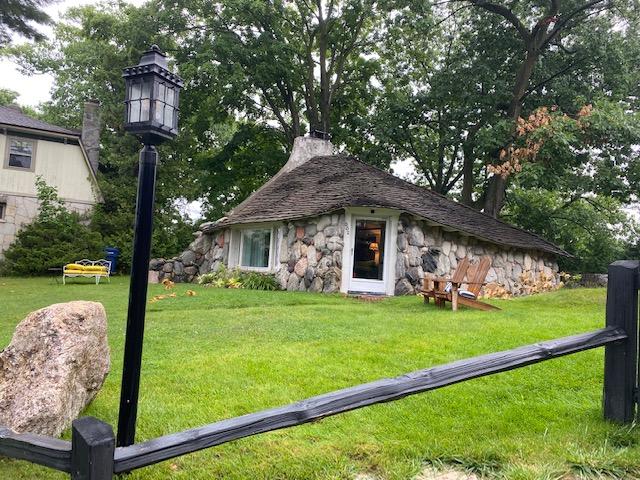
One of the first “mushroom houses” we came upon is called the Thatch House – Formerly called Sunset Villa (pictured above). With its distinctive oversized thatched roof and lovely stonework, you can’t miss the impressive structure, located at 304 Park Avenue.
Thatched cottages are not common in the USA but with our roots in England, they are very familiar to us. There is a certain comfort which comes with seeing this particular home, which reminds me so much of the English cottages, on a grander scale.
The home was significantly remodeled in 2015, to reflect a more “mushroom” like character but it was originally built by Mr. Young in 1918. The new rendering was first drawn on a napkin. When a passerby exclaimed, “wow that looks like a mushroom”, the new owner realized the mission had been achieved. The massive home now boasts 6 bedrooms, 5 1/2 baths as well as a media room. It is used as a vacation rental and is often the setting for weddings.
Located next to the the Thatch House is the Half House.
Half House-Charlevoix, Michigan
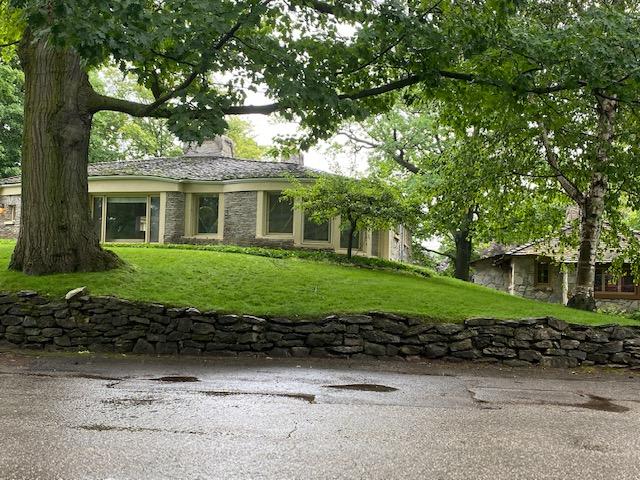
This lovely little home appears to have been cut in half. It is said that this home was built by the imaginative Earl Young as a wedding gift for his daughter. Can you imagine receiving such a charming gift? Built in 1947, the half house remains the same as it was in its original design.
Earl Young’s Original Home
Although this house isn’t as impressive as the remodeled mushroom, it is a very large home. Viewing the house from the back reveals terraced steps which lead down from the hill above. The layers of stone have been carefully set to blend seamlessly with the landscape. This house is located at 306 Park Avenue.
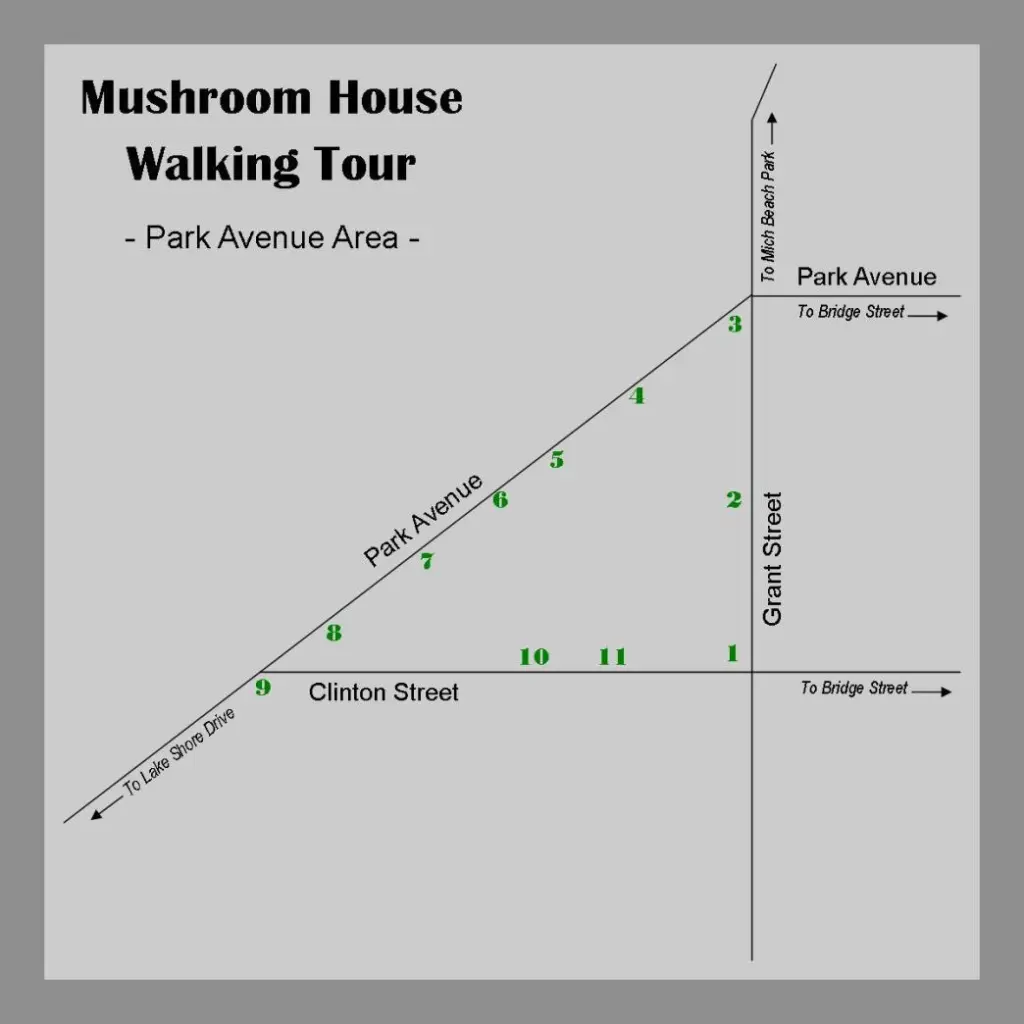
The eleven mushroom houses can be found along a triangular block in the Park Avenue area consisting of Grant Street, Clinton Street and Park Avenue. This is a self guided walking tour. Parking is available along any street. The homes are now private residences, so care should be taken to respect the privacy of the owners but it is a great way to pass an hour or so.
I will leave the remaining homes for you to discover, but I’m guessing it will be easy to see why we chose “Q” as our letter to represent these “Quirky” homes.
On an ABC Adventure, it can be hard to represent each letter. Such was the case with our letter “O”.
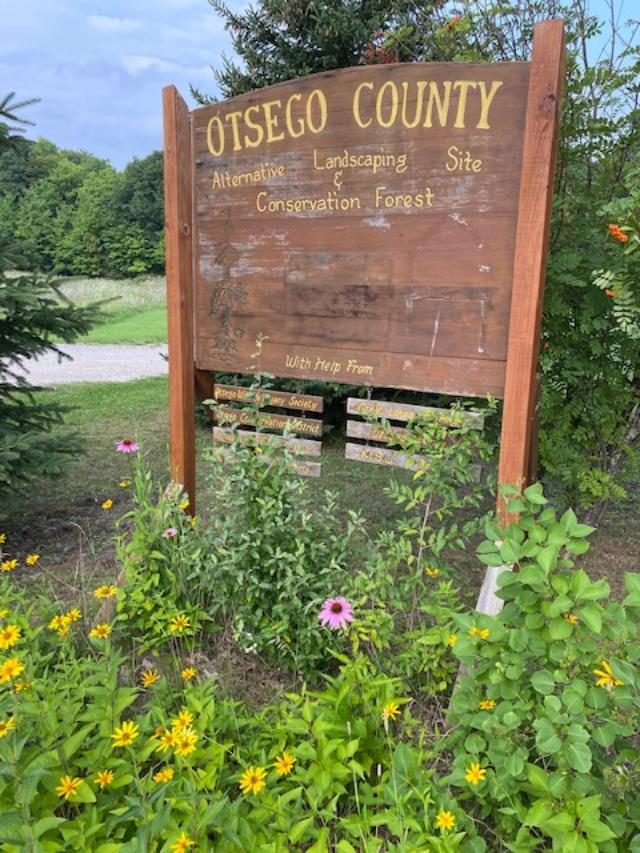
As we traveled through Northern Michigan, on our 2 day adventure, we realized that we were passing through the county of Ostego. Like with many of our challenging letter, we had left the “opportunity” to discover something new “open”. It meant we just needed to be “observant” as we traveled, always looking for words which we could add to our list.
This is how we came upon the county of Ostego, which is where the town of Gaylord lies. Gaylord had been one of our destinations. With much Native American influence in this area, I researched the word Ostego. There are actually a great many interpretations of origin. One shows it meaning a “place of the rock”another means, “clear waters”. The county is nestled in a glacial valley, filled with over 300 lakes, making both descriptions seem accurate.
Either way, we knew it would be worth a moment of our time as we pulled into the Otsego State Park and just enjoyed a few minutes of exploration around the pristine beach along Ostego Lake. It was the perfect excuse to get “outside” and breath. It had been another “outstanding” moment along our path of discovery.
Never mind that nature and north both begin with the letter N, it seems our brains were not allowing us to play with words on our Northern Michigan road trip. Except for the letter N, we had completed the entire alphabet as we had traveled along on our two day adventure. There was a sense of pressure to find our final letter before arriving home. I can’t imagine how many opportunities we had already missed.
Then we saw it! The “nature” preserve was tucked off to the side. It was pouring with rain. We could have easily talked ourselves into bypassing the opportunity. Instead we turned down a miles long, dead straight dirt road. The tunnel of trees created a canopy over the car as we ventured toward our unknown destination. Along the way the magic of Michigan was present everywhere.
The greens of the forest were almost ethereal from the rain. A magical mist floated among the branches. As the woods wrapped us in their embrace, this peaceful location seemed untouched and unspoiled by man. Deer quietly stepped in front of the car, unafraid as if they had never known the fear of encroachment. We continued driving. The deeper we went, the more isolated it became. Suddenly the road ended and we were left to explore the most amazing beach, free of everything except beauty. We had been nourished.
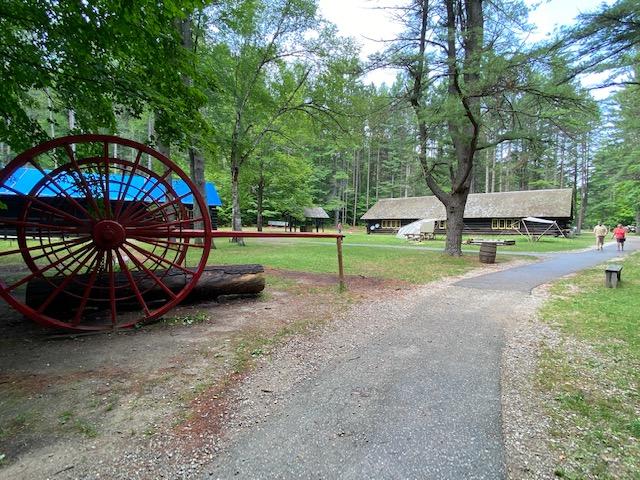
While on a whirlwind tour of Northern Michigan, we stopped at the Hartwick Pines State Park in Grayling, Michigan. The White Pines, which once covered all of the state, have been protected within the 49 acres of the park. It is one of the last stands of old growth trees in the USA. Walking along the 1.5 miles of paths which meander among the towering trees it is easy to understand how logging became such an important part of Michigan history.
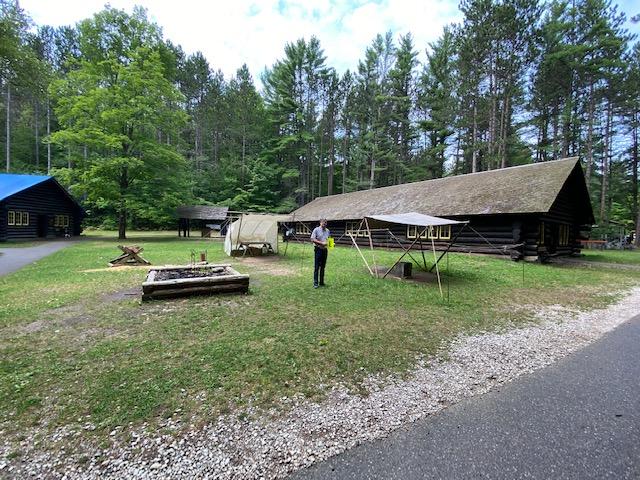
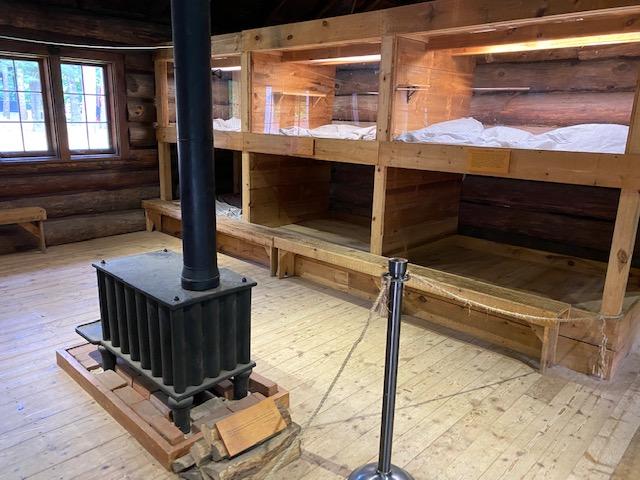
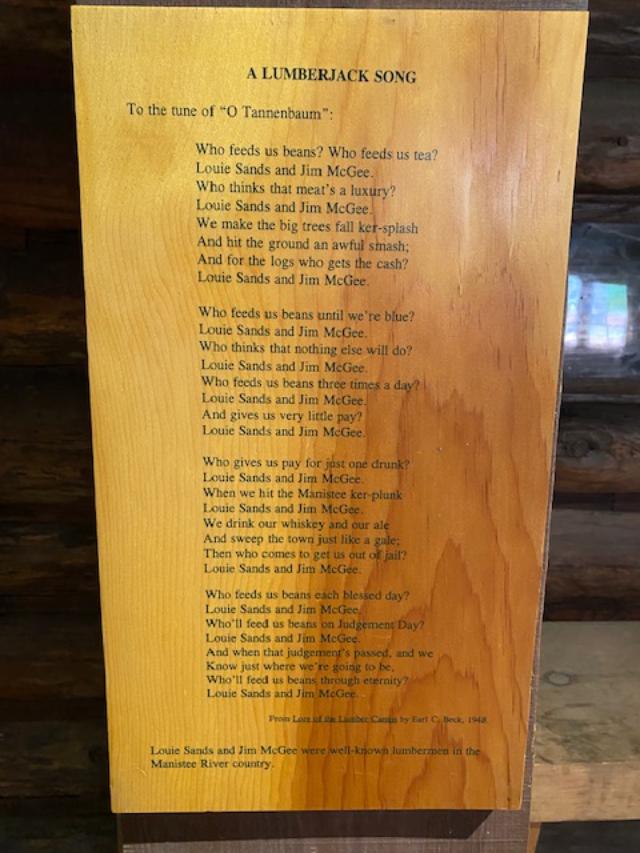
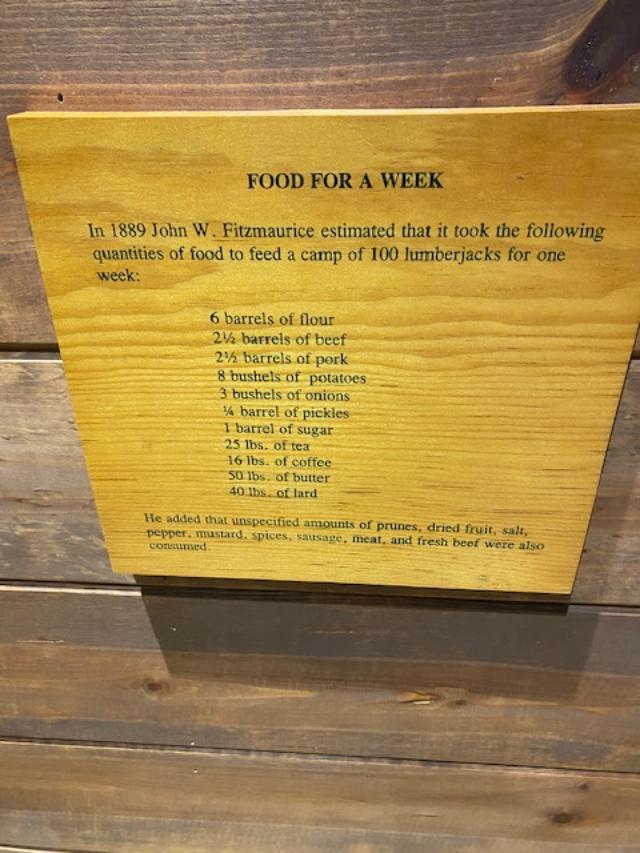
Nestled in the center of the forest is a replicated logging camp, now turned museum. Built in the 1930’s the replicated logging camp represents life from the 1890’s. Here we were able to view the equipment, tools, a bunkhouse, food preparation area and an old sawmill.
The State Park is open year round. The logging museum is open
April 30 – May 27: 9 a.m. to 4 p.m.
May 28 – September 4: 9 a.m. to 5 p.m.
September 5 – October 30: 9 a.m. to 4 p.m.
Hartwick Pines State Park 4175 Hartwick Road Grayling, MI 49738
It was pouring with rain the day we traveled through Kalkaska. I needed a K for our alphabet tour as we made our way through several Northern Michigan towns, on a two day adventure. As soon as I saw the giant 17 foot long fish, located near the old railroad depot now turned Nature Museum, I knew that I needed this picture. Truth be told, unless you count the gas station and convenience stores there weren’t many other options for exciting photos of this tiny town.
Taking this picture made me smile as imagined what people were thinking as they saw me standing in the pouring rain, holding a letter for no apparent reason. It was likely the most entertainment in the town in a while. Curiosity generally gets people talking. It is often the way we often start discussions about our ABC adventures. Although Kalkaska attracts many visitors, most people were smarter than us on this day and didn’t get out of their cars.
With a population of just over 2,000, Kalkaska is the kind of small town most people just drive through unless you know someone or are coming to explore the great natural beauty which surrounds the town. Still, rain or shine, Alan and I don’t miss opportunities and now I have a picture with a giant fish to prove it!
These kinds of oversized oddeties exist all across the USA, there quirkiness is worth capturing as part of the fabric of our country. Even though they seem out of place, there is often more than meets the eye and such was true for the giant fish which was dedicated in 1966. It has become an icon to welcome people to the area.
The Kalkaska County website boasts that there are “561 square miles with 80 inland lakes and 275 miles of streams and rivers. Kalkaska is well known for its wide open spaces and of course for its trout fishing. It is so celebrated there is a festival which honors the Brook Trout, which also happens to be the state fish of Michigan. The National Trout Festival is held the last week of April annually. Earnest Hemmingway also frequented the area and I would have never realized that unless I had stopped to read the historical information located near the the giant fish.
Summer and fall are not the only time people come to play. With an annual average of 126 inches of snow per year, winter is also popular giving way to activities such as skiing, sled dog racing and snowmobiling. It is no wonder that this area is described as natures playground.
Like the stories still to be told of the area, I hope the giant fish, which catches travelers and reels them in, holding them spellbound to enjoy the unspoilt beauty will be here for many generations. If you find yourself wanting to slow down and take in a little more of the area, try Trout Town Tavern for fish and chips or smoked trout pate’ and be sure to grab a picture, you may only pass this way once!
When we are on an ABC adventure, there are certain letters which always give us challenge. J is one of those letters. Coffee is often a part of many of our adventures but we are always challenging ourselves to find new ways to describe it. Java and Joe are both J themed words we can substitute and on this adventure it was our excuse to check out a great little drive through called Cuppa “Joe”.
Thank goodness for the Ethiopian goat herder, who realized how energized his goats became after eating the berries from a certain tree. He noted that the goats wouldn’t sleep at night after consuming the berries. The story goes that the goat herder took the berries to the monks, who steeped them in water, noting that drinking the elixir allowed them to remain awake during evening prayers. News of the magic potion spread around the world.
Thomas Jefferson once said “Coffee-the favorite drink of the civilized world.” Beans are now grown worldwide and is second only to crude oil, as the most sought after commodity in the world!
It matters not what you choose to call your coffee but if you need it to get started and want to make great use of your letter “J” , you could call it java, joe, jitter juice or jamocha all will be as satisfying and a perfect excuse to take a break.
Ice cream means summer to us. We literally count the season by how many weeks the ice cream shops are open! This favorite confection was once limited to the elite. Currently the price of a cone from an ice cream shop is running around $5 per cone, which does start to crimp the budget if we are eating it almost daily (which Alan does through the season). Thankfully I can find ice cream on sale pretty regularly for about $2.50 per half gallon, which can sustain him for a week, so he never feels deprived.
Ice cream hasn’t always been so readily available. The origins of ice cream are debatable, Romans and Chinese Royalty are both referenced. Imagine that the earliest version of this treat would have some poor soul being sent off on an expedition to travel through the desert then climb the highest mountains to collect glacial ice, which was sweetened by fruits! It is not hard to imagine then that this treat was limited to royalty.
It would take until the 1700’s before being brought to the United States. American Colonists would be the first to call it “Iced Cream”, which would later be shortened to the phrase we know today. With the introduction of mechanical refrigeration sometime around 1897 the product could be sold in a commercial setting. It would take another 7 years before the ice cream cone would debut at the St. Louis World Fair, finally making the treat portable.
Today there are so many flavors to choose from. We could probably spend hours at an ice cream counter trying to figure out what we want…hard or soft, what flavor, toppings or not, cake cone, sugar cone or cup. The options are endless.
One thing is for certain, with an ice cream shop in nearly every town we visit, we never deprive ourselves of this sweet treat. Life is simply too short to miss an opportunity for these tiny blissful moments. Even though ice cream is easily accessible these days, there is still associated with special occasions and if living itself isn’t reason to celebrate, then I don’t know what is…eat the ice cream and imagine yourself a royal!
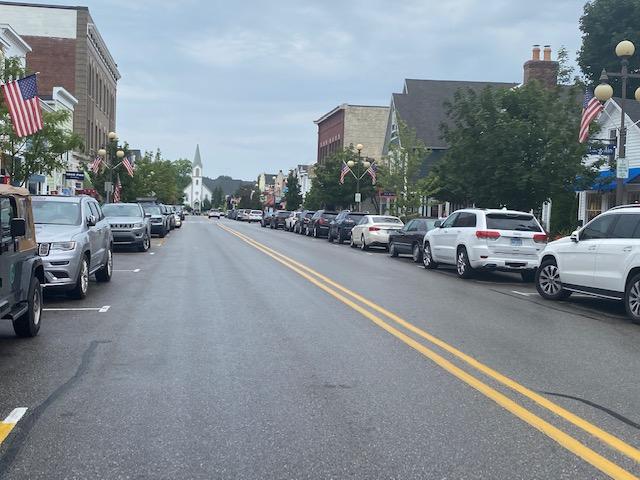
Sometimes it is just important to get off the beaten path, which is how we discovered the quaint town of Harbor Springs. I would like to say we took the road less traveled, but the popular scenic corridor along Highway 119 is located just north of Petoskey, Michigan and the pull of nature and beauty is great.
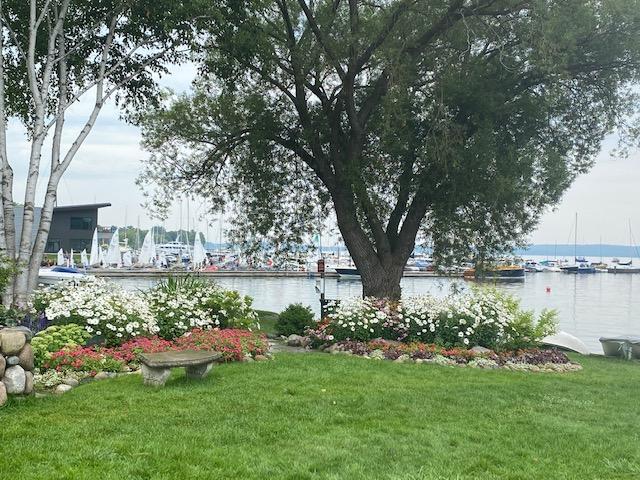
The waterfront community sits in a sheltered location on the North shore of Little Traverse Bay on Lake Michigan.
Harbor Springs lies just 7 miles off US 31, yet feels like a step back in time as travelers seek the views of Lake Michigan and the many activities offered during all four seasons. There is also an abundance of culinary and cultural attractions available in this area.
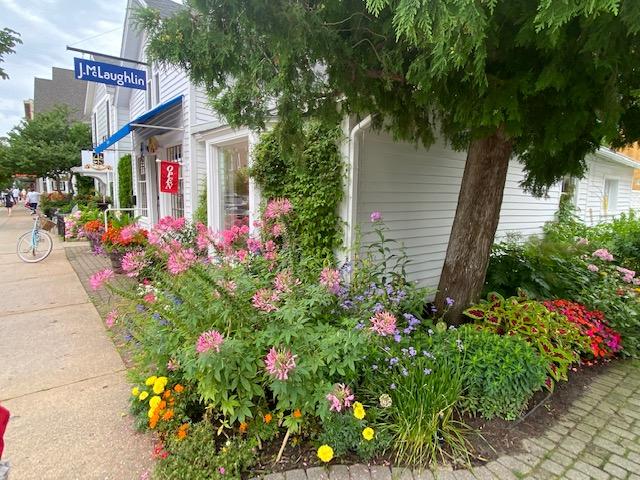
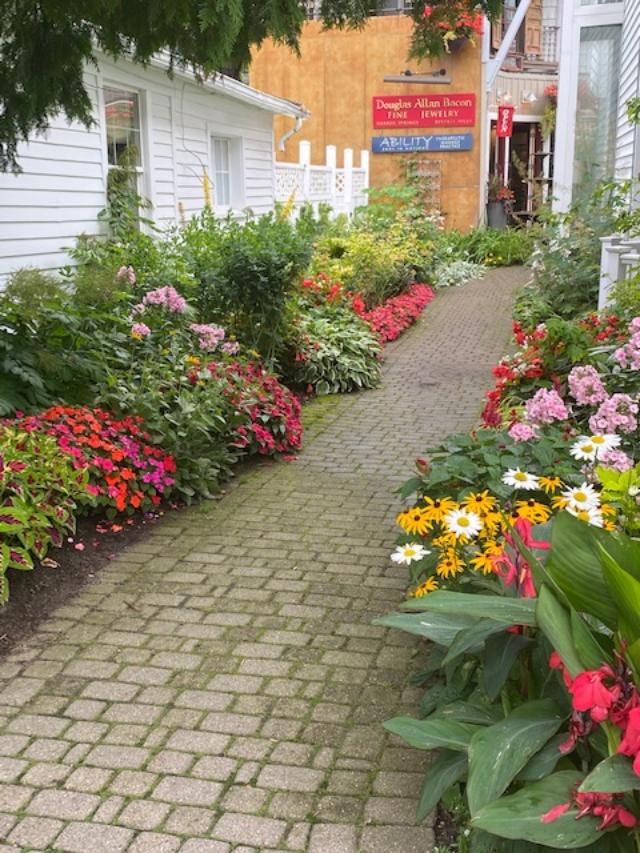
With a population of just 1200 people, some might be tempted to roll right through the sleepy little village of Harbor Springs. The tiny downtown area seems to have stood still in time but closer inspection reveals a thriving art community. Benches scattered throughout town invite you to slow down and savor the moment.
The real treat is tucked quietly behind the main road, it is almost hidden and if you don’t allow yourself time to wander, you might just miss it. A short walk reveals a beautiful waterfront area, complete with two beaches, a green space, picnic facilities and a dock to walk on. Luxurious homes and huge yachts reveal there is more to this town than meets the eye.
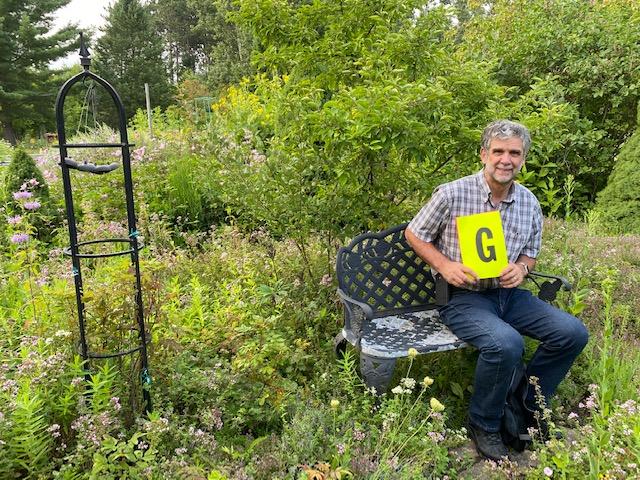
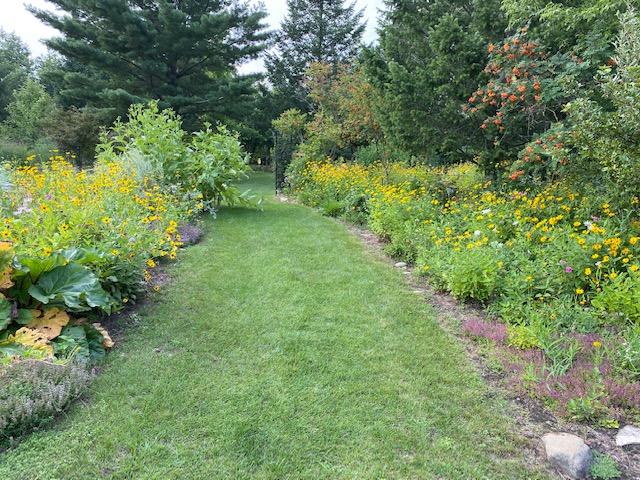
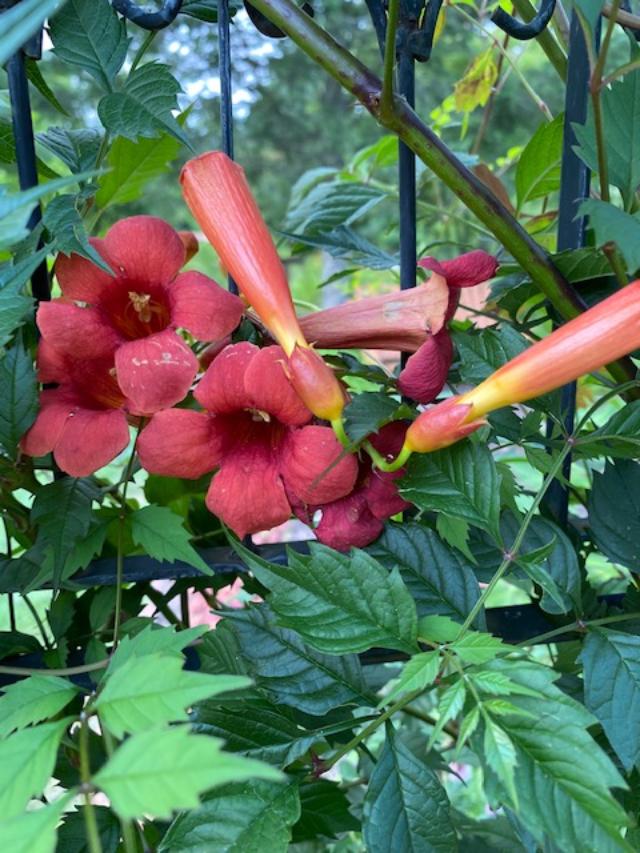
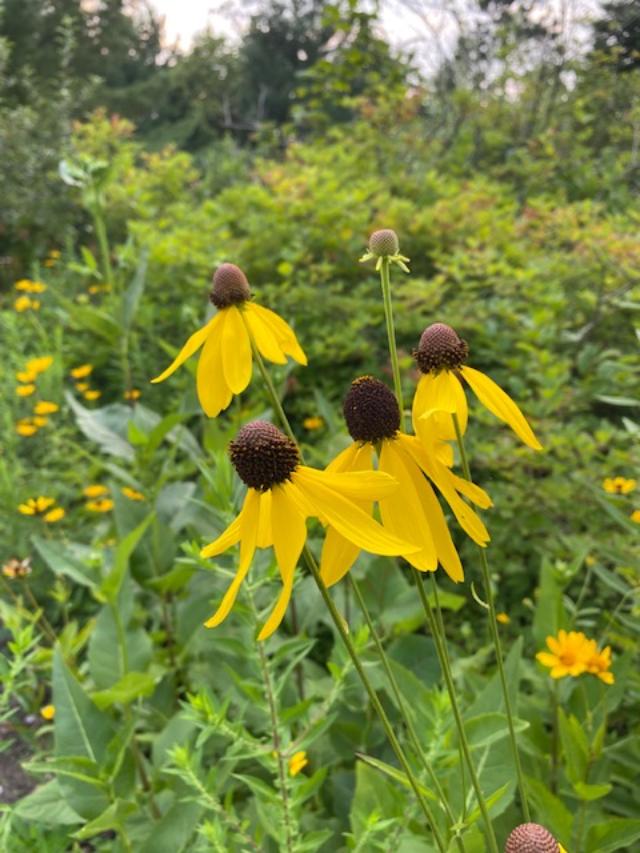
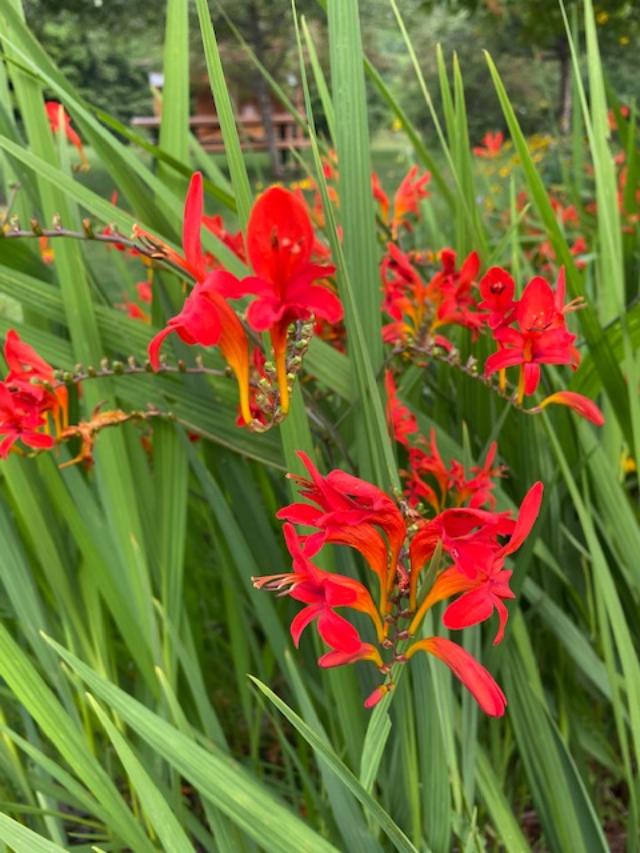
Flowers and gardens are often part of our ABC Adventures. As I researched things to do in the Gaylord area, I was more than just a little curious about the description of the Demonstration Gardens, since it had been described as having been created from a waste area. I wondered if it would be worth a visit. We had already explored the little town of Gaylord for our “G” but we had a little time available and the gardens are free, so we decided to add a little detour. We asked several locals, but no one seemed to have heard of them. Thank goodness for google maps.
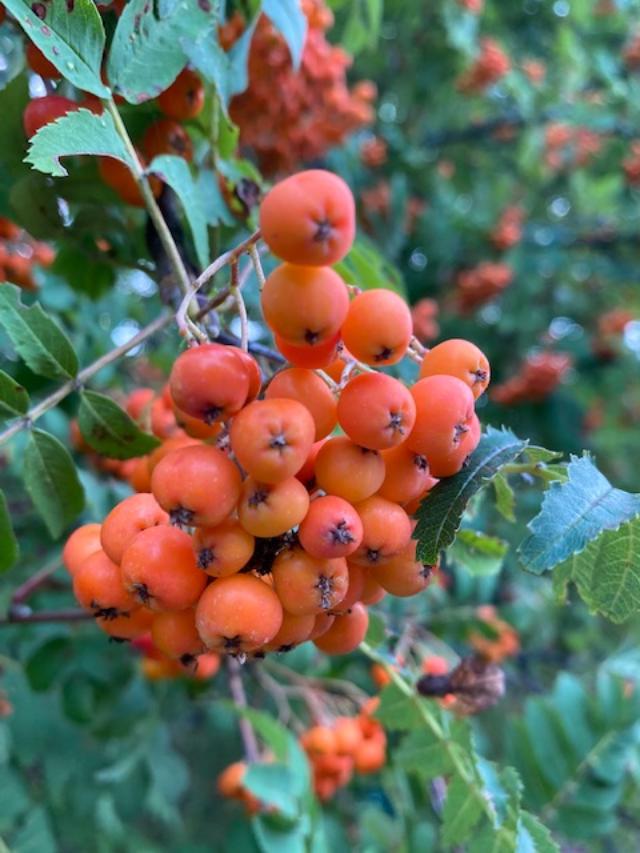
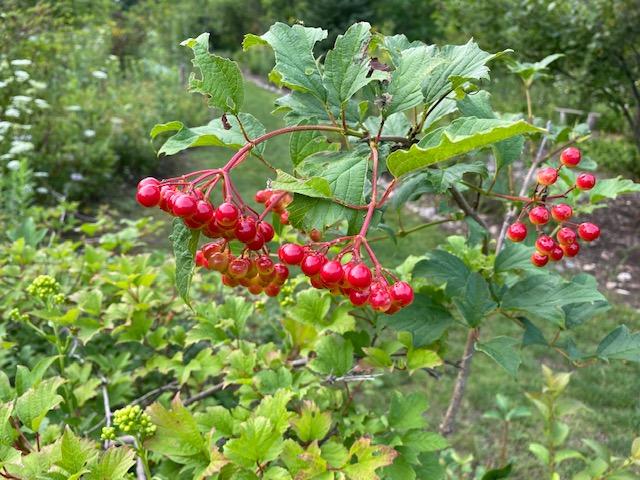
We found the park at the edge of a very industrial area. Concrete and asphalt seemed to be more abundant that flowers. The small sign located at the edge of this area offered little inspiration for the beauty which lay beyond. We followed a path which passed under an arch of orange berries, inviting us into the gardens. This turned out to be a best kept secret type of adventure and I hope the locals will one day realize what a gem they have.
The three acre garden was developed to heal the land and “educate the public on the importance of native plants for preserving water quality and supporting ecosystems”. Since replanting with natives was something I have been trying to do in my own gardens, we decided it was worth a few minutes exploration.
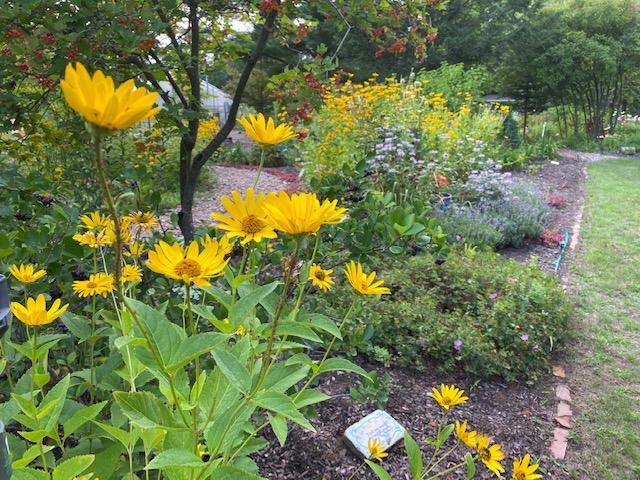
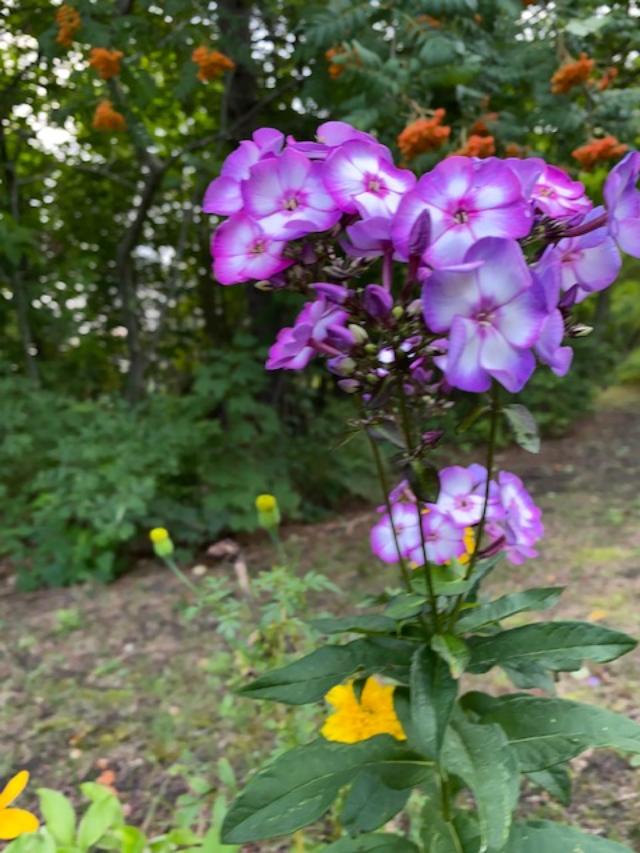
The city began removing refuse from an old dump site in 1997. Over the years, the area was replaced with plants native to Michigan. Native plants tend to need less care. Their roots can grow up to several feet as they reach deep for water and nutrients. Some people call them weeds but seeing a native garden in a structured format we are reminded how very beautiful these plants can be. Native plants will always attract butterflies and wildlife as they work to create a full circle of life.
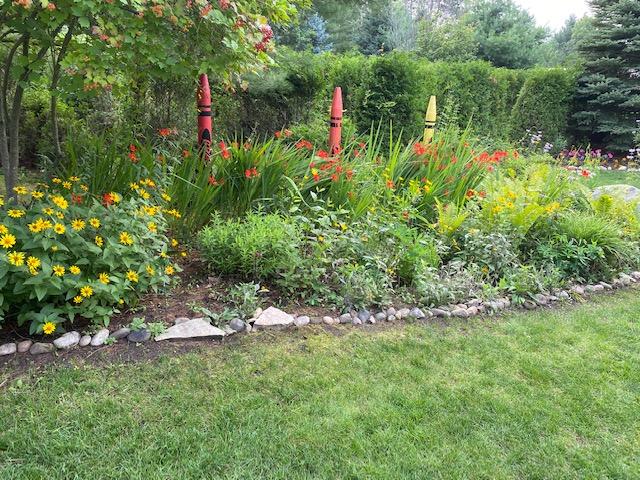
Visiting in the fall and toward the end of the day, we had the place to ourselves as we meandered through each of the 11 gardens. With hoses strewn across the paths instead of in-ground sprinklers, in many ways it was like visiting a neighbors garden. Unlike touring a Botanical Garden, the structure is loose but great care has actually been taken. From songbirds, to hummingbirds, to butterflies many of the gardens have been planted specifically to support a particular type of wildlife.
Other gardens such as the herb garden and the Seed to Harvest garden have been planted to support a youth education program and grow foods for the less fortunate. This area also features a home compost demonstration site geared toward educating people on how they can compost kitchen scraps and yard trimmings in their own backyard. We had arrived at the end of the harvest season, so didn’t see a lot of the food which had been grown but the tender loving care given to each garden is apparent.
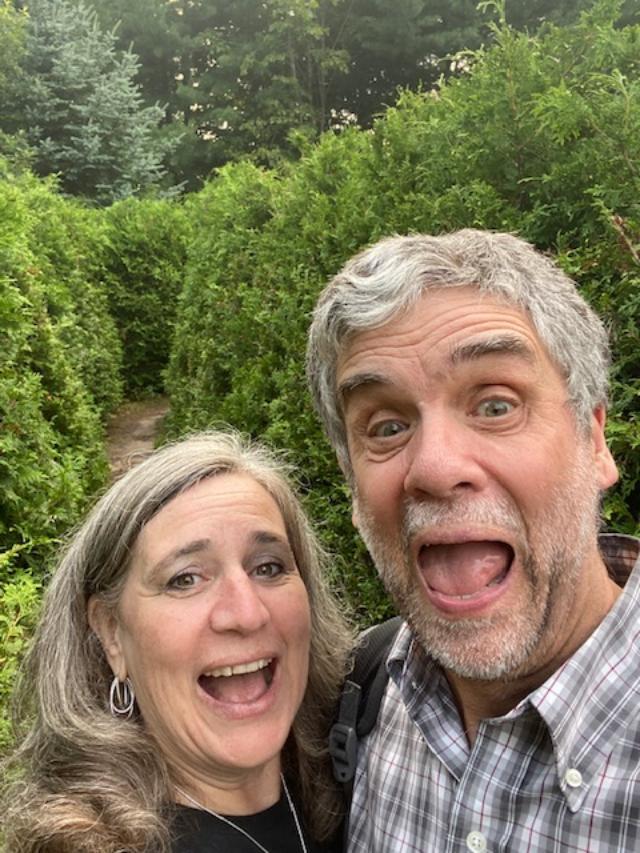
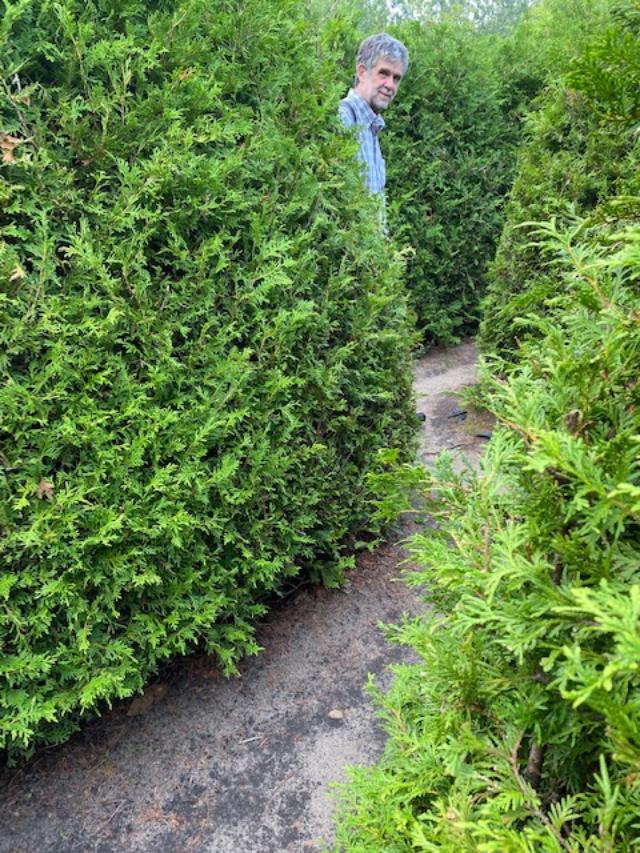
Some areas such as the Children’s Garden are planted to invite you to play in a riot of colors, smells and textures meant to stimulate the senses. We embraced our youth as we hid from each other in the arborvitae maze.
We notice a stage set along a forest edge, we can only imagine the family memories waiting to made in this special place. What a great setting for a picnic.
With the sun beginning to set, our adventure comes to a close. As we head towards the car, we reflect on the beauty we had seen in the Demonstration Gardens. This had been a terrific way to end the day. The colors, patterns and variety had indeed made us pause and play.
As I hold my husbands hand I also reflect on taking time to do this activity, it would have been easy to skip it. I am filled with “gratitude” for this man. We have been married 38 years, marriage can grow very routine over time. I marvel that Alan is so willing to play the alphabet game, to continue to explore and discover together. I hope there are still many memories to make. We have both come to realize that every day can be an adventure, if we choose to make it that way.
Today we had gained a greater appreciation for what others call weeds. I guess it is all in the way you look at the world. Marriage and relationships are like gardens, they must be nurtured and tended. Some will see weeds, others will find beauty, it is all perspective.
Holding hands, we pass under the berry arch on our way back to the car. We are once again thrown into the reality of urbanization but like these gardens, I realize it is up to us to always strive to remove the toxins from our lives and replace them with beauty. We need only to plant the seeds.
The gardens may be found at:
Corner of Cross St. and Livingston Blvd. Gaylord, MI 49735 (989) 732-4021