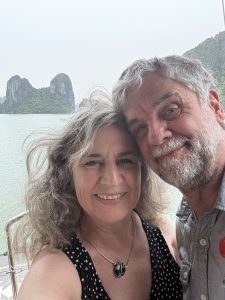
We fell in love with the idea of cruising Halong Bay, when our friend Sherri, cruised there last year. The otherworldly scenery, of limestone pillars rising out of the waters in the South China Sea, had called our name ever since. This area is also dedicated as a UNESCO site. Truth be told, much of this cruise had been selected for the itinerary, which would give us 2 full days to explore this region.
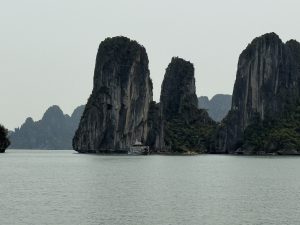
The name Ha’ long means “descending dragon.” Legend says, the dragons were sent there by gods to protect Vietnam from invaders. The dragons spit jades and jewels to the sea which later turned into the islets and islands. These 1600 islands created a protective wall to shield against enemies.
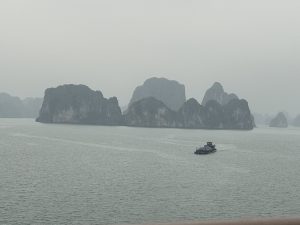
With 600 boats registered to explore the area, choosing the right tour for yourself is really important. It can be very busy but knowing where the boats go, there are still quiet places waiting to be discovered. Almost every trip offered will include a tour of the islands, a cave tour and sometimes kayaking, with a stop at a pearl farm or floating village.
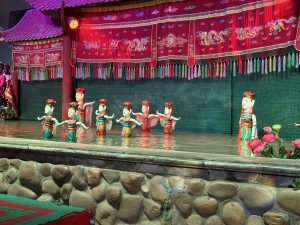
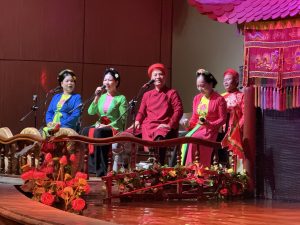
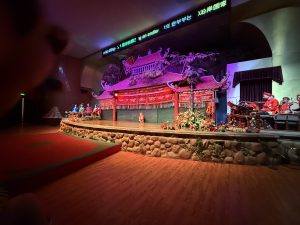
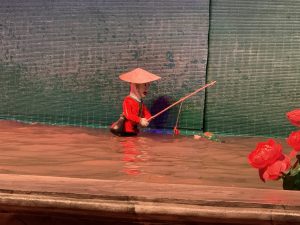
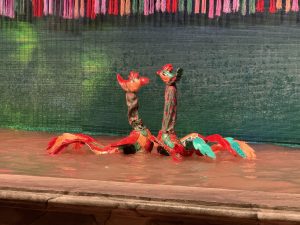
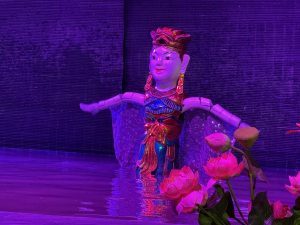
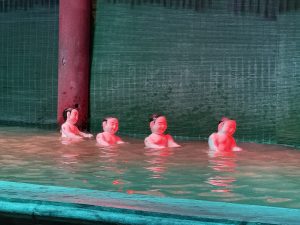
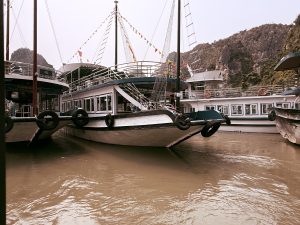
Yesterday we had been meant to sail through the area on a traditional junk boat. A naturalist would be on board to describe the conservation process which is being done to save the stunning karsts (islands) rising out of the water and the work they are doing to regulate the massive surge in tourism to the area. The limited amount of port time would only allow us the chance to explore on our own for a day, which is plenty really. We were going to be visiting zone 4, which is one of the most unspoiled areas. This area is usually reserved only for the very wealthy or for tour boats on a 2 or 3 day cruise. When our cruise line suddenly changed the excursion time of the water puppet show, by a 4 hour difference, we thought we might have to eliminate the cruise around the islands. All was not lost, we just detoured and found a shorter excursion and were still able to do both activities, during the time we were in port. It just meant a little less time around the islands and we only made it to zone 2, My Dr. had wanted me to cancel the entire day and rest a little longer. I decided if I could get on the tour boat, I would prop my foot up and enjoy the ride. Our cruise ship would remain in port overnight and depart at 7a.m. the next morning. This had allowed us to take in the water puppet show during the evening.
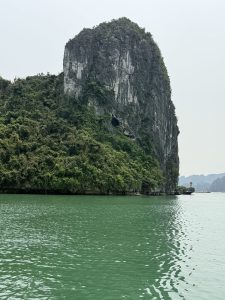
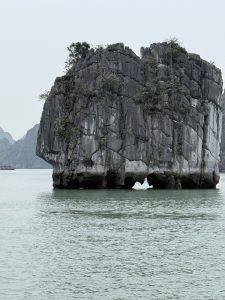
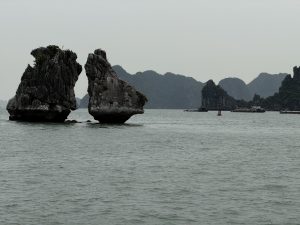
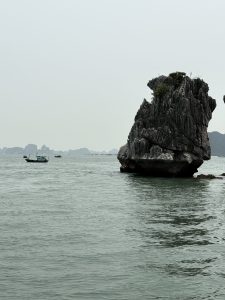
Most of the Halong Bay tours include a tour to a cave. Some offer time kayaking and may visit an oyster farm or floating village. Because we were on the shortened version of the trip, our excursion would only include the island tour and cave tour.
Alan would have to explore the cave on his own. I was so proud of him for continuing to complete the tours even when I couldn’t.
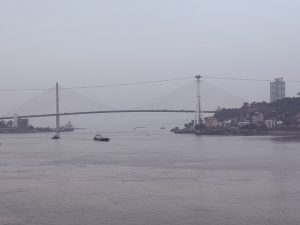
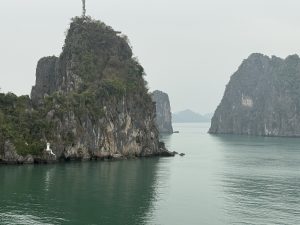
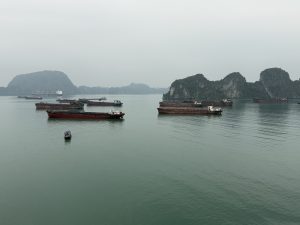
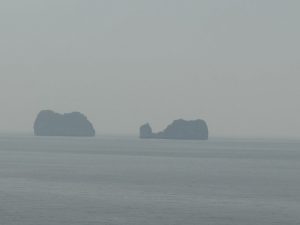
The next morning we set off at 7am and began to slowly work our way through the islands and eventually sail out to sea. This is called “scenic cruising” and when we are lucky enough to have it on an itinerary, it can be some of the most spectacular scenery of the entire trip. Our second day in the area of Halong Bay did not disappoint. There were many interesting sites to discover along the way. Many of the islands have names such as chicken rock and whale rock.
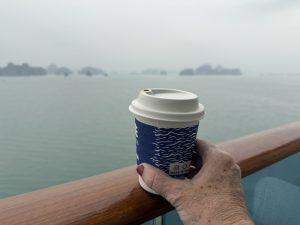
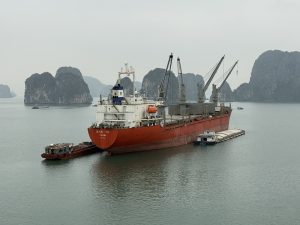
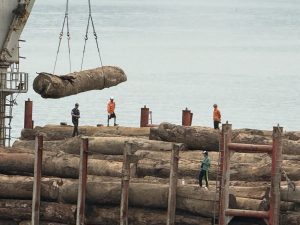
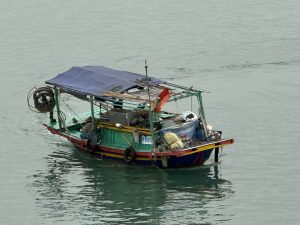
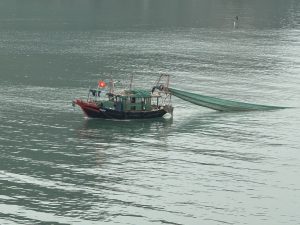
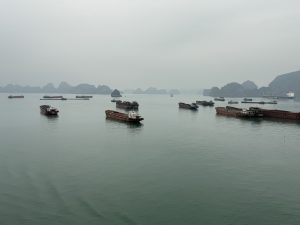
Even though we had seen a lot yesterday, I woke early to watch the sunrise before we set off, unfortunately it was another cloudy day. As we moved out to sea, we had an entirely different perspective than we had, had the day before. There were many interesting things happening in the bay. I was fascinated with the logging and fishing boats. There was a sort of market out here as people sold their produce directly from their boats. It was a slow day for us, as we passed the time on our balcony, watching the world go by. We simply let nature work its magic. In this place, at this moment, there are no politics, there are no worries. On this 50 square foot space of our balcony, we can pretend we are alone, as we quietly move further away from the populated areas, watching the unspoiled beauty of the placid waters and vegetation covered karsts, as we sailed out to sea. This is the reason we always book a balcony cabin. We are so grateful to be here, to experience the magical beauty of this amazing place.