Sometimes our ABC game just doesn’t line up in alphabetical order, such was the case with our time spent in Na Trang, Vietnam. Today’s activity actually took place on March 30, 2026, a couple of days before Halong Bay. Today was a welcome late start. We would be on tour from 9:45-3:15pm. One of our shorter adventures.
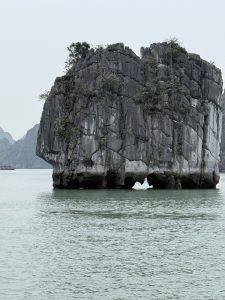
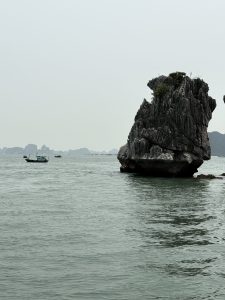
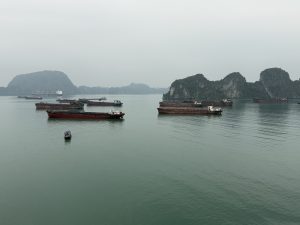
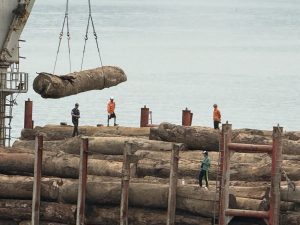
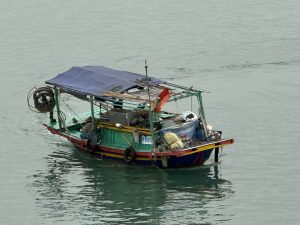
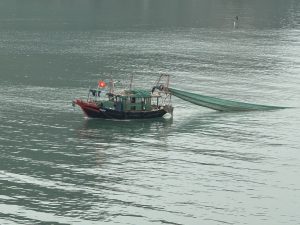
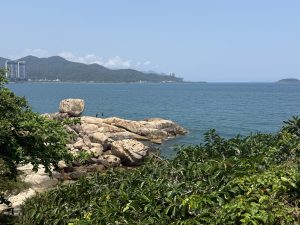
We ported at Cham Ran, which is a military base. As we disembarked, we were repeatedly warned that no photos were to be taken, until outside of the military zone. We would be under constant surveillance until we were off the base, which ran for about 20 miles through some of the most pristine waterfront and beautiful forest that I have ever seen. I would say that the military here enjoys some pretty fine accommodations along the pure white sand beaches! These photos were taken just beyond the base.
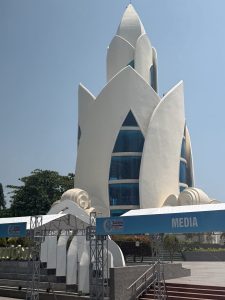
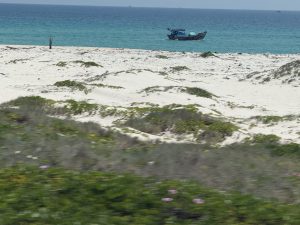
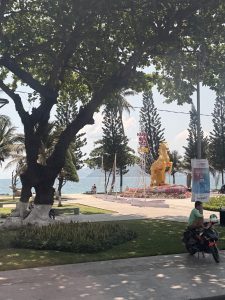
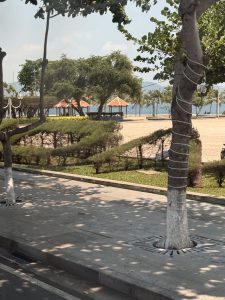
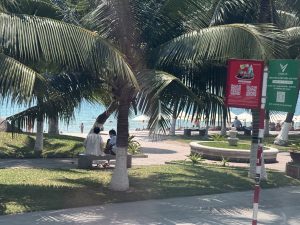
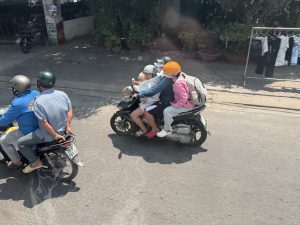
Once outside the base, we entertained ourselves along the one and a half hour journey to Na Trang by simply observing outside the bus window. I will be eternally fascinated with the motorbikes of Vietnam. On this day we saw an entire family, including a child eating ice cream and carrying the pet dog, on one bike. We also saw fascinating architecture and beach front sculptures. I was intrigued to learn that the beaches are mostly used by tourists.
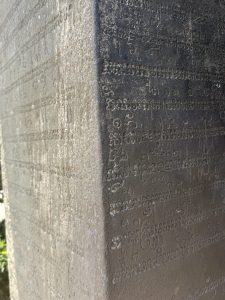
The highlight of this excursion was going to be the Po Nager Cham Towers. The word Ponagar means “the mother of the country”. Perched on a steep hill, overlooking the Cai River, the Ponager Cham Towers are a 1,000 year old Hindu complex, which were built to worship the Queen Po Ina Nagar. According to the Cam people, she was the” goddess of creation, coming out of the clouds and sea foam to give them bountiful harvest, as well as a peaceful life”. Surrounded by mountains, rivers and natural beauty, one can understand why the towers were built here. Originally there were more towers but only 4 remain today. In 1979, Ponagar Tower was classified as a national monument. This has now become a popular tourist destination.
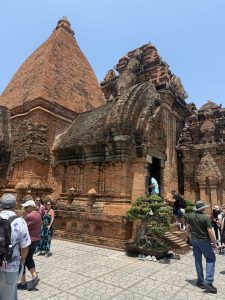
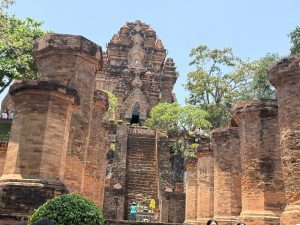
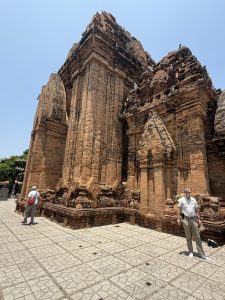
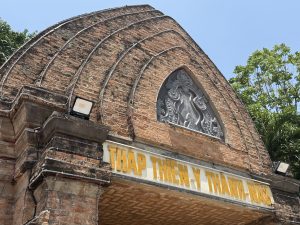
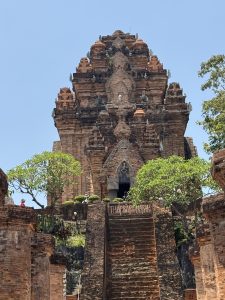
I had been so excited to see this stunning architecture but as luck would have it, fate had different plans for me. As I took my final step at the top of the steep entrance, I fell backwards (flipped actually) down the stairway leading to the towers. There were so many people on the stairs, we will never know if I missed my footing, or if I was knocked backwards. Thankfully Alan was quick on his feet and ran below me to catch me, preventing a much more serious injury than the fractured foot and sprained knee ligament that I incurred. We still had a full day of touring ahead of us and not wanting to go to a foreign hospital, I carried on until I could go to the onboard medical facility, upon our return to the ship (about 4 hours later). I managed to hobble my way through the Cham Towers, but unable to bear much weight, the knee and ankle soon began to swell and hinder my ability to move very far.
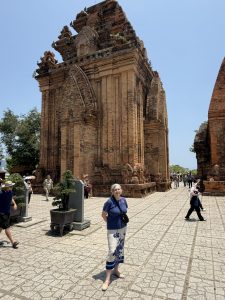
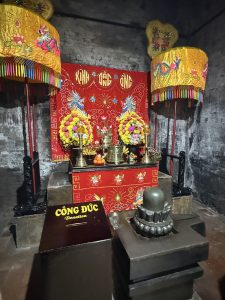
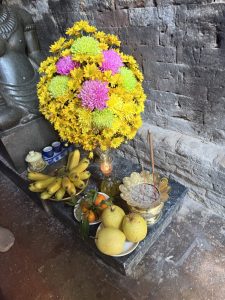
The temple at the tower was filled with flowers, fruit and incense. Due to its small enclosed space, the scents were overwhelming to many of the visitors. I was fascinated by all the details in this architectural masterpiece. The temple’s central image is a 1.2m tall stone statue of the goddess Yan Po Nagar sitting cross-legged, dressed only in a skirt, with ten hands holding various symbolic items. No photography of the deity was allowed.
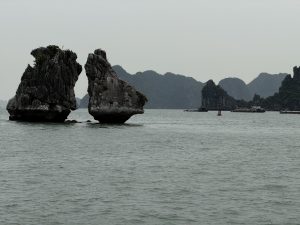
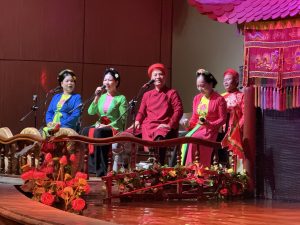
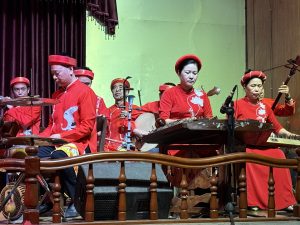
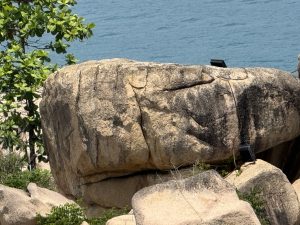
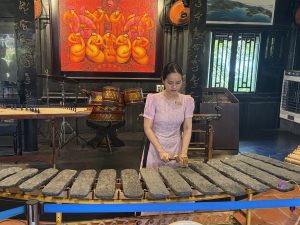
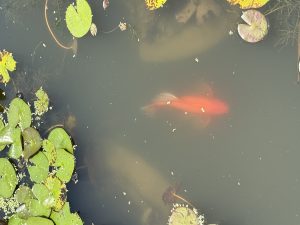
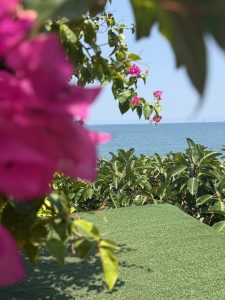
Following our visit to the towers, we went to the Hon Chong Promontory. This is a unique rock formation of stacked rocks which jut out into the harbor. There are two clusters of rocks. One is called Hon Chong which means husband in Vietnamese, the other is called Hon Vo, meaning wife. I was unable to venture to the rocks, so Alan volunteered to go ahead, to see if he could locate the giant five-fingered hand print embedded on a boulder. According to a folktale that has been passed down for generations, a giant man was fishing here, when a giant fish swallowed him and pulled him away. The man tried to pull himself back to shore, while tightly holding a fishing-rod in one hand and pressing the other hand against the boulder, which left the imprint we see today. Alan was unable to get down to the handprint in the time allotted but enjoyed visiting the promontory. In the meantime, I was gently exploring the waterfront building leading to the rocks. There was a group playing traditional Vietnamese instruments and I was quite content to sit and listen to them as I watched the koi in a nearby pond and simply enjoyed the flowers which seemed to surround this area. Alan wasn’t willing to leave me alone for very long so he soon rejoined me.
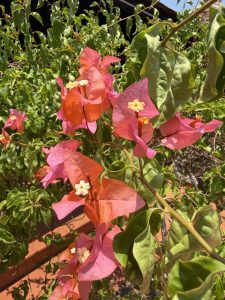
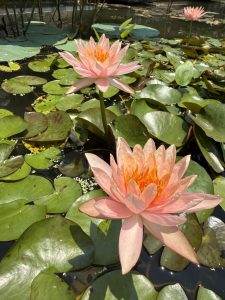
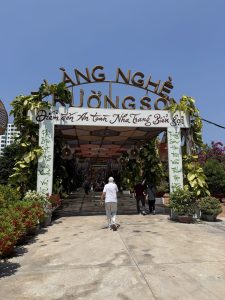
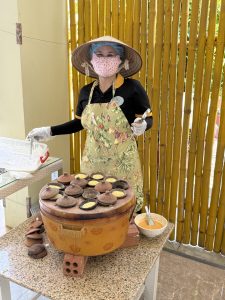
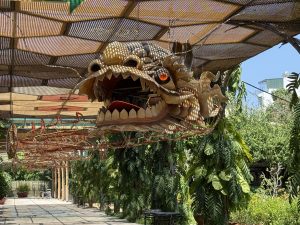
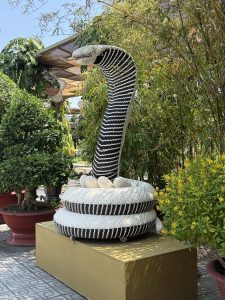
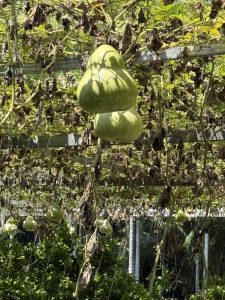
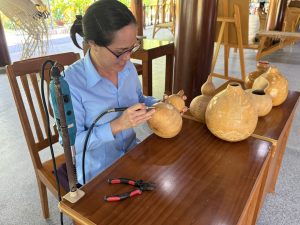
By now, we were already halfway through our day. Lunch was next. Considered a hidden gem, we arrived at the Lang Nghe Truong Son Cultural Village. First we experienced a massive Vietnamese buffet, with every kind of unique food available. I especially enjoyed the stuffed pancakes. We moved from the buffet through a courtyard filled with interesting animal sculptures and peaceful gardens into the craft village. Visitors to the Craft Village can see the artisans weaving mats, making hats and knitting nets. We also observed artisans making sand paintings and carving gourds.
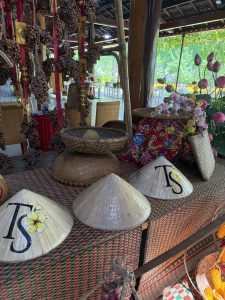
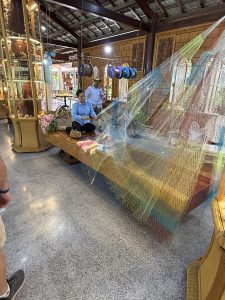
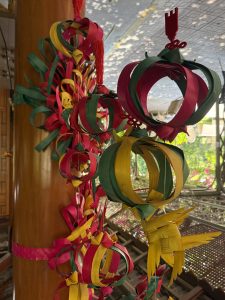
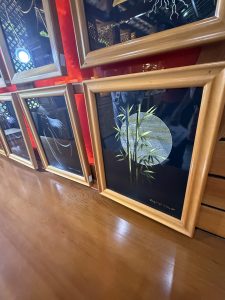
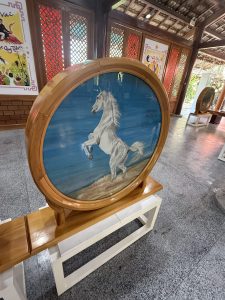
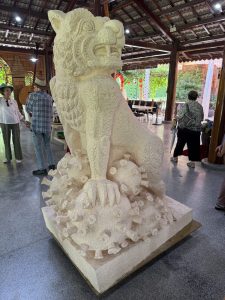
Our next stop of the day was the Dam Market. By now my ankle had swollen considerably. I did not feel like bumping into people or getting stepped on in a crowded space, so Alan and I opted to sit outside and enjoy a refreshing drink from a local vendor. Knowing I was heading to medical as soon as we arrived back, I used the time to fill out an incident report. The tour guide wasn’t very happy that I had fallen.
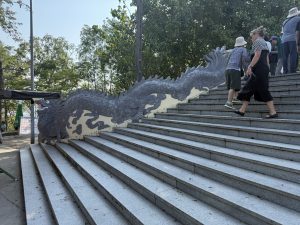
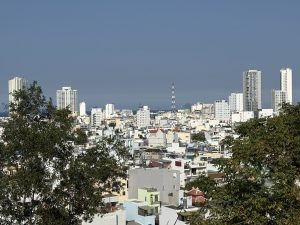
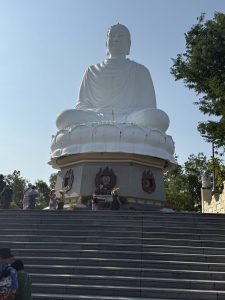
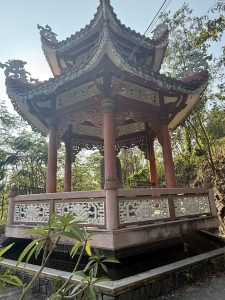
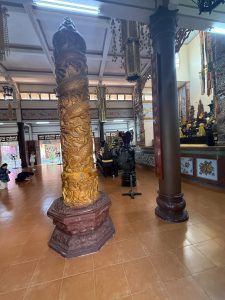
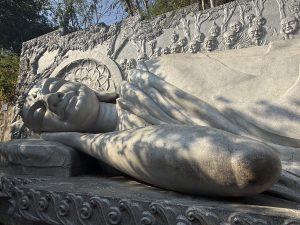
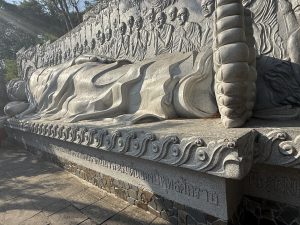
Our final stop was the Long Son Pagoda. Owning several Guinness World Records and considered as the largest pagoda in Nha Trang, Long Son Pagoda is worth visiting once in a lifetime. The huge white Buddha towers over the city of Na Trang and is visible from quite a ways away. This was another impressive highlight which I was going to have to sit out, as it required conquering 193 steps to the top of the hill. The temple itself was built in 1886 and has seen many wars that left a mark on it. The temple is now the center of the Vietnam Buddhist Studies Foundation, where many monks study in its premises. Alongside the sitting Buddha statue on the hill, the temple grounds also house the reclining Buddha, also known as the “sleeping Buddha.” I am so grateful to Alan for completing the mission, just so I could enjoy the photos.
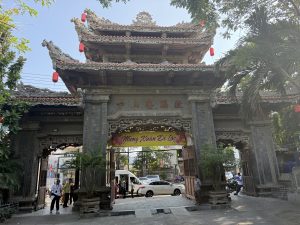
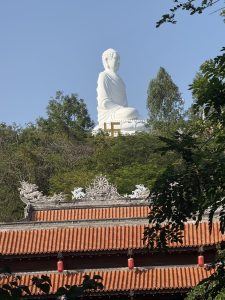
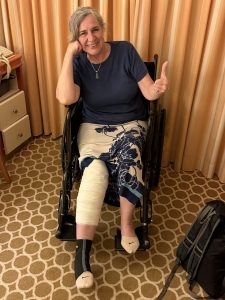
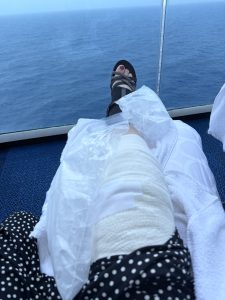
From here, we headed back to the ship. The hour and a half drive passed quickly. Upon returning to the ship, I immediately hobbled my way to the medical bay on the 4th deck, where I spent the next hour being x-rayed and prodded, confirming that I had a fracture of the foot and a badly sprained knee. The knee was immobilized and a compression sock was placed on my foot. I left the medical bay in a wheelchair with strict orders to stay off my foot/knee and pack it in ice for at least the next 24 hours. Thank goodness we had a sea day the next day.
Health Update: This injury would prove to be more serious than originally thought. I had actually fractured my foot in two places, including the talus bone, one of the hardest bones to break in the body. Upon returning home from this travel adventure, I was immediately placed in a walking cast for over 6 weeks. This was followed by months of physical therapy 3 times a week. Due to the complex tears in the ligaments and tendons and my connective tissue disease, I was warned it will take over a year to recover from this injury.
My advice? Travel everywhere but don’t roll down stairs and always carry travelers insurance!