“N” is for Na Trang (Vietnam)

Sometimes our ABC game just doesn’t line up in alphabetical order, such was the case with our time spent in Na Trang, Vietnam.  Today’s activity actually took place on March 30, 2026, a couple of days before Halong Bay. Today was a welcome late start.  We would be on tour from 9:45-3:15pm.  One of our shorter adventures.

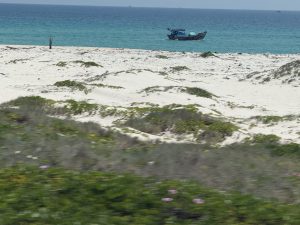
We ported at Cham Ran, which is a military base.  As we disembarked, we were repeatedly warned that no photos were to be taken, until outside of the military zone.  We would be under constant surveillance until we were off the base, which ran for about 20 miles through some of the most pristine waterfront and beautiful forest that I have ever seen.  I would say that the military here enjoys some pretty fine accommodations along the pure white sand beaches!  These photos were taken just beyond the base.
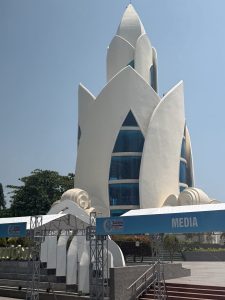
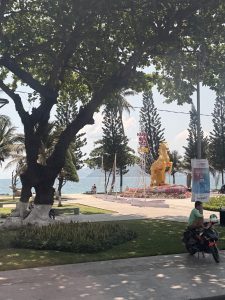
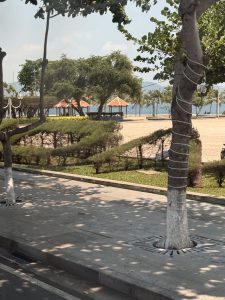
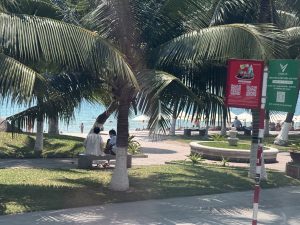
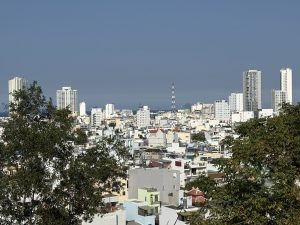
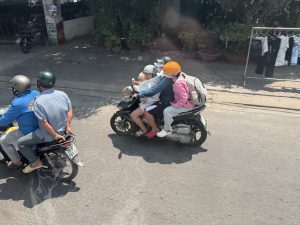
Once outside the base, we entertained ourselves along the one and a half hour journey to Na Trang by simply observing outside the bus window.  I will be eternally fascinated with the motorbikes of Vietnam.  On this day we saw an entire family, including a child eating ice cream and carrying the pet dog, on one bike.  We also saw fascinating architecture and beach front sculptures.  I was intrigued to learn that the beaches are mostly used by tourists.
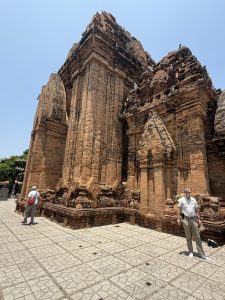
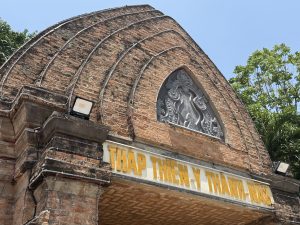
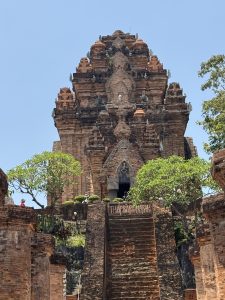
The highlight of this excursion was going to be the Po Nager Cham Towers. The word Ponagar  means “the mother of the country”.   Perched on a steep hill, overlooking the Cai River, the Ponager  Cham Towers are a 1,000 year old Hindu complex, which were built to worship the Queen Po Ina Nagar.  According to the Cam people, she was the” goddess of creation, coming out of the clouds and sea foam to give them bountiful harvest, as well as a peaceful life”.  Surrounded by mountains, rivers and natural beauty, one can understand why the towers were built here.  Originally there were more towers but only 4 remain today.  In 1979, Ponagar Tower was classified as a national monument. This has now become a popular tourist destination.
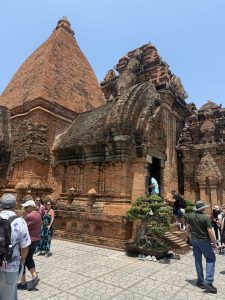
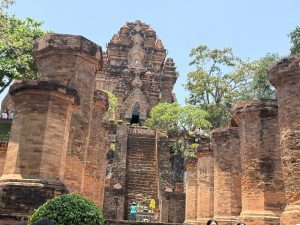
I had been so excited to see this stunning architecture but as luck would have it, fate had different plans for me.   As I took my final step at the top of the steep entrance, I fell backwards (flipped actually) down the stairway leading to the towers.  There were so many people on the stairs, we will never know if I missed my footing, or if I was knocked backwards. Thankfully Alan was quick on his feet and ran below me to catch me, preventing a much more serious injury than the fractured foot and sprained knee ligament that I incurred.  We still had a full day of touring ahead of us and not wanting to go to a foreign hospital, I carried on until I could go to the onboard medical facility, upon our return to the ship (about 4 hours later). I managed to hobble my way through the Cham Towers, but unable to bear much weight, the knee and ankle soon began to swell and hinder my ability to move very far.
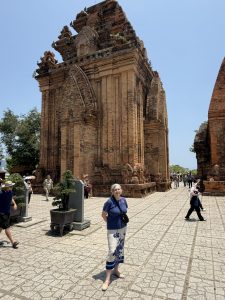
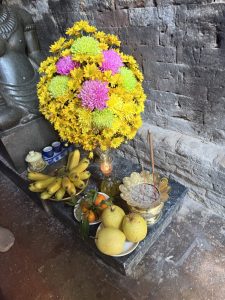
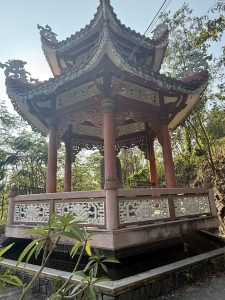
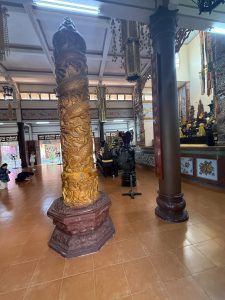
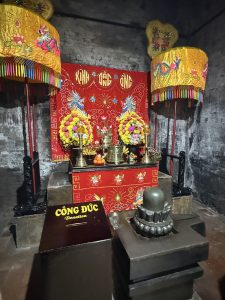
The temple at the tower was filled with flowers, fruit and incense.  Due to its small enclosed space, the scents were overwhelming to many of the visitors. I was fascinated by all the details in this architectural masterpiece. The temple’s central image is a 1.2m tall stone statue of the goddess Yan Po Nagar sitting cross-legged, dressed only in a skirt, with ten hands holding various symbolic items.  No photography of the deity was allowed.
 

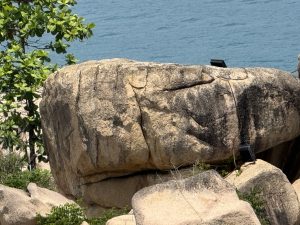
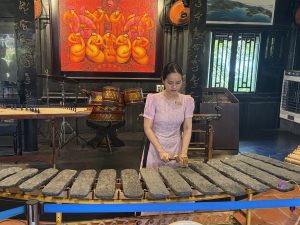
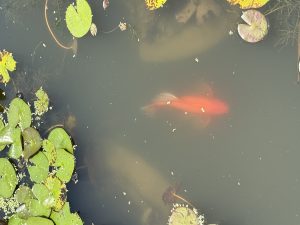
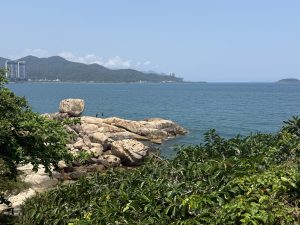
Following our visit to the towers, we went to the Hon Chong Promontory.  This is a unique rock formation of stacked rocks which jut out into the harbor.   There are two clusters of rocks.  One is called Hon Chong which means husband in Vietnamese, the other is called Hon Vo, meaning wife.  I was unable to venture to the rocks, so  Alan volunteered to go ahead, to see if he could locate the giant five-fingered hand print embedded on a boulder.   According to a folktale that has been passed down for generations, a giant man was fishing here, when a giant fish swallowed him and pulled him away.  The man tried to pull himself back to shore, while tightly holding a fishing-rod in one hand and pressing the other hand against the boulder, which left the imprint we see today.   Alan was unable to get down to the handprint in the time allotted but enjoyed visiting the promontory.  In the meantime, I was gently exploring the waterfront building leading to the rocks.  There was a group playing traditional Vietnamese instruments and I was quite content to sit and listen to them as I watched the koi in a nearby pond and simply enjoyed  the flowers which seemed to surround this area.  Alan wasn’t willing to leave me alone for very long so he soon rejoined me.
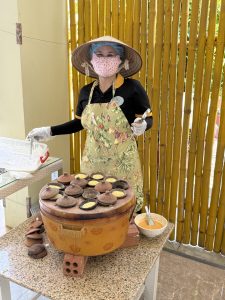
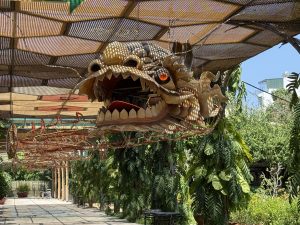
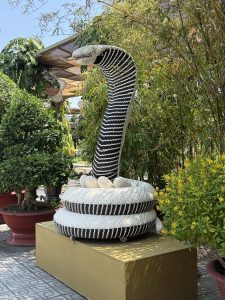
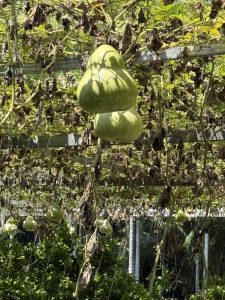
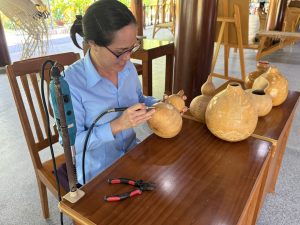
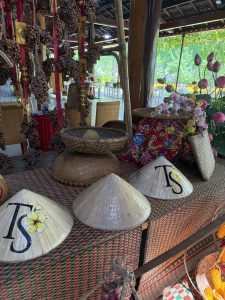
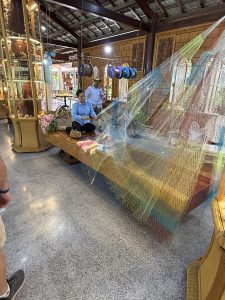
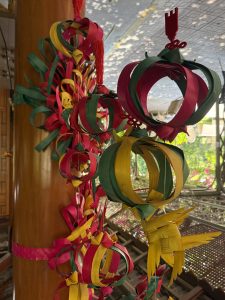
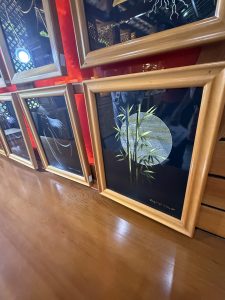
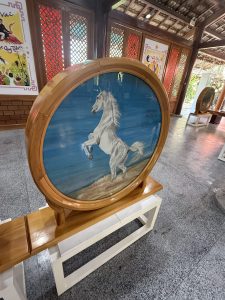
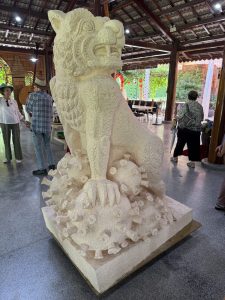
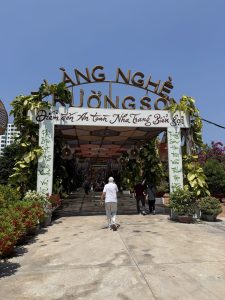
By now, we were already halfway through our day.  Lunch was next.  Considered a hidden gem, we arrived at the Lang Nghe Truong Son Cultural Village. First we experienced a massive Vietnamese buffet, with every kind of unique food available.  I especially enjoyed the stuffed pancakes.  We moved from the buffet through a courtyard filled with interesting animal sculptures and peaceful gardens  into the craft village.  Visitors to the Craft Village can see the artisans weaving mats, making hats and knitting nets.  We also observed artisans making sand paintings and carving gourds.
 

Our next stop of the day was the Dam Market.  By now my ankle had swollen considerably.  I did not feel like bumping into people or getting stepped on in a crowded space, so Alan and I opted to sit outside and enjoy a refreshing drink from a local vendor.  Knowing I was heading to medical as soon as we arrived back, I used the time to fill out an incident report.  The tour guide wasn’t very happy that I had fallen.

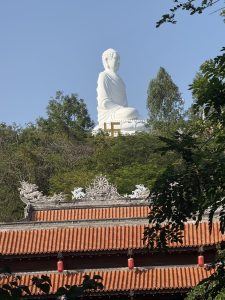
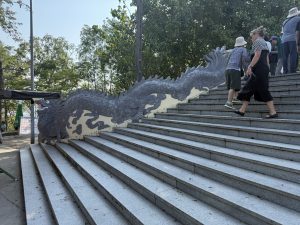
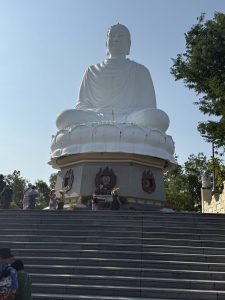
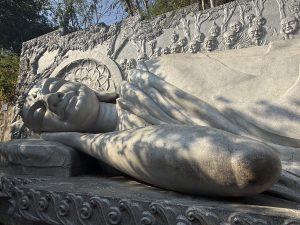
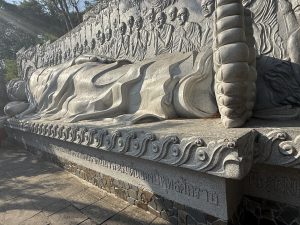
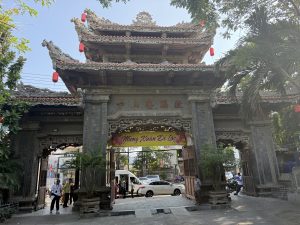
Our final stop was the Long Son Pagoda. Owning several Guinness World Records and considered as the largest pagoda in Nha Trang, Long Son Pagoda is worth visiting once in a lifetime. The huge white Buddha towers over the city of Na Trang and is visible from quite a ways away.  This was another impressive highlight which I was going to have to sit out, as it required conquering 193 steps to the top of the hill.  The temple itself was built in 1886 and has seen many wars that left a mark on it. The temple is now the center of the Vietnam Buddhist Studies Foundation, where many monks study in its premises. Alongside the sitting Buddha statue on the hill, the temple grounds also house the reclining Buddha, also known as the “sleeping Buddha.”  I am so grateful to Alan for completing the mission, just so I could enjoy the photos.
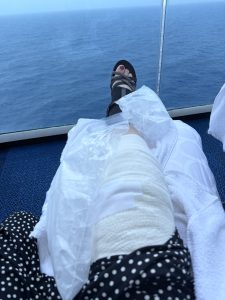
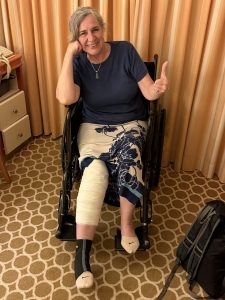
From here, we headed back to the ship.  The hour and a half drive passed quickly.  Upon returning to the ship, I immediately hobbled my way to the medical bay on the 4th deck, where I spent the next hour being x-rayed and prodded, confirming that I had a fracture of the foot and a badly sprained knee.  The knee was immobilized and a compression sock was placed on my foot. I left the medical bay in a wheelchair with strict orders to stay off my foot/knee and pack it in ice for at least the next 24 hours.  Thank goodness we had a sea day the next day.

Health Update:  This injury would prove to be more serious than originally thought.  I had actually fractured my foot in two places, including the talus bone, one of the hardest bones to break in the body.  Upon returning home from this travel adventure, I was immediately placed in a walking cast for over 6 weeks.  This was followed by months of physical therapy 3 times a week.  Due to the complex tears in the ligaments and tendons and my connective tissue disease, I was warned it will take over a year to recover from this injury.

My advice?  Travel everywhere but don’t roll down stairs and always carry travelers insurance!
 

“K” is for Keepsakes (Asia)

Go on vacation and it is likely you will come home with some special keepsake.  A great souvenir should transport you back over and over in time, to the memories made in a location.  There is a great expression, “take only memories and leave only footprints”.  This statement is perfect in its simplicity, when experiencing a natural area but visiting interesting locations and exploring unique cultures, warrant gathering items which help us to remember.  Like many, we came home with treasures to add to our home.  Some cost a lot, others cost nothing. Space, weight and budget may dictate what item or items are worthy of our making their way home in our suitcases, so let me tell you about a few of our favorite things to collect.

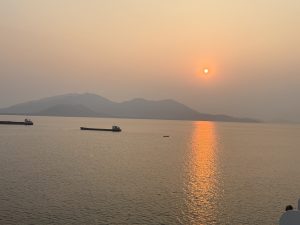
A sunset in Vietnam

There are so many keepsakes which cost little to nothing. It will come as no surprise that my number one souvenir will always be my pictures and my written words. My first suggestion for travelers is to take as many photos as possible, while allowing yourself to be fully immersed in your experience. There is a saying, “if you don’t have a picture of it, it never happened”.  You can always delete photos which don’t turn out well, but you can not recreate those special moments, which show how you have spent your days and who you shared your time with.  My official photo count for this 30+ day adventure is over 10,000 pictures! These days, cell phones make taking pictures easy.  You will never regret reliving the memories through your photos and stories.

I will delete many of these images but a few hundred photos will become priceless treasures.  These will be added to our digital photo frame at home (our number one treasure in our house), allowing us to relive our experiences over and over, initiating conversations, as we reminisce.   Our 4 year old grandson especially enjoys the photos on the frame and often makes up his own stories about our pictures, while telling us he has “been there”.  We love fueling his imagination and we hope to inspire his dreams of visiting these exotic locations for himself one day.

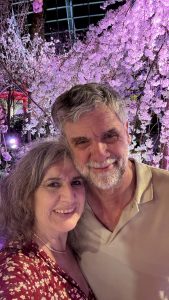
Sometimes it is not “what” we collect in our travels that we consider a souvenir, but the stories we gather along the way.  Photos become a documentation of how you are spending your time but a photo rarely stands alone without an explanation.   Alan and I are always playing the ABC game, so we are often looking for unique activities and adventures to experience.  In the past, we have designed ABC adventures around using different modes of transportation, visiting cities and tasting various alcohol laden drinks along the abc trail.  We even completed an airport art adventure, using the alphabet as our guide!  Our photos often reflect the goofiness we get up to, as we try to document each letter under our selected theme.   We are both trying to get better at selfies!
“Us” at Gardens by the Bay, Singapore

If you think of a camera as a way to capture your story visually your creativity will naturally flow,  I am the designated photographer for our family.  I still don’t consider myself a great photographer but I am pretty good at documenting our lives.  It wasn’t always this way.  When I met Alan, he was the one exploring photography but once kids came, I became passionate about capturing them on film, scrapbooking and story telling, which meant I spent more time behind the lens than in front of it.  Alan and I are always together, we are a team and most of our photos represent that but I also want my children and grandchildren to have photos of each of us as separate and unique individuals.  If you are the photographer, remember to step out from behind the camera occasionally.  You are part of the story too!

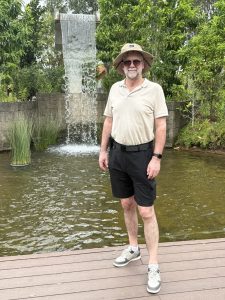
Exploring Chinese Gardens in Singapore

This brings me to my next souvenir freebie.  A journal costs nothing to keep.  A few sentences about the things you ate, the people you met, the weather and the experiences you had, will be great memory joggers as you revisit your moments.  You can use the notes feature on your phone, an app or good old pen and paper.  The most important  thing is to write down some details.  This is the only way I would ever remember that every student in Hong Kong is required to choose an English name for themselves.  This tidbit certainly makes my writing more interesting but it also offers more depth to the photos we take.

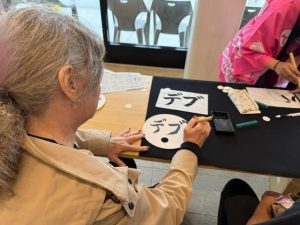
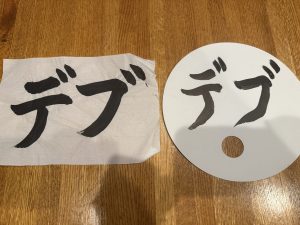
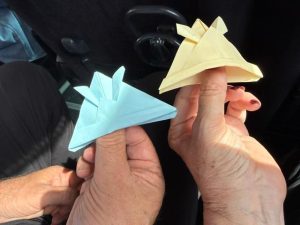
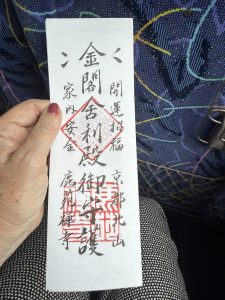
Memorabilia is also something easy to acquire.  While in Japan, I spent a few minutes learning to write my name in calligraphy.  I may frame this work of art but if I don’t, I will always remember how fun it was to learn.  On several of our Japanese excursions, we also learned the art of origami folding.  We made Mount Fuji and a Samurai helmet.  One of our tour guides also gifted us a tiny, folded, origami heron.   These are small treasures which were also documented by photos but if I choose to keep the items, they can easily be added to scrapbooks or journals.  Another favorite piece of memorabilia was an entry ticket to the Golden Pavilion in Kyoto, Japan.  It is beautifully written calligraphy which offers a wish for family safety and safe travels.  This is worthy of space among my story telling.  Currency can also be a form of memorabilia.  While in Vietnam, we were millionaires as we carried 9 million Dong, the equivalent to a little less than $350!

Learning to write in Japanese
My name in Japanese
Samurai origami
Our entrance ticket to the Golden Pavilion

Let’s explore some of our inexpensive keepsakes, these were all conscious purchases.  My first rule for myself when collecting keepsakes is that a souvenir can’t take up space in a junk drawer, only to be donated to charity in a couple of years…you know the kinds of trinkets I mean. With so much mass produced “stuff”, we have to be selective about what to give space and weight to in our luggage.

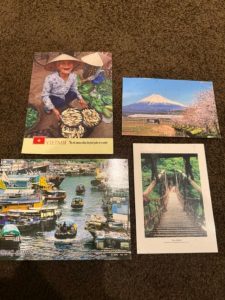
The first is the simple postcard.  I try to write as many as possible while on our adventures.  Hand written notes to friends and family are quickly becoming a lost art.  Getting up to 30 cards written and in the mail, when you only have a single day in a country, is an adventure in itself and content for a different blog post. The adventures which have been created around  first finding a postcard, writing them, then getting stamps and finding a mail box are story worthy.  I mailed a card from each city we visited to our 7 year old granddaughters,  first grade class, so they could follow our adventures.  The teacher turned these into a lesson by having each child draw a photo from their favorite location and tell us what they had learned.   This by far became my favorite keepsake…like I said, it’s the stories which are the real meaning of keepsakes and I can only imagine how wonderful it will be for our granddaughters classmates to get these tiny works of art and their own stories back at their graduation.   I also take time to write postcards to myself.   Since I know the post person is sure to read it,  I usually try to put something funny on the back, regarding our adventures.  So far she has never commented but I like to imagine the joy she gets when she realizes I am really talking to her.   When I get home, I attach my postcards  to a ring which gives me a mini diary of the things we have done. The best thing about postcards is that many areas are restricted for photos but often there is a postcard from a professional and the pictures are always better than anything I could take.  Besides, if I lose my pictures, these are great backups.  Sometimes I will buy a postcard as mini pieces of art.  Framed, these can be quite beautiful.

Postcards sent to myself.

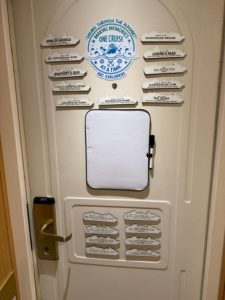
Cruisers are notorious collectors of magnets.  They are a small and inexpensive item,  which generally decorate the cabin doors and sadly they are often stolen from said doors.  We collect magnets in a different way.  Instead of gathering magnets from each location, I have personal magnets made for each of our cruises.  These tiny wooden ships represent the ship we sailed on, the dates and locations we traveled to.  I keep them on the magnetic walls of our cabin when we sail and on display in our home when we are there.  I never realized how much joy a tiny collection could bring.  Every time I pass the ships, I am reminded how fortunate we have been to be able to travel and I am filled with gratitude at the opportunity.

Our custom made cruise magnets.

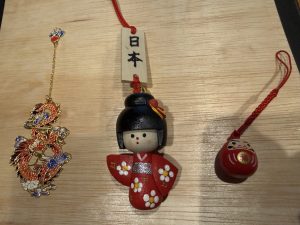
I have also always collected Christmas ornaments from the places we visit. Now that the kids have left home, our tree has become travel themed.  This is another of those adventures worthy of its own story, especially in countries which don’t celebrate the Christian holiday.  It has become quite the experience to find a meaningful and tiny item which can be repurposed as an ornament.  Ornaments do not need to be typically Christmas themed to earn a spot on our tree!  On this trip I repurposed a bookmark from Taiwan to become an ornament.  I chose a Kokeshi doll which represents friendship or love from Japan and I also bought a tiny Daruma figure which is a Japanese good luck charm, to help us realize our dearest wish.

New Christmas ornaments

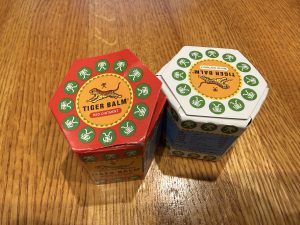
Cosmetics, toiletries, creams, lotions, soaps etc are other small items which can easily be tucked in a corner of luggage.  Of course I had to pick up these tiny containers of Tiger Balm, while in Singapore.

Tiger Balm

This brings me to our next category of keepsakes which are slightly more expensive and bulky.  The first is home decor. Alan and I are really not collectors of anything specific.  We are also seriously trying to downsize, so Alan’s first question anytime I want to add something large is always, “where are you going to put it”?   Our home decorhas always had a global influence but most of the pieces came through the now defunct Pier One store and have never really meant anything.  Our current travel adventures are now taking us to the exotic places we have only dreamed of discovering, giving us opportunities to gather really unique and meaningful items, the kind we want to talk about.

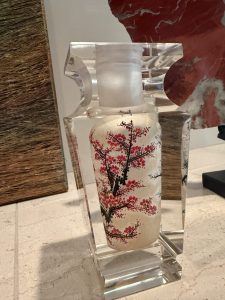
On long trips, we must also pace our spending.  On this journey, we would be visiting 7 countries and many interesting cities, each with their own cultural specialties.  I had to decide if I wanted one really unique piece from Asia, or different items from each country.    My first keepsake was acquired at the beginning of our journey, in Chinatown, located in Singapore.  This was our first destination. My treasure was a beautiful vase,inside a vase.  It is hand painted from the inside, using tiny brushes. It was expensive, heavy and was going to require hand carrying home. It was going to be awkward, as it was very fragile and could only be taken in hand luggage but it was something I just had to have.  The artist is no longer alive, so these pieces are fairly difficult to find.  I decided if this was the only piece I ended up bringing back, it would be a wonderful addition to our home. Fortunately I didn’t blow all of our souvenir budget!

Hand painted vase

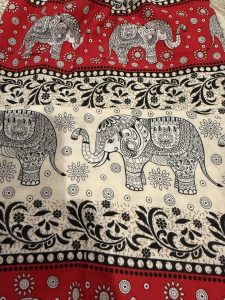
Clothing can  also be a wonderful souvenir . Our next destination was Thailand.  I had already made up my mind that I was coming home with a pair of elephant pants, because I hadn’t brought any home the last time we were there and I had always regretted it.  Elephant clothing is likely mass produced for tourists.  Business was certainly brisk in the shop where I picked mine up.  Any male or female trying to enter the Grand Palace in shorts, dresses above the knee etc, were required to purchase a pair… guaranteed sales! Colors and patterns are so varied, there is no limit to the combinations available.  There were dresses, short sets and shirts with elephant prints, but by far the elephant pants, with their billowing legs and elasticated ankles are the hot commodity.  It was humorous trying to find a pair of Asian sized pants, to fit a 6ft 6in man from our tour group.  Stories are what keepsakes are all about and as I wear the breezy pants in our 90 degree days, I am instantly transported back to the joy I experienced in this wonderful country and the many friends we made while traveling and yes, we saw the elephants!

Elephant pants

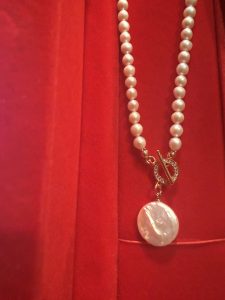
By the time we hit Vietnam, I was reminding myself to look for smallish items, since we were already close to our weight limit.  Jewelry tucks in nicely in almost any suitcase.  At a specialized craft market, I found a pretty, hand crafted,  pearl necklace to bring home.

Pearls

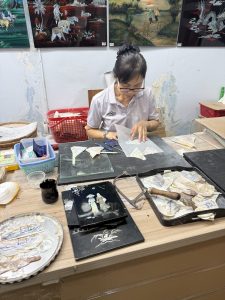
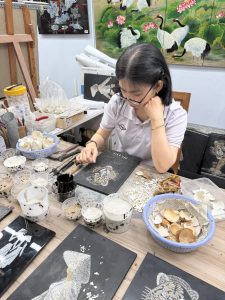
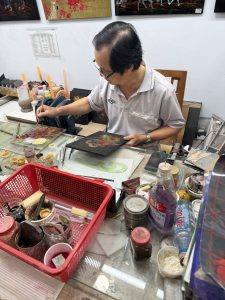
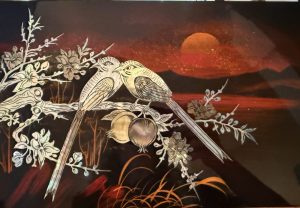
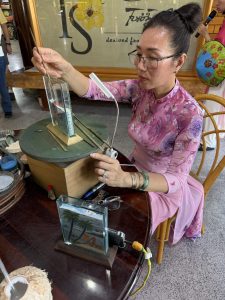
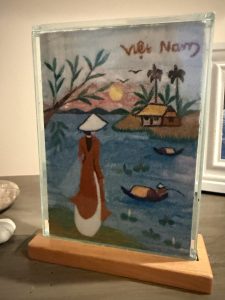
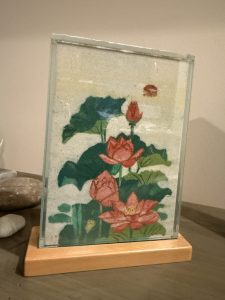
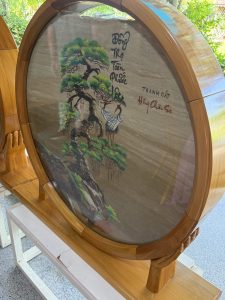
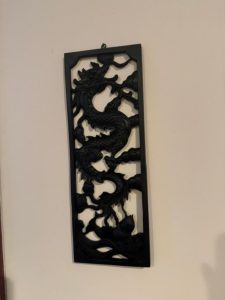
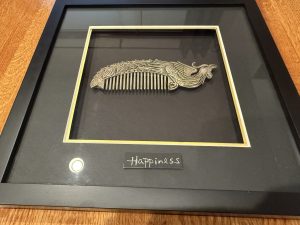
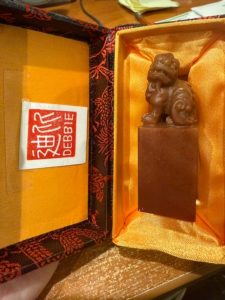
Lately we have also been looking for local art to bring home.   Vietnam was a smorgasbord of opportunities. We opted for three art pieces from this country.  Each item represents a craft style, unique to the areas we visited.  Lacquerware is a real specialty in Ho Chi Minh city .  As shells and paint are meticulously laid between seven layers of lacquer, it can take months to complete a single picture.  We chose a small picture of two birds (we called them lovebirds) to commemorate our trip.  Our second item came from the craft village in Na Trang.  Sand art is not unique to Vietnam, but I have never seen two photos created at the same time, on opposite sides of an acrylic block!  In Hoi An, I picked up a wooden carving of a dragon. The local artist sat among his carving tools in a tiny shop no bigger than a shed. He wrapped my purchase in a Vietnamese newspaper which could have been a collectible in itself.   In Hong Kong I found two special gallery shops as the Stanley Market.  The first was a tiny shop filled with beautiful stamps carved from stone.  I chose a foo dog.  These mythical lions represent power, prosperity and protection.  Within a half hour, the stamp master had engraved my name and personal Chinese “chop” into the bottom of my stone. This treasure is an art piece in itself, but also a nod to my writing, as I begin to put my own “stamp” on things.  From another quiet gallery, tucked way at the back of the Stanley market  we found a shop selling unique pressed paper art and framed artifacts.  This is how I ended up with an antique silver phoenix hair comb, encased in a shadowbox frame.  With the single word, “happiness”. It seemed indicative of all which we experienced on this journey.  The Chinese phoenix, or Fenghuang, set atop the haircomb,  was often given to symbolize a happy marriage.

Artists at work

Our “lovebird” lacquer art.
The artist making my sand art painting.
Front side of the painting.
Back side of the painting
Here’s the one I couldn’t afford. It is about 3 feet across!
Wooden carving


Antique phoenix haircomb                                     Chinese “chop” with my name

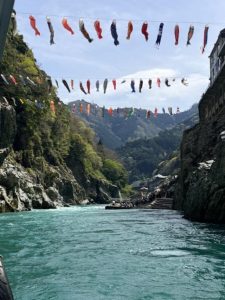
As we reached our final country of Japan,  I was really beginning to worry about space and weight in our suitcases.  We had now purchased several fragile items.  What I had most hoped to represent with my keepsakes was the customs and culture of each country.  When we sailed down the Yoshina River,  through the Iya Valley, we saw these colorful, fish shaped windsocks being flown across the Oboke Gorge.  Families fly them in a celebration held on May 5th, to represent family and wish for their children to grow up strong, brave and healthy, just like the determined carp, swimming upstream.  These are called koinobori, or carp streamers.  They have a permanent display at the gorge.  I loved what they represent and knew that they would soon decorate my own dock, at home.  These were the last items packed into our suitcase.

Koinobori streamers

Every room in my home is quietly telling the stories about our lives.  Our stories have changed from our frugal beginnings as newlyweds, to parents, to grandparents and now to world traveling retirees.  The items we collect are a reflection of us.  Items don’t have to be branded, or expensive to earn a position in our home.  They don’t have to be particularly significant to anyone but us.   The word souvenir comes from the French verb “souvenir” which means to remember.

“A” is For Art at the Airport-ABC Air Travel

Airports are busy places.  Often we rush around and miss much of what is offered there.

Have you ever been stuck at an airport and/or had a long layover and wondered how to pass time?   Why not design a self paced art tour while you are waiting?

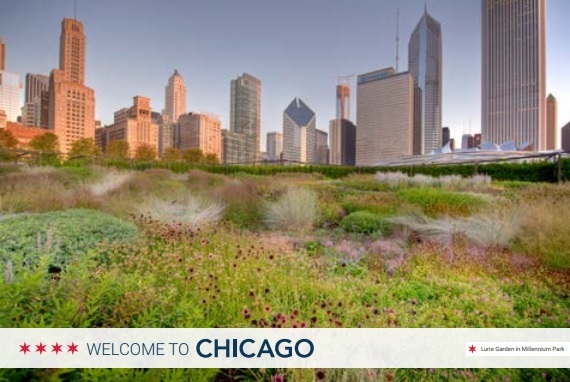
This was how we created our next ABC Adventure.   Our mission would be to see as many art installations as we could, while traveling through airports. We wondered if we could complete an entire alphabet. The next time we find ourselves with some time, it will be a great excuse to walk around and get some exercise.  On this day we passed 2 hours walking from terminal to terminal at Chicago O’Hare Airport.

In our quest to complete the alphabet, we have found paintings, sculptures, fiber art and so much more.  Airport art rivals that of any gallery.  The long walls, high ceilings and open spaces lend themselves to bigger installations of art.

The next time you are stuck in an airport, take a look around.  Can you complete a full ABC adventure with art as your theme?

As we try to complete the alphabet tour, we will continue to add photos as we travel and the airport locations which we find them, so be sure to check back often.

A is For

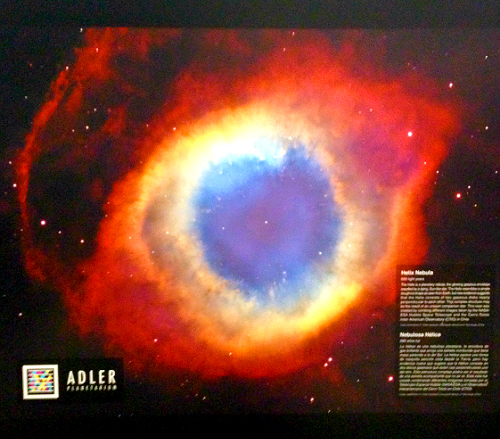
Adler Planetarium Exhibit (Chicago O’hare Airport)

The Adler Planetarium has an exhibit in the Pedestrian Walkway on the way to the CTA O’Hare Blue Line Station. The Exhibit features many posters such as the one above offering views of beautiful constellations in the night skies.

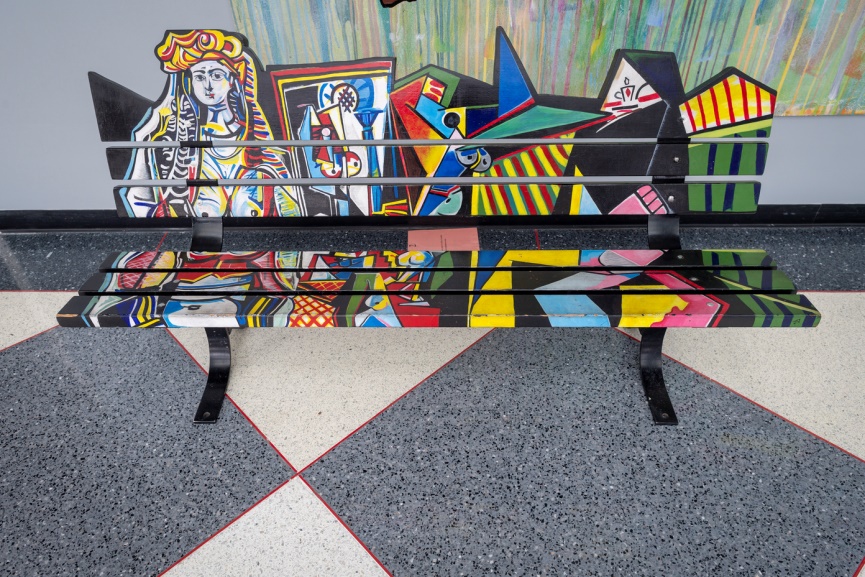
After School Matters Benches (Chicago O’hare Airport)

Located throughout the Terminal 1/2 Bridge and Terminal 5, the After School Matters Benches depict various designs. All benches are hand painted by teen apprentice artists in the After School Matters art program. After School Matters is a non-profit organization that offers Chicago teens high quality, hands-on, project-based apprenticeship programs in a variety of content areas, including the arts, communications and leadership, sports, and STEM.


B is For

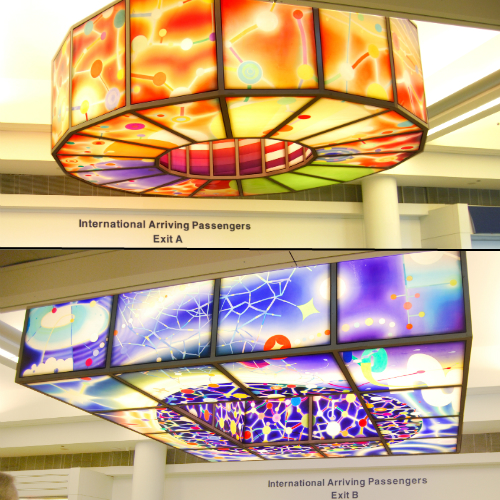
Beacons by Steven Heyman

A large square “Blue Beacon” and a large circular “Orange Beacon” suspended above the “Meet and Greet” area in the lower level of Terminal 5. Illuminated with fluorescent lamps, they measure 16′ x 16′ x 4′. The artwork was commissioned in collaboration with the Chicago Department of Cultural Affairs Public Art Program.

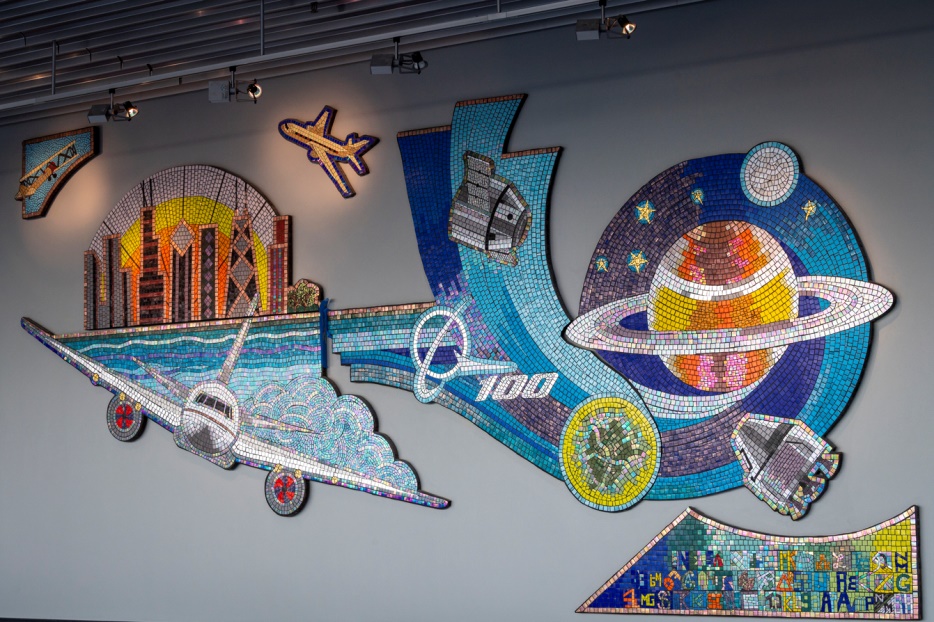
Boeing Mosaic

This mosaic piece, created by After School Matters teen apprentice artists, celebrates aircraft manufacturer Boeing’s 100th anniversary in 2016. The piece hangs in Terminal 3, in the hallway between the Rotunda and H1. After School Matters is a non-profit organization that offers Chicago teens innovative out-of-school activities through science, sports, technology,creative writing and the nationally recognized gallery program.


C is For

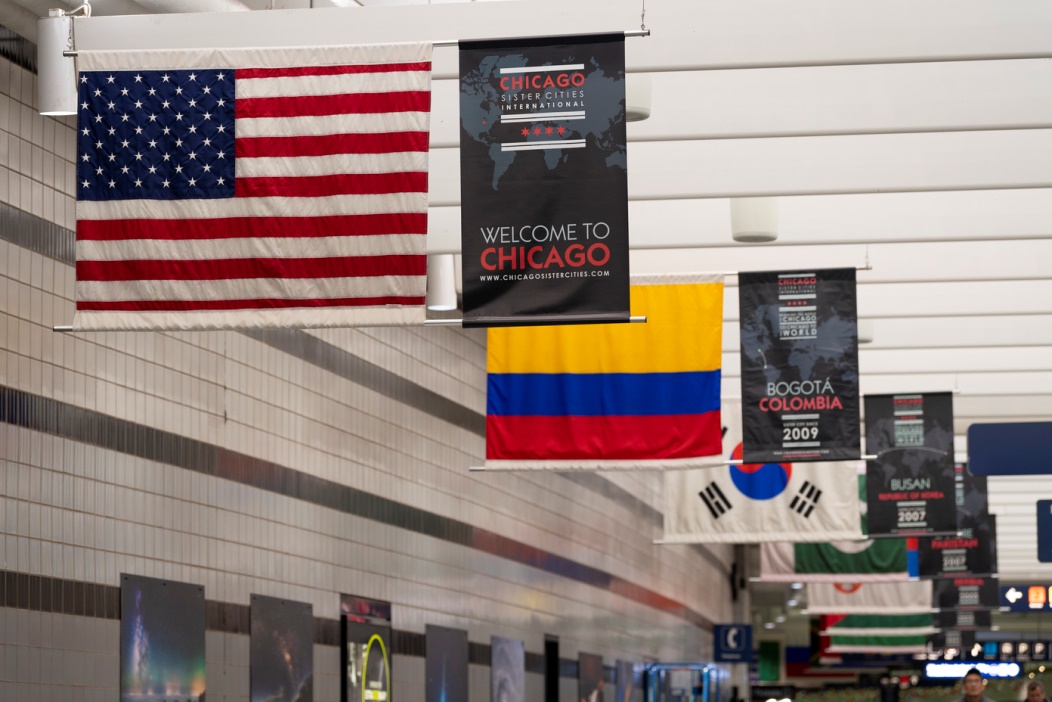
Chicago Sister City Flags (Chicago O’hare Airport)

Representing the nations of Chicago’s Sister Cities, the flags are presented with help from Chicago Sister Cities International. Public art in and around Chicago’s O’Hare International Airport; January 2020.

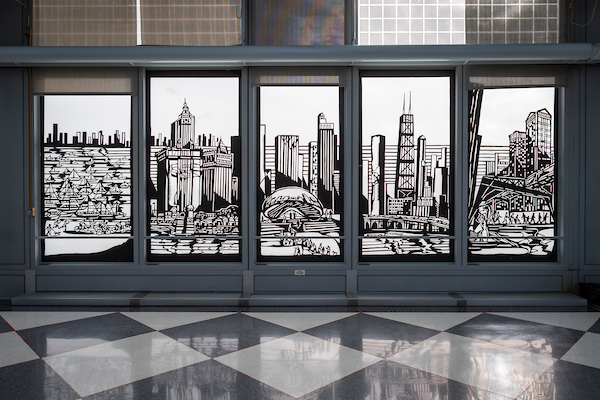
City Windows by Qiao Xiaoguang (Chicago O’hare Airport)

Created using ancient Chinese paper cutting techniques, City Windows depicts iconic sites from Beijing and Chicago. The piece commemorates the friendship and cooperation between China and Chicago. It is located near Terminal 1 Gate B19.


D is For


E is For

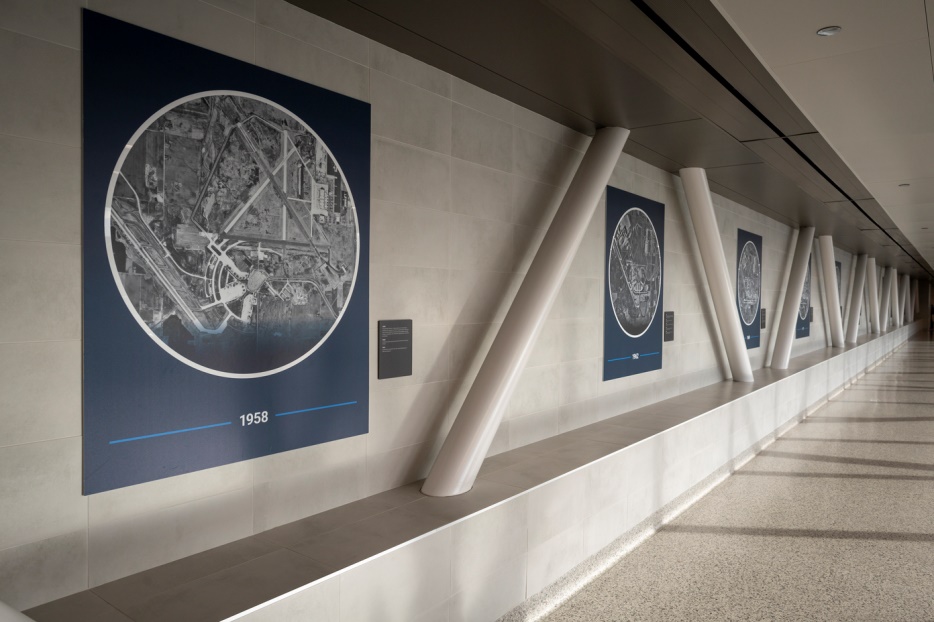
The Evolution of O’Hare (Chicago O’Hare Airport)

This gallery of aerial photos offers travelers a look at how the O’Hare airfield has evolved since it opened in 1945. A timeline of historical events accompanies each photo. The gallery can be found in the Terminal 3 L Stinger (Gates L20-24).


F is For

G is For

H is For

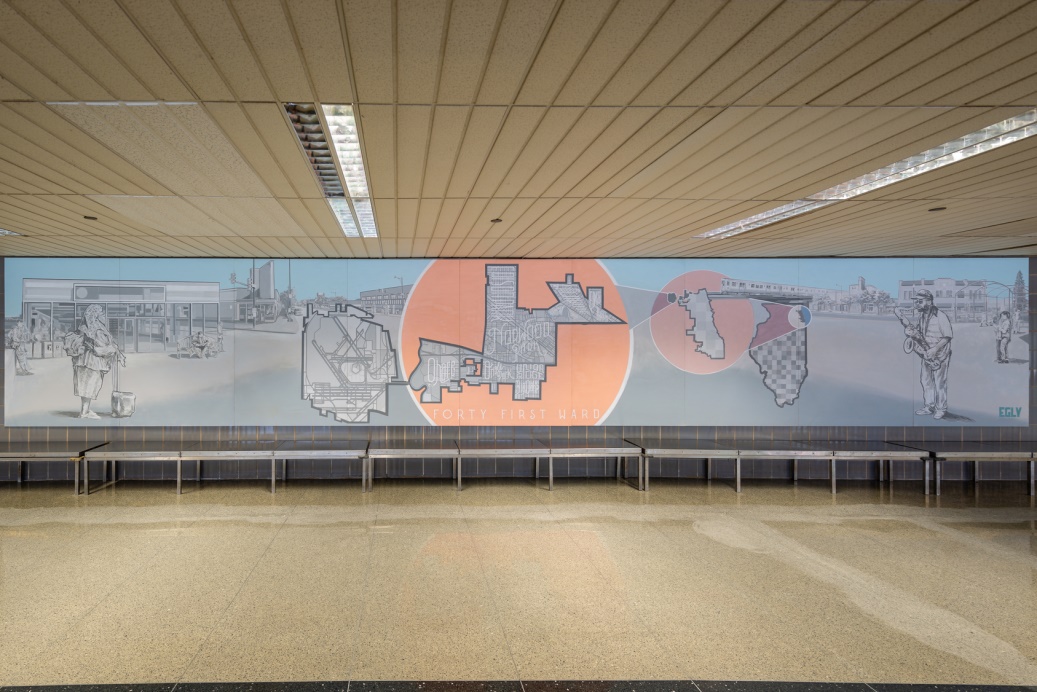
Here and There by Mitchell Egly (Chicago O’Hare Airport)

Created as a part of the City of Chicago’s 50 x 50 Neighborhood Arts Project and initiated during the Year of Public Art, Here and There is a visual representation of the many neighborhoods that comprise the 41st Ward, the Ward O’Hare is within. This piece was sponsored by by 41st Ward Alderman Napolitano’s office. It is located within the airport’s Bus Shuttle Center.


I is For

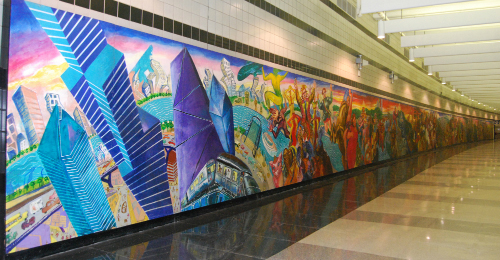
I’ve Known Rivers by Alejandro Ramero and Gallery 37  (Chicago O’Hare)

A 208-foot long mural painted in acrylics, that brings to life the words and spirit of the Langston Hughes poem of the same name. The mural, created by teen apprentice artists from After School Matters, is located in the CTA Pedway. After School Matters is a non-profit organization that offers Chicago teens high quality, hands-on, project-based apprenticeship programs in a variety of content areas, including the arts, communications and leadership, sports, and STEM.


J is For

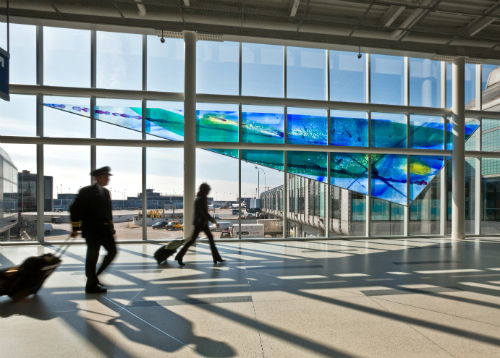
Jet Trails by Guy Kemper (Chicago O’Hare)

This sculpture measures 50 feet in length and 12 feet in height and consists of hand-blown painted glass in cool shades of blue, green and violet. The sculpture is suspended onto the window mullions directly across from Security Checkpoint 3 in Terminal 1 (past security).

K is For

L is For

M is For

N is For

O is For

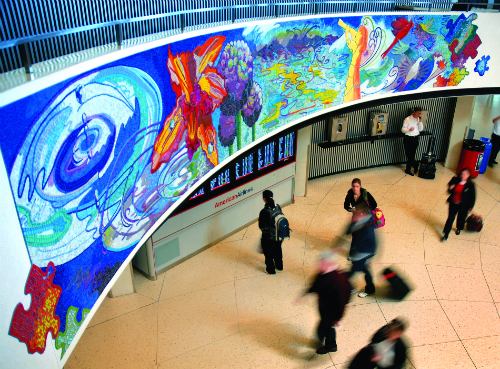
On The Wings of Water (Chicago O’Hare)

A 35,000-piece Venetian glass and tile mosaic shows how air travel and water link cultures across continents and between cities, towns, and rural areas. It was completed with the help of After School Matters student artists and can be found in the Rotunda between Terminals 2 and 3 (past security). After School Matters is a non-profit organization that offers Chicago teens high quality, hands-on, project-based apprenticeship programs in a variety of content areas, including the arts, communications and leadership, sports, and STEM.


P is For

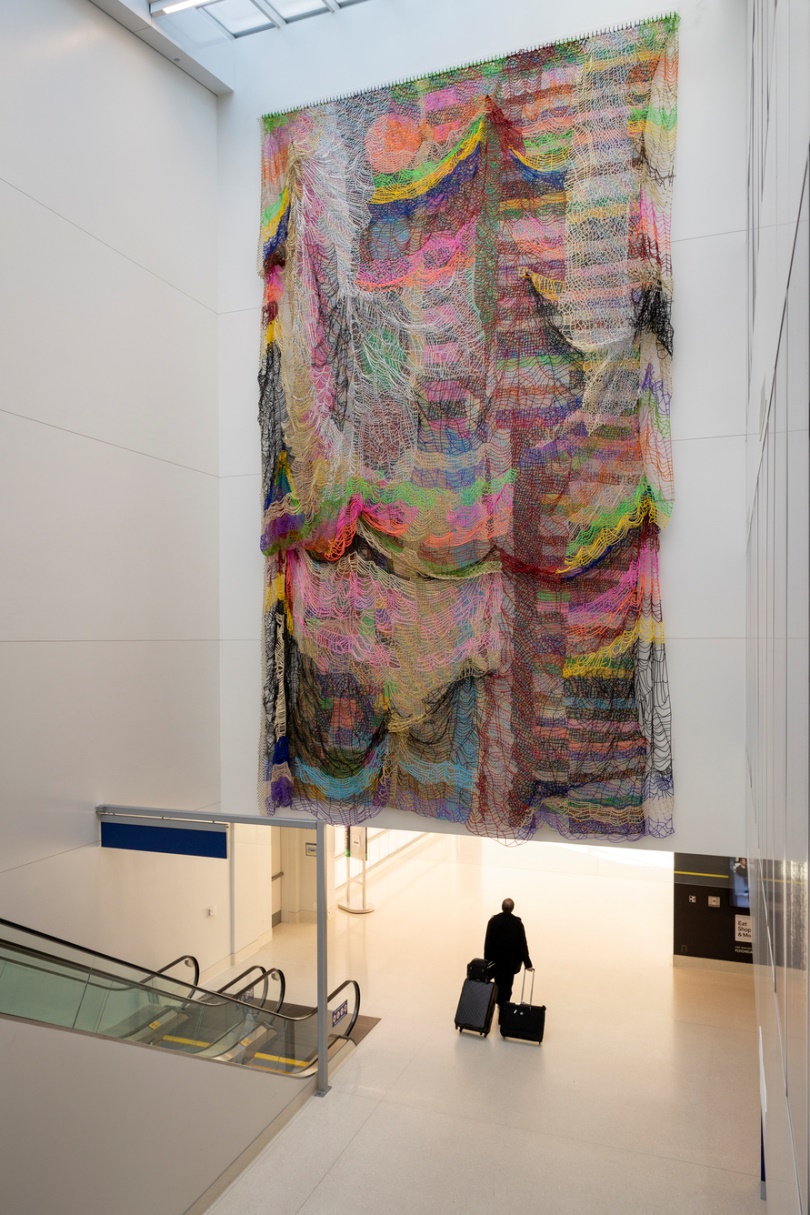
Palimpsest by Nick Cave (Chicago O’Hare)

A dimensional tapestry constructed of hand-strung, beaded shoelaces woven with memory-steeped iconography and patterns through a nylon fishing net base layer. The piece represents a travel to understanding, the web of humanity, and future memories. Its colors come directly from Chicago’s unique skyline and is a continuation of the greeting a visitor takes in through their airplane’s window as they begin their decent for landing. It is located within the airport’s Multi Modal Facility.


Q is For


R is For

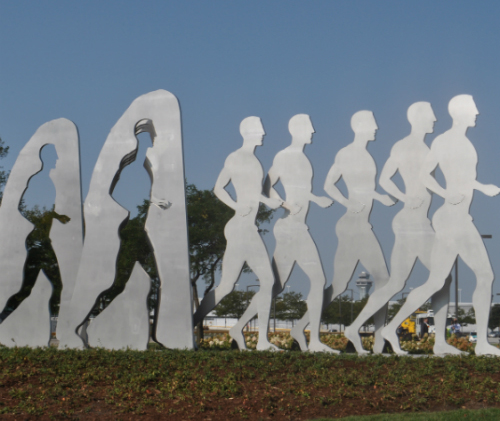
The Runners by Theodoros Papagiannis (Chicago O’Hare)

The Runners, a 16-foot sculpture, is located along the I-190 south side embankment and can be seen by motorists and CTA Blue Line riders exiting the airport. Donated by the Athens Committee of Chicago Sister Cities International and supported by Chicago’s large Greek-American community, the sculpture depicts five runners emerging from antiquity into the modern world. A maquette of this same piece is located within Terminal 5, behind the Arrivals Level information desk.

S is For

77 Neighborhoods (Chicago O’Hare)

This photo exhibit, located in the Terminal 5 corridor approaching the US Customs and Border Protection Federal Inspection Services area, showcases architecture, life, and popular scenes from across Chicago’s 77 neighborhoods.

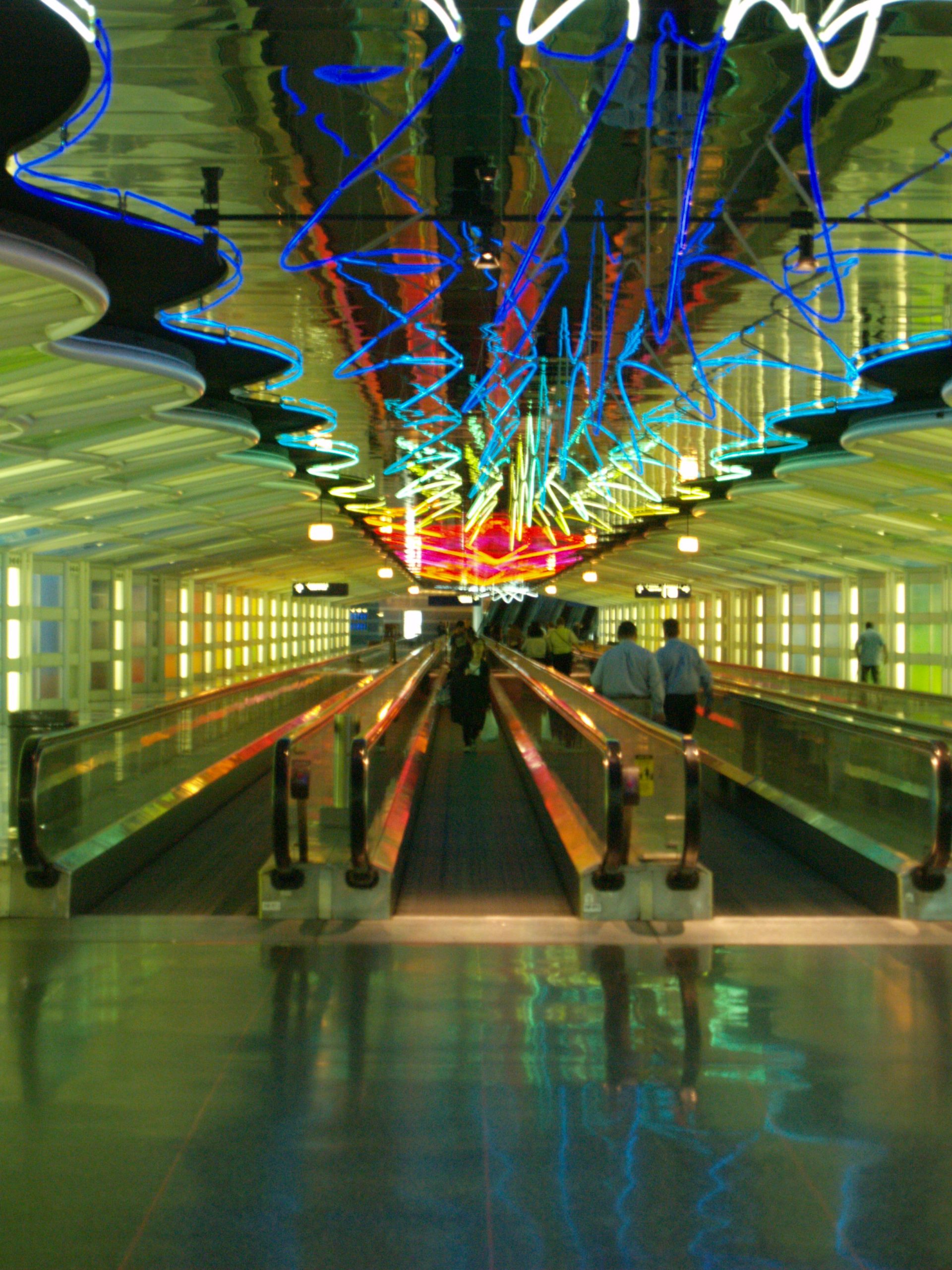
Skies The Limit (Chicago O’Hare)

A multi-sensory sculpture which extends above the walkway connecting concourse B and C in Chicago’s O’Hare Airport.  The artist, Michael Hayden was commissioned by the airport in 1987 to design the 744 foot-long, neon kinetic sculpture which changes color in time to music.

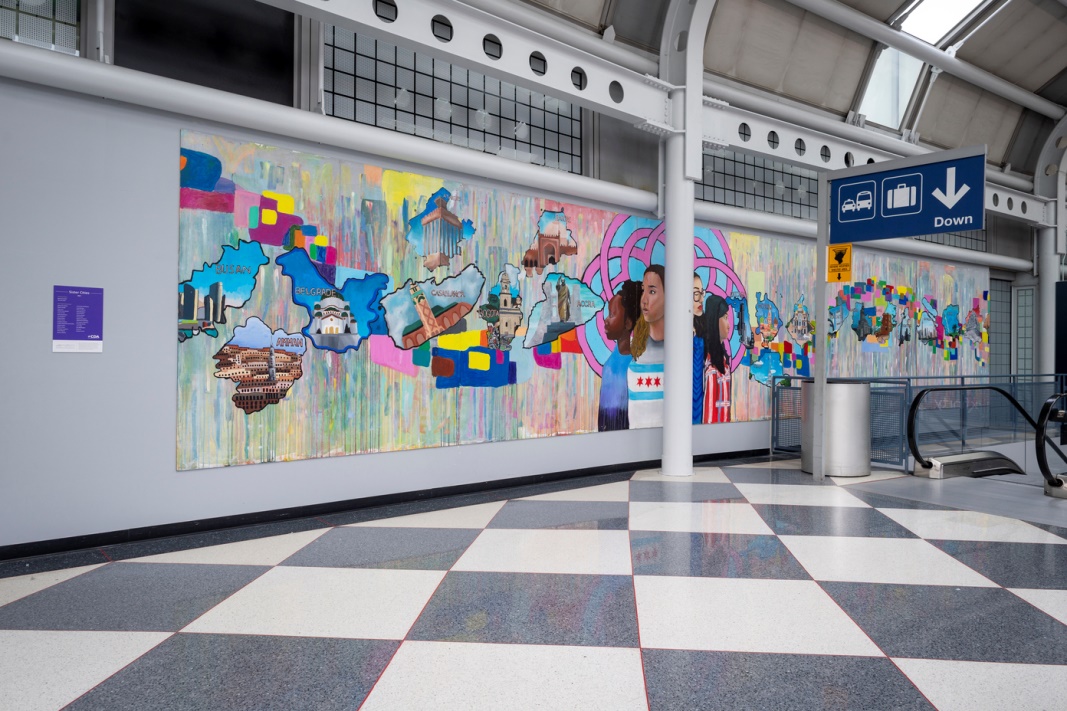
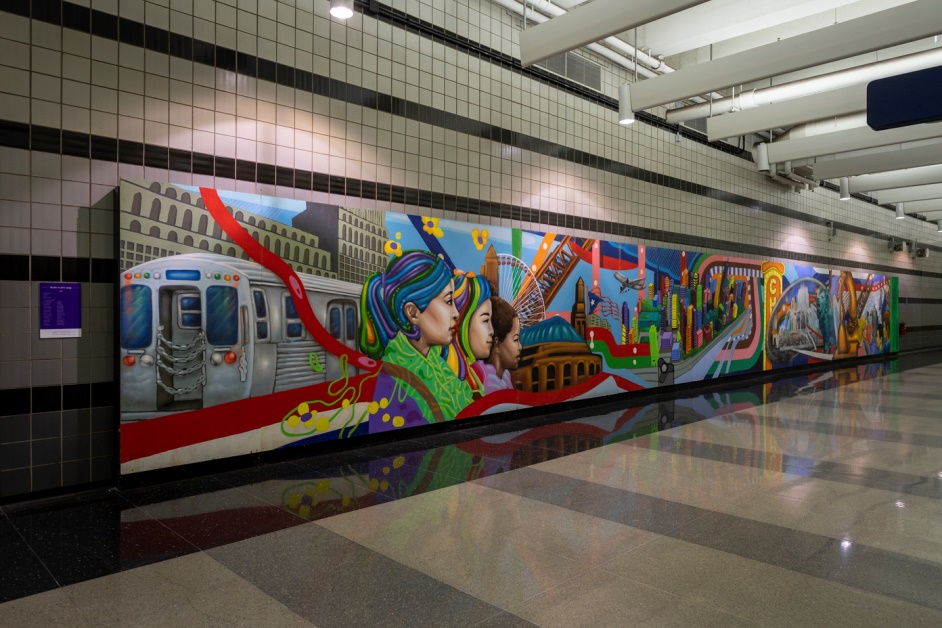
Sister Cities by After School Matters (Chicago O’Hare)

Inspired by Chicago’s numerous Sister Cities, the mural depicts scenes from cities across the globe. Teen apprentice artists from After School Matters created the piece. After School Matters is a non-profit organization that offers Chicago teens high quality, hands-on, project-based apprenticeship programs in a variety of content areas, including the arts, communications and leadership, sports, and STEM. It is located in the hallway between Terminal 1 and Terminal 2.

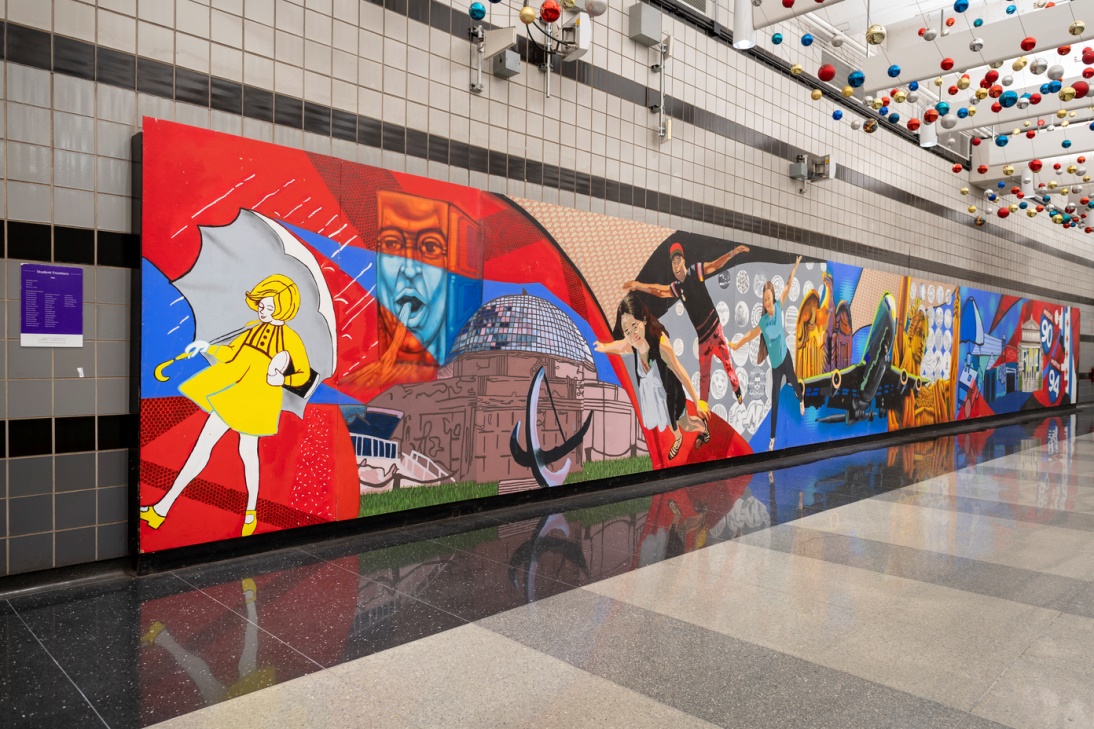
Student Frontiers by After School Matters (Chicago O’Hare)

Teen apprentice artists participating in After School Matters programs created this mural in 2016. After School Matters is a non-profit organization that offers Chicago teens high quality, hands-on, project-based apprenticeship programs in a variety of content areas, including the arts, communications and leadership, sports, and STEM. This mural is located in the CTA Pedway.


T is For

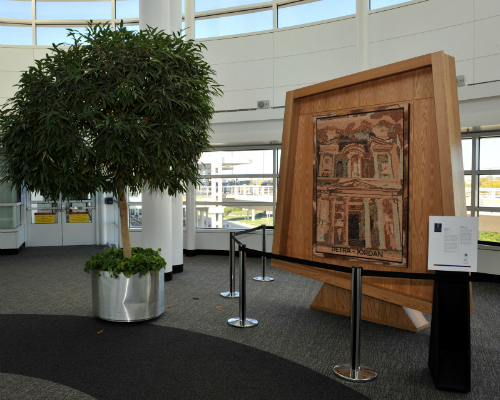
Treasury of Petra by Sonia Twal (Chicago O’Hare)

A limestone and marble mosaic donated to the City of Chicago from its sister city Amman, Jordan.  It can be found in Terminal 5 near Gate M14. The mosaic was inspired by the carved rock and stone facade of the red-rose city of Petra in the southern Jordanian desert. The limestone and marble used in Twal’s representation were obtained from the Petra region.

U is For

V is For

W is For

X is For

Y is For

Youth in the Loop by After School (Chicago O’Hare)

Teen apprentice artists participating in After School Matters programs created this mural in 2015. After School Matters is a non-profit organization that offers Chicago teens high quality, hands-on, project-based apprenticeship programs in a variety of content areas, including the arts, communications and leadership, sports, and STEM. This mural is located in the CTA pedway.

Z is For

A is for Art

Art Prize!
Art Prize!

Within each city, there are many ways to create an “A” themed adventure.  In almost any location,  you could explore art.  There are many ways to do this.  You could make art, or go to an art gallery, or an art museum.  You could further specialize this activity, by viewing abstract art exclusively.  Perhaps an art & craft show is more your speed. There are a lot of ways to focus on art.   One of our personal favorites is Art Prize.

If you are ever in Grand Rapids, MIchigan during  September and October, we highly recommend this free event.  This is a contest, which draws artists from around the world.  For nearly 3 weeks, entries remain on display throughout parks, streets, restaurants, laundromats, theaters ect.  The entire city seems to participate.  This event covers miles of area, so wear your walking shoes!  Artists compete for your vote in an attempt to win the $200,000 cash prize. Visit for an hour, or stay for a week, there is plenty to explore.