“N” is for Na Trang (Vietnam)

Sometimes our ABC game just doesn’t line up in alphabetical order, such was the case with our time spent in Na Trang, Vietnam.  Today’s activity actually took place on March 30, 2026, a couple of days before Halong Bay. Today was a welcome late start.  We would be on tour from 9:45-3:15pm.  One of our shorter adventures.

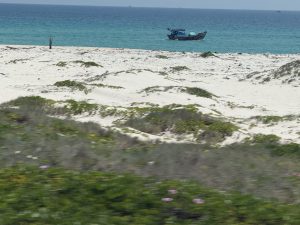
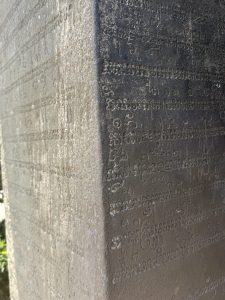
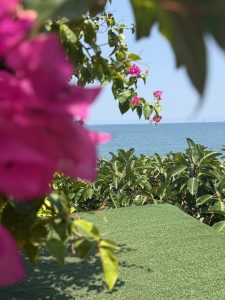
We ported at Cham Ran, which is a military base.  As we disembarked, we were repeatedly warned that no photos were to be taken, until outside of the military zone.  We would be under constant surveillance until we were off the base, which ran for about 20 miles through some of the most pristine waterfront and beautiful forest that I have ever seen.  I would say that the military here enjoys some pretty fine accommodations along the pure white sand beaches!  These photos were taken just beyond the base.
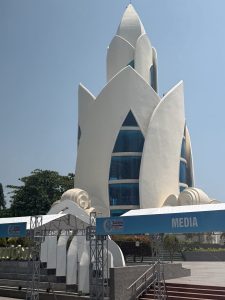
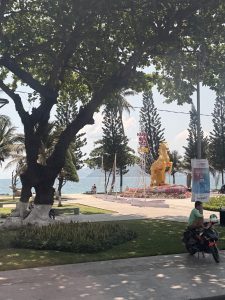
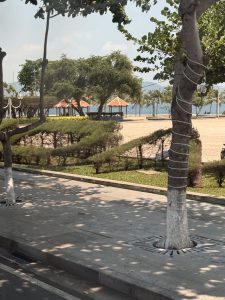
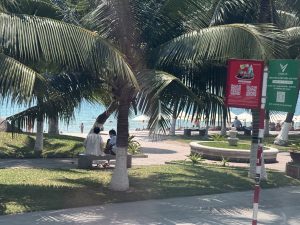
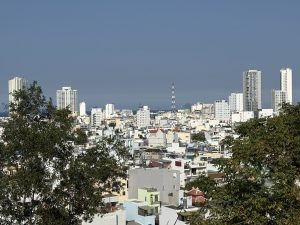
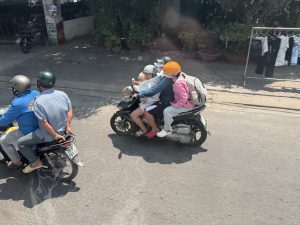
Once outside the base, we entertained ourselves along the one and a half hour journey to Na Trang by simply observing outside the bus window.  I will be eternally fascinated with the motorbikes of Vietnam.  On this day we saw an entire family, including a child eating ice cream and carrying the pet dog, on one bike.  We also saw fascinating architecture and beach front sculptures.  I was intrigued to learn that the beaches are mostly used by tourists.
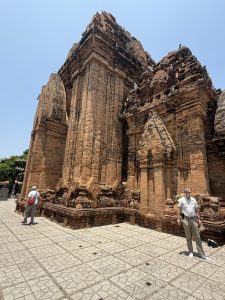
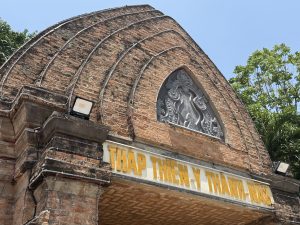
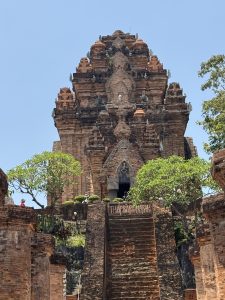
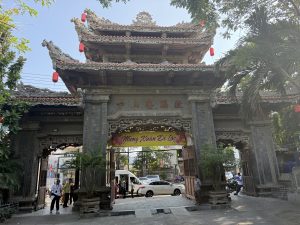
The highlight of this excursion was going to be the Po Nager Cham Towers. The word Ponagar  means “the mother of the country”.   Perched on a steep hill, overlooking the Cai River, the Ponager  Cham Towers are a 1,000 year old Hindu complex, which were built to worship the Queen Po Ina Nagar.  According to the Cam people, she was the” goddess of creation, coming out of the clouds and sea foam to give them bountiful harvest, as well as a peaceful life”.  Surrounded by mountains, rivers and natural beauty, one can understand why the towers were built here.  Originally there were more towers but only 4 remain today.  In 1979, Ponagar Tower was classified as a national monument. This has now become a popular tourist destination.
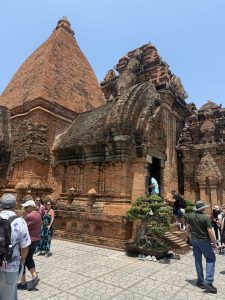
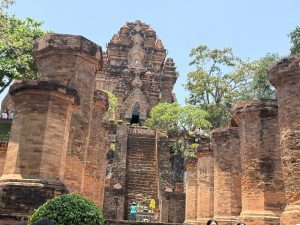
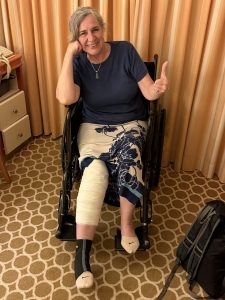
I had been so excited to see this stunning architecture but as luck would have it, fate had different plans for me.   As I took my final step at the top of the steep entrance, I fell backwards (flipped actually) down the stairway leading to the towers.  There were so many people on the stairs, we will never know if I missed my footing, or if I was knocked backwards. Thankfully Alan was quick on his feet and ran below me to catch me, preventing a much more serious injury than the fractured foot and sprained knee ligament that I incurred.  We still had a full day of touring ahead of us and not wanting to go to a foreign hospital, I carried on until I could go to the onboard medical facility, upon our return to the ship (about 4 hours later). I managed to hobble my way through the Cham Towers, but unable to bear much weight, the knee and ankle soon began to swell and hinder my ability to move very far.
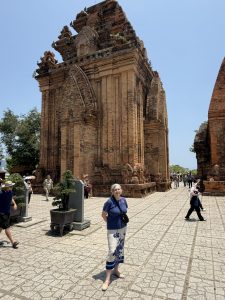
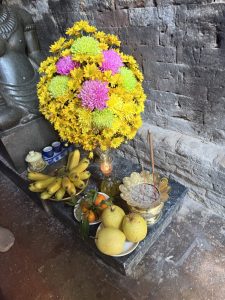
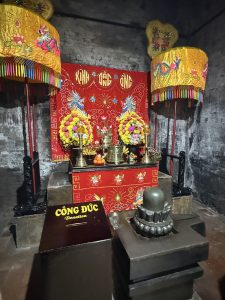
The temple at the tower was filled with flowers, fruit and incense.  Due to its small enclosed space, the scents were overwhelming to many of the visitors. I was fascinated by all the details in this architectural masterpiece. The temple’s central image is a 1.2m tall stone statue of the goddess Yan Po Nagar sitting cross-legged, dressed only in a skirt, with ten hands holding various symbolic items.  No photography of the deity was allowed.
 

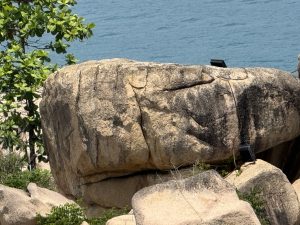
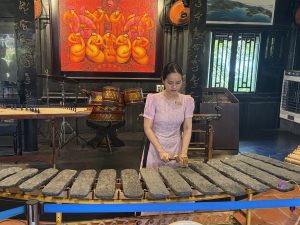
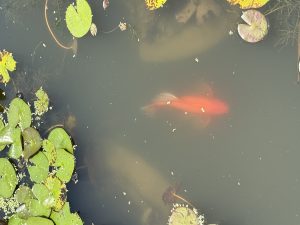
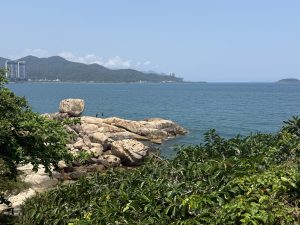
Following our visit to the towers, we went to the Hon Chong Promontory.  This is a unique rock formation of stacked rocks which jut out into the harbor.   There are two clusters of rocks.  One is called Hon Chong which means husband in Vietnamese, the other is called Hon Vo, meaning wife.  I was unable to venture to the rocks, so  Alan volunteered to go ahead, to see if he could locate the giant five-fingered hand print embedded on a boulder.   According to a folktale that has been passed down for generations, a giant man was fishing here, when a giant fish swallowed him and pulled him away.  The man tried to pull himself back to shore, while tightly holding a fishing-rod in one hand and pressing the other hand against the boulder, which left the imprint we see today.   Alan was unable to get down to the handprint in the time allotted but enjoyed visiting the promontory.  In the meantime, I was gently exploring the waterfront building leading to the rocks.  There was a group playing traditional Vietnamese instruments and I was quite content to sit and listen to them as I watched the koi in a nearby pond and simply enjoyed  the flowers which seemed to surround this area.  Alan wasn’t willing to leave me alone for very long so he soon rejoined me.
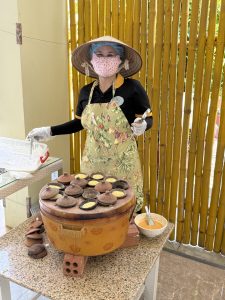
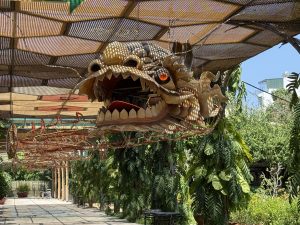
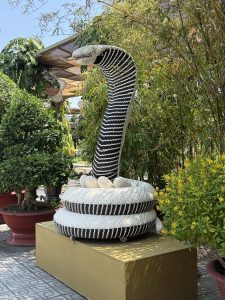
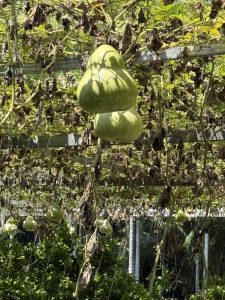
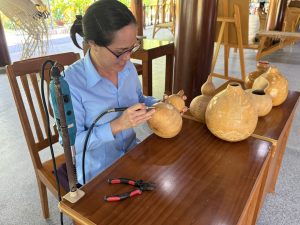
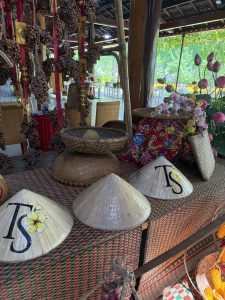
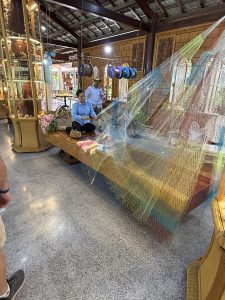
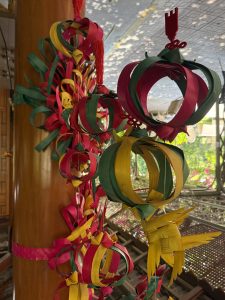
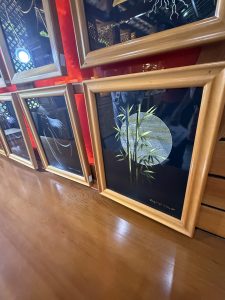
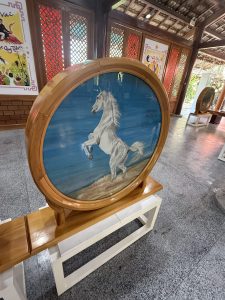
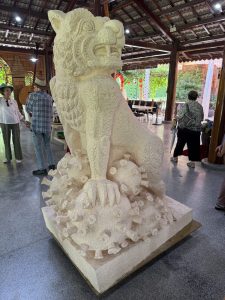
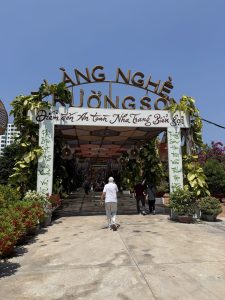
By now, we were already halfway through our day.  Lunch was next.  Considered a hidden gem, we arrived at the Lang Nghe Truong Son Cultural Village. First we experienced a massive Vietnamese buffet, with every kind of unique food available.  I especially enjoyed the stuffed pancakes.  We moved from the buffet through a courtyard filled with interesting animal sculptures and peaceful gardens  into the craft village.  Visitors to the Craft Village can see the artisans weaving mats, making hats and knitting nets.  We also observed artisans making sand paintings and carving gourds.
 

Our next stop of the day was the Dam Market.  By now my ankle had swollen considerably.  I did not feel like bumping into people or getting stepped on in a crowded space, so Alan and I opted to sit outside and enjoy a refreshing drink from a local vendor.  Knowing I was heading to medical as soon as we arrived back, I used the time to fill out an incident report.  The tour guide wasn’t very happy that I had fallen.

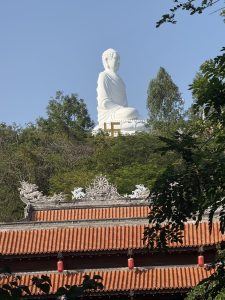
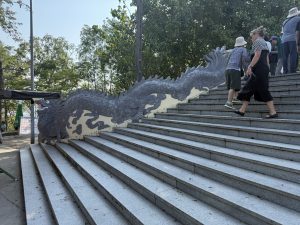
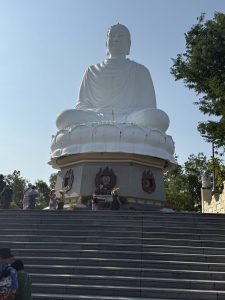
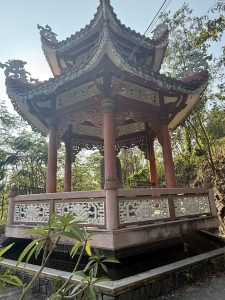
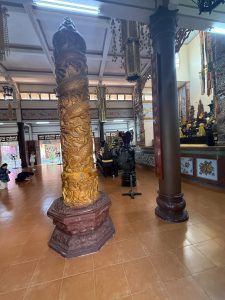
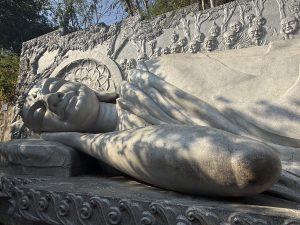
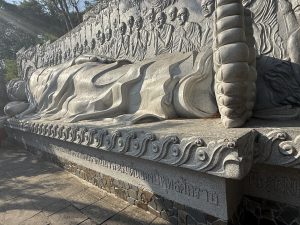
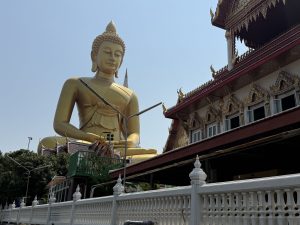
Our final stop was the Long Son Pagoda. Owning several Guinness World Records and considered as the largest pagoda in Nha Trang, Long Son Pagoda is worth visiting once in a lifetime. The huge white Buddha towers over the city of Na Trang and is visible from quite a ways away.  This was another impressive highlight which I was going to have to sit out, as it required conquering 193 steps to the top of the hill.  The temple itself was built in 1886 and has seen many wars that left a mark on it. The temple is now the center of the Vietnam Buddhist Studies Foundation, where many monks study in its premises. Alongside the sitting Buddha statue on the hill, the temple grounds also house the reclining Buddha, also known as the “sleeping Buddha.”  I am so grateful to Alan for completing the mission, just so I could enjoy the photos.
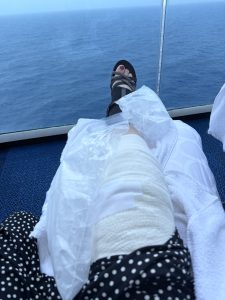
From here, we headed back to the ship.  The hour and a half drive passed quickly.  Upon returning to the ship, I immediately hobbled my way to the medical bay on the 4th deck, where I spent the next hour being x-rayed and prodded, confirming that I had a fracture of the foot and a badly sprained knee.  The knee was immobilized and a compression sock was placed on my foot. I left the medical bay in a wheelchair with strict orders to stay off my foot/knee and pack it in ice for at least the next 24 hours.  Thank goodness we had a sea day the next day.

Health Update:  This injury would prove to be more serious than originally thought.  I had actually fractured my foot in two places, including the talus bone, one of the hardest bones to break in the body.  Upon returning home from this travel adventure, I was immediately placed in a walking cast for over 6 weeks.  This was followed by months of physical therapy 3 times a week.  Due to the complex tears in the ligaments and tendons and my connective tissue disease, I was warned it will take over a year to recover from this injury.

My advice?  Travel everywhere but don’t roll down stairs and always carry travelers insurance!
 

“H” is for Heartland (Thailand)

The term heartland refers to an area which is “essential to the viability and survival of the whole.  By concentrating resources and focusing on economic and political self- sufficiency, the area serves to become impervious to attack.”

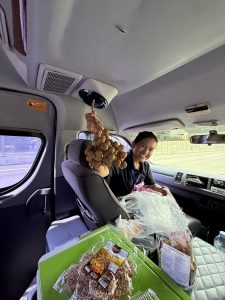
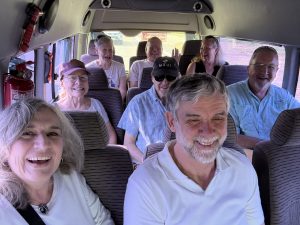
For our 5th and 6th day we are docked in Leam Chebang overnight.  It is nearly 2 hours from the major city of Bangkok. Some people have gone to Bangkok for the two days.  The ship tour was mostly focused on food (not our thing), so we are on two, private, day tours instead and as a bonus we get to return to the ship to sleep and eat…no repacking!  We have chosen to split our adventures between  the cities of Bangkok and Pattaya, to try to experience as much variety as we can.  (More on our Pattaya adventure soon).  Our guide for the two days is called Pooh.  She exudes happiness and it instantly sets the tone for the time our group of 8 people,  will spend with her.  From the moment we begin our drive to Bangkok she keeps us busy, trying different Thai snacks and pointing out interesting things to see along the way.

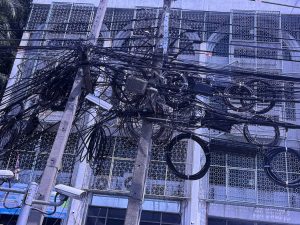
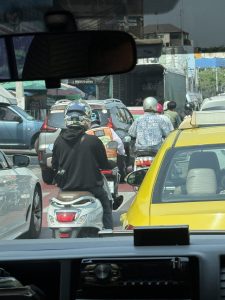
We watch in awe as the motorbikes navigate the busy roadways,  weaving between busses, nearly disappearing under the wheels., riding knee to knee with other motorbikes and scooters.   This is the most common form of transportation and there appear to be few rules of the road., except to read the expressions  of the drivers and feel the rhythm of the traffic.  There are no horns used in Thailand, it is considered offensive.  Traffic is as automatic as a a heartbeat. Sometimes entire families ride on a single motorbike.,  We saw newborns strapped to their mothers, a child holding her dog,  The industrial area seemed to stretch from the port all the way to Bangkok.  We passed time by noting the differences between our home and Thailand.  We marveled at the massive excess cables coiled on poles, meant to quickly restore electricity to the cities. Not one person asked “Are we there yet” on the two hour journey!

Bangkok is  home to 10 million people, the undisputed heartland of Thailand, serving as its primary political, economic and cultural center and it was our destination for this day.  The 12 hour experience was a complete sensory thrill and a photographer’s paradise. Everything in Thailand is colorful.  As we approached, the city, gleamed with skyscrapers built alongside ancient temples. Everywhere I looked seemed to be either sparkling, white or gold.  There are over 30,000 temples throughout Thailand so you never have to look far to find the next one!   We would be visiting four locations today and I expected to fall in love with this country even more than I had in 2023.

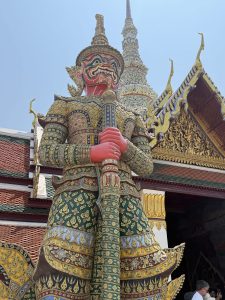
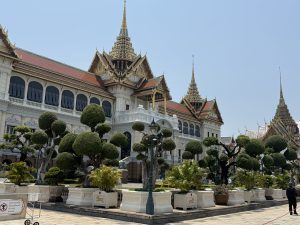
Our first stop was the Royal Grand Palace.  I am going to have to revisit each place on different posts for an in depth explanation of the significance, to do each area justice.

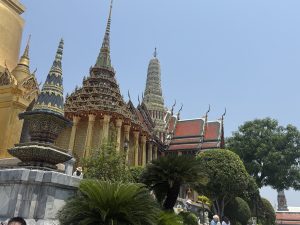
The Royal Grand Palace represents one of the most important places in all of Thailand. Construction began in 1782 under  King Rama I.  The palace would serve as the official residence of kings until 1925.  During this period it was not only an administrative site but also the religious capital of Thailand.  Rather than being a single structure, the Grand Palace is comprised of numerous buildings, halls and pavilions set around open lawns, gardens and courtyards.

As we strolled through the site we tried to picture it when it was home to thousands of guards, princesses and servants.  There were so many people who called this home, that it was once referred to as a city within a city.   Today, over eight million people a year visit to see this spectacular architectural wonder!

By the early 20th century, more palaces had been built around the country.  Although the Kingdom had already started moving away from the Bangkok Palace, the end of the monarchy in 1932 was the last time the Royal Grand Palace was used as a home.

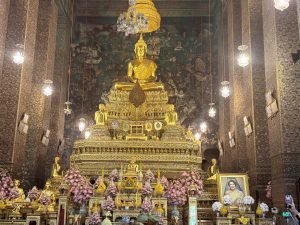
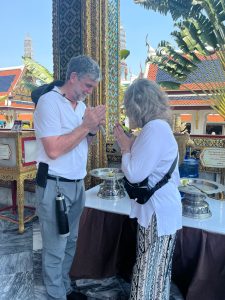
Our next stop was the Royal Temple , which is actually a chapel, within the Royal Grand Palace.  It has all the features of a temple, except for living quarters for the monks.  This sacred space holds the Emerald Buddha, which has been located here since 1784 but it is much older than that and traveled around the country for years, working miracles. When the Royal Grand Palace was built, King Rama I created a special temple to house it. With the reverence given to this Buddha I expected a massive figure. The green colored statue is only 26 inches tall but sits atop a 29.5 foot high pedestal! He is not emerald in color at all, but rather a deep green, likely carved from jade or jasper. He has 3 outfits, made of gold, which are changed seasonally by the current King, The Emerald Buddha is one of the few Buddha’s in the country which may not be photographed, except from the doorway of the temple.  In the Thai culture, bowing is a customary way of showing respect. I had a very special experience as my tour guide showed me how to correctly bow and accept Buddha’s positive energy.  The Thai people believe the figure brings prosperity to their nation. It was very moving to partake in a ritual so personal to the Thai people.


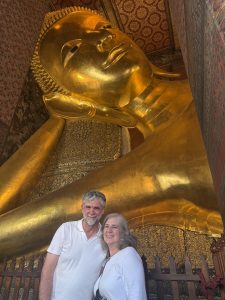
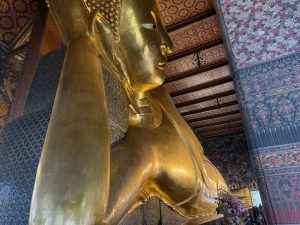
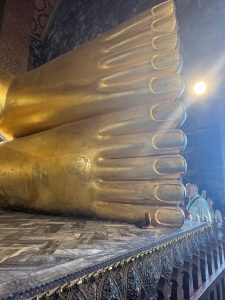
After a couple of hours, we made our way to Wat Phra Chetuphon (Wat Pho) to see the Reclining Buddha.  It was very similar to the one we had seen in Phuket.  The massive Buddha is housed inside one of the buildings as part of a whole temple complex.  Wat Pho is actually the oldest temple complex in all of Bangkok.  In fact, it was here before Bangkok itself!  After the old capital was destroyed by the Burmese in 1767, King Rama I would expand the temple to add artifacts moved from Ayutthaya (the former capital).


In the early 19th century, Rama III would again expand the temple to help grow Thailand’s first university.  The Reclining Buddha now lies in a building that was constructed around the same time.

The image of Buddha lying down is meant to represent his final moments on earth, when he enters the state of nirvana.

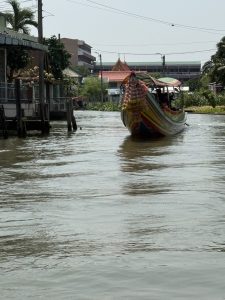
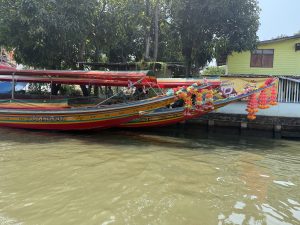
As we were immersing deeper into the cultural side of the city.  the morning slipped slipped into afternoon . Next we stepped onto a long tail boat…another new mode of transportation to add to our ever-growing list of ways to travel.  A long tailed boat is basically a canoe with a roof and powered by a common automotive engine.  They are steered with a long paddle.

Canals (khlongs) were originally established to transport goods. These busy waterways are still used today.  The first canals were dug in the late 18th century when Rattanakosin (now Bangkok) became the capital of Thailand.  The canals were created by digging a wide trench, which linked to the Chao Phraya River.  More canals followed and became important, not just for the defense purposes but also for irrigation, drainage, trade and transportation.  By the 19th century, Bangkok had developed a big canal network with hundreds of kilometers of waterways.  It is during this period that the canals became known as the Venice of the East.

During the 20th century, the city expanded but shifted its focus to building new roads, rather than canals.  They are still used, they just hold less importance now that there are roadways.


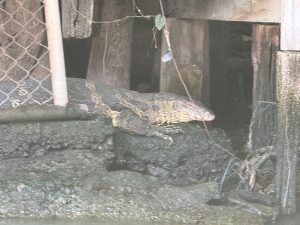
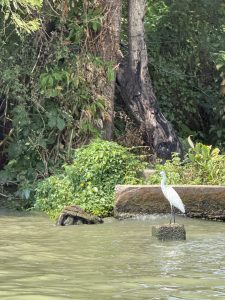
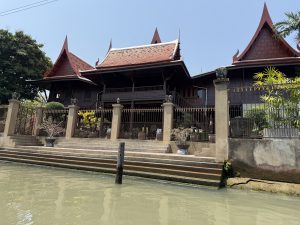
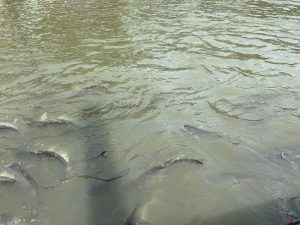
The canal trip was a perfect juxtaposition to the  busy city and temples.  The water was filthy and life was happening all around us. Giant monitor lizards basked in the sun and egrets stood motionless waiting for a fish to happen by.    Houses built on stilts were often seen crumbling alongside ornate properties built of teak.  Along the canal, vendors hawked food and goods from passing boats and my camera simply couldn’t take it all in.  Our tour guide passed out what appeared to be brightly colored Cheeto’s, which we fed to the thousands of catfish occupying the murky waters.  The gaping mouths and thrashing bodies startled many of the guests., causing them to lean to one side of the longboat, which in turn shifted the balance.  For so many reasons, this was not a waterway I wanted to be dumped into!

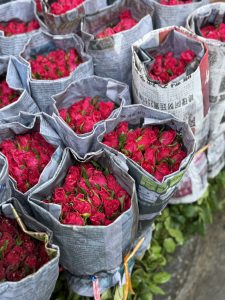
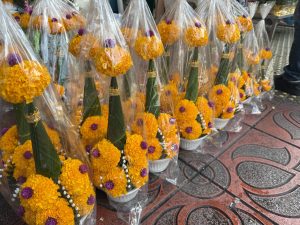
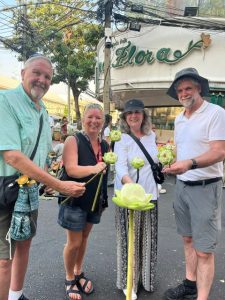
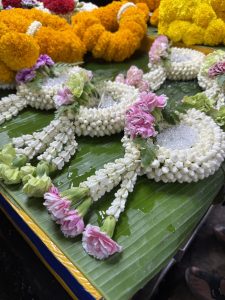
Our last stop for today would be in the Flower Market. It was super hot and half of our group chose to stay in the van, missing one of the most beautiful parts of the tour.  We had arrived here at the end of the day, so the stalls were less full and the market was less busy.  Still, the market was very impressive.  As we watch a weathered garland maker ply her wares outside a five star hotel, I am once again struck at how past, present and future blend harmoniously,  It is thought that the flower markets evolved from the fish industry.  The flowers were brought in to cover the strong odors.   Eventually the flowers came to become their own market, providing service to the temples and villagers alike, so now instead of fish, there are garlands on ice and it seems every color of flower on earth was represented.  Many of the elaborate flower arrangements are created as alter pieces and sold to the wholesale market. As our guide walked us through the market, jasmine infused the air, creating a complete sensory experience to our day.


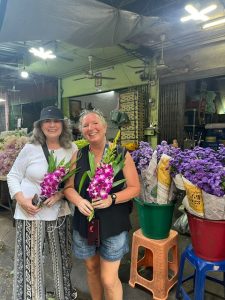
Our guide taught the 4 of us braving the heat, how to fold a lotus to reveal the flower. I purchased a small bouquet to bring back to our cabin. As is the Thai way, our guide was secretly purchasing  jasmine garlands for all of us, a blessing of sorts and a special treat for the others in our group who had sat out the flower market.

It was nearly 7pm by the time we were back on board the ship.  Bangkok had been a photographers playground with robed monks, tuk tuks, sparking temples, colorful boats and flower markets.

It had been a perfect day and I had a new bouquet of flowers to go in our room! I had even brought a collapsible vase specifically for this moment. The garland gift was hung on our wall and would grace our cabin for many days, the scents and beauty reminding us of the lovely Thai people we had met, beckoning us to return to the heartland for more.


CruiseTip:

You can bring fresh flowers on to the ship, you just can’t take any agricultural products off the ship.