“A” is for Arranging an ABC Adventure

The ABC Adventure is meant to encourage you to explore deeper and is intended to assist you with documenting your journey,  You are using your camera and language skills to document a story while adding some creativity to both.

An ABC Adventure is part personal guidebook, part word game, part photography challenge and part Scavenger Hunt.  It is all  fun.

“Rules” of the Game

  1. The first rule is that there really are no rules!  There are however a few missions.  The purpose of the ABC game is to live more deeply and to document the journey, but mostly to have fun along the way.
  2. The game is similar to a Scavenger Hunt.  It may be played by yourself, with a group, or in teams. You will take one photograph representing a word or phrase (that you choose) for each letter of the alphabet. You do not need to complete the alphabet in order. There is no time limit to the game (unless you choose to set one).
  3. Begin by choosing an anchoring theme for your game.   Put your anchoring theme at the top of the page.  This offers a little confinement to your mission.  ABC games are not limited to travel. Here are a few themes we have used:
  • Art in an Airport
  • Birthday Celebrations
  • Date Nights
  • Exploration By Country
  • Exploration By the City

You could also do an ABC food tour, an ABC cruise ship tour, an ABC art in the airport tour, your ABC Adventures are only as limited as your creativity.

  1. Write out the alphabet leaving blank space next to each letter.  Each letter will represent a single word or phrase. Once you assign the word or phrase, you will take a photo to represent it (or you can take a photo first and then assign it to a word). There are no limits to how creative your photography  or word choices may be.  In fact, the more creative, the more interesting the game becomes.

The choice of creating a guide before you begin a game is entirely up to you.   You can follow our process below, or jump straight to the Scavenger Hunt section.


Creating a Guide  (Wordplay and Personal Guide)

  1. The value in making a list is to see where you are going to be challenged.  Some letters are more difficult than others to represent.   Write out the alphabet leaving blank space next to each letter. We generally create our lists on the computer because the word list can become very long.  By having all the options, you can quickly see where an alternate word or phrase choice might exist.  Mostly the guide is a long series of questions.
  2. Where are you going?  What is the mission of this ABC Adventure? If you are doing a travel themed ABC Adventure, this may be continents, countries, states, cities, towns and/or villages.  If you are limiting your exploration to something like the cruise ship, then you might  write “C” for cruise or “I” for Island Princess (or whatever specific ship you are on).  If you were looking just for art in a museum then you might just record the name of the museum.  In our example below, My theme is ABC’s By State.  We knew we would be visiting several Hawaiian islands but I began with H-Hawaii then added K-Kauai since I knew we would be experiencing at least that much.  My list will eventually expand to include Maui and Oahu as part of an overall Hawaiian Adventure.
  3. Next ask yourself who is going to play the game/travel with you.  In our case, it will just be Alan and I, so I will add and “A”-Alan and “D”-Deb to my list.
  4. How will you get there? (example A-airplane, C-cruise, “R” Rental car etc).  Do you know of any other transportation you would like to experience? *Since much of Kauai  inaccessible by road, it is recommended to see from a sailboat “S” , “C” catamaran and/or “P” plane.  Do you already know if certain tours use a specific kind of transportation? You could use “K” for kayak.
  5. Next, begin to research tours or activities you might be interested in.  This is your “what will we do question”.  I often visit Trip Advisor or Pinterest to find fun things to do.  We knew we wanted to take a flight tour over Kauai so our abc list  began to look like this… A-airplane, F-flight tour  etc.  Always list multiple terms for each word, this is how you will eventually fill the entire alphabet with options.  Move from broad to specific.  You could also begin to get creative here…what about the letter “U” for Up (as in up in the air).  Each guide will be personal to your interests, activities and goals.
  6. Begin to fill in things you will likely see on the tour. For example,  as we researched the flight tour we knew we could use  “N” for Na Pali coast and “W” for Waimea Canyon. These were both included on the tour. As we read about  these places we noted that Waimea Canyon was also referred to as the Grand Canyon of the Pacific.  We cross referenced the list with a “G”.      We knew these areas would be “L” -lush.  Our words were beginning to get a little more descriptive.  We knew that we would be seeing “W”-waterfalls and “R” rainforests.  We noted that the Na Pali coast was undulating. We added these words.  Hint, words spark creativity of photos and vice versa.
  7. Stay open to discovering new things to explore.  As we researched our options, we also discovered many other things we might be interested in exploring such as “F” for Fern Grotto and  “R” for Riverboat cruise, if we had time.  My mind raced with the possibilities of how we could spend our time.  What restaurants are recommended?  What sites are top to see?  You likely won’t “do” everything on your list but writing down everything which interests you, means that you will have numerous options  when it comes time to actually going on your personal journey.  If it were raining, you might need to move an activity indoors, you will already know where to go.  This is the personal guide portion of the game.  Think of it as a travel guide.
  8.  Now imagine the culture.  What foods, games, dances, music, language etc do you want to discover.  Your abc list might begin to look like “H”-hula and  “U”-ukelele.  Is there a traditional dress which people wear?  For example, “A” Aloha Shirts.
  9. Begin to add other categories which interest you such as A-architecture, animals, B-boats, beaches C-churches etc.  Continue to move from broad to specific for example you could add A-animals but research showed that we would likely see C-chickens and W-whales on this trip, so they were also listed.
  10. Keep asking questions and adding to your lists.    What foods are eaten?  Example “M” Macadamia nuts, “S”-shave ice.  How do they taste or smell? Sweet, sour, pungent?  What time of year is it? What season are you in? What month is it? Is it dry, arid, wet or humid? Sunny or cloudy?  What do you hear? What colors could you add? What emotions are triggered?  Do you expect to stand in awe?
  11. *The more descriptive terminology you add, the more interesting your writing will become when it comes time to tell your story.  This may also give you some interesting ideas for photography.
  12. Keep building  your alphabet lists with creative exploration of language.  For example “C” could be coffee (which Kawaii is famous for) but perhaps you already have a “C”, you could also use “J” for Java.
  13. Add some colors to your list.  Kawaii is very “G”-green but dig deeper and add interesting words like  “V”-verdent.
  14. Did you know the “Y”-Yellow Hibiscus is the state flower?   Build, build, build on the ABC/word list before you begin playing the game.  The more time you spend here, the more options you have once you begin the game.

Scavenger Hunt

  1. Use your blank alphabet list.  The goal is to try to represent each letter of the alphabet with a word or phrase and a photo.  Hint: take more photos than you think you need.
  2. You are using your camera and language skills to document a story.  Add some creativity to both.  How do you document words like yellow?   Did you know that the  state flower of Hawaii is yellow? Since my theme is ABC’s By State (Hawaii), this would be a great way to document my “Y” for yellow.  This can often be a tough letter to find, so it will be high on my list to get this photo.  if I see the word pineapple, I might choose to photograph a pineapple plantation, a single pineapple growing, or a wonderful pina colada (or all of the above).  I might also try to experience the local pineapple french toast with coconut dressing, all would be wonderful ways to represent the word pineapple.

Detours-Sometimes you won’t have an idea for a letter.  This is your chance to become very observant.  Words and opportunities are everywhere.  Detours are what create the adventure, don’t be afraid of them.

  1. Did you see a sign which begins with your needed letter?  Detour.
  2. Could you find a quote which begins with your desired letter and fits the theme of your adventure?  Detour.
  3. Could you rearrange your photos/words to be able to use something somewhere else?  Detour.

Share Your Story

By the time you finish this game, you are sure to have had some grand adventures. It is likely that you took more photos than just those that you selected for the Scavenger Hunt.  It is likely that you imagined more words and phrases than you used (you did save your list didn’t you?).  I know that I will have tried to capture every single word on my list.  I will have let my creativity flow through my photography and word choices.  It is now time to use these to put the words and photos together because a photo without explanation is left to interpretation and words with no pictures means it never happened.  By the time you complete an ABC adventure, your photos and descriptive writing should represent who, what, where, when, why and how of the adventure you set out to enjoy.

We experience the world one letter at a time and discover our world one word at a time, but we write our legacy by one story at a time.


The Overall Kauai ABC List

Here is how our Kauai, Hawaii list eventually shaped up.  (Yours may look different based on personal interests/goals).

  • Allerton Gardens/Aloha shirts/ Aloha/Airplane/Alan/animals/Awe
  • Blow Hole (Spouting Horn)/Beaches/Botanical Gardens/blue
  • Chickens (thousands occupy the island)/coffee (see also java)/coconut/crater/chocolate/cruise
  • Deb
  • Eucalyptus trees (Tunnel of trees on way to Koloa Town and Poipu Beach)
  • Fern Grotto (lava cave overgrown with ferns-about 2 miles up the Wailua River-accessed by kayak or boat trip)/Flowers/Forbidden Island (Ni’Hau)/Flight
  • Grove Farm Sugar Plantation Museum/Grand Canyon of the Pacific (Waimea Canyon Park)/gardens/ green
  • Hanalei (shopping)/Hanalei Bay/Hanakapi’ai Beach/Hawaii/Helicopter tour (Island Helicopter Tours are the only one which land at a waterfall)/Hula Dancers (Sheraton Kauai Resort, Grand Hyatt Kaui and Kilohana Plantation estate)/humid
  • Island Plane Tour
  • January/Jurassic Park Falls/Java (see also coffee)
  • Kalaheo Coffee Co (breakfast/baked goods)/Kawaii/kayak/Kilohana plantation/Koke’e State Park/Kalalau Trail (first half mile)/Koa wooden bowls/Kauai coffee/Kilauea Point/Kilauea Lighthouse/Koa wooden bowls/Kipu Kai/Kalapaki Beach/Kalua (the act of cooking a pig in the ground for hours)/Kauai/Koloa Town
  • Lighthouse (Kilauea Lighthouse)/Luau/leis/Lanai/Larsen’s Beach/lava cave/lush
  • Mountain tube/monk seals/Moreton Bay fig trees/McBride Gardens/Mount Waialeale-(wettest spot on earth)/Mahaulepu Beach (monk seals/beauty/hiking)/Macadamia nuts/ Moloa’a Beach/music/ Mountains/mango/mai tai
  • Na Pali Coast/Na ‘Aina Kai Botanical Gardens)/Ni’Hau (Forbidden Island)
  • O
  • Pineapple/Pineapple French toast with coconut dressing (at the Kalaheo Coffee Co)/Passionfruit/Pupu Platter (cross between tapas and bar food)/Poipu Beach (Tunnel of trees and spouting Horn)/Pu’u O Kila Lookout (Kokee’e Park)/pottery/passionfruit/Polihale Beach/palm trees
  • Queen’s Bath (Kalapana)/Poke (Hawaiian sushi)
  • Rainforests/Red Dirt Falls (Grand Canyon of the Pacific-located in Waimea Canyon Park)
  • Shave ice/Spouting Horn/Shop/surfing/seashells/Shipwreck Beach/Smith Family Luau/Sticky rice pudding/Spouting Horn (blow hole)/sunset
  • Tunnel of Trees (see also Euclyptus trees)/Tidepools
  • Ukulele/Undulate
  • Vintage train (Kilohana plantation)/volcano/verdent
  • Waterfalls-Wailua Falls& river/Waimea Canyon/Wailua River/Wai’oli Hui’ia Church (Hanalei)/Whale watching (winter only when Pacific humpbacks migrate to mate and give birth), wasabi mustard, wooden bowls/ Wai-ale-ale Crater/wet/winter
  • X
  • Y yellow
  • Zen/Zipline (Skyline Hawaii)


The words above words also give me an opportunity to expand my language as I write the descriptions and stories of each experience.   How interesting does a story about cooking a pig in an underground oven (Kalue) become when I use local terminology and/or language?  How much more authentic does the experience become when local culture is infused into the adventure?

The ABC’s give us structure but this is your adventure to design in any way which you choose.  Enjoy the journey!


“T” is For TSA Approved Travel Snacks-Travel Tips & Tricks

TSA APPROVED TRAVEL SNACKS

  • Apples *be warned, they make some people gassy.  If you slice these before travel, make sure to treat with Fruit Fresh or lemon juice to prevent browning.
  • Baked oatmeal
  • Bananas
  • Bell Pepper strips
  • Blackberries-whole
  • Blueberries-whole- *Blueberries can be frozen and used as an icepack that TSA won’t confiscate
  • Breakfast bars
  • Breakfast burritos (scrambled egg with diced veggies
  • Breakfast cookies
  • Breakfast sandwich
  • Carrots
  • Celery
  • Cheese sticks/slices
  • Cherries
  • Coconut
  • Cooked ground beef or turkey
  • Cookies
  • Crackers
  • Cucumber
  • Dehydrated/dry fruit
  • Deli meat *perishable item
  • Dry cereal
  • Edamame
  • Energy balls
  • Fruit roll ups
  • Granola/Granola bars
  • Grapes-whole or cut *grapes can be frozen and used as an ice pack which TSA won’t confiscate.
  • Grilled beef, chicken, pork, turkey
  • Hard Boiled Eggs*perishable so shouldn’t be kept at room temperature for more than a couple of hours.
  • Jerky
  • Kiwi-whole or cut
  • Melon-cut, cubed or balls
  • Muffins
  • Nut butters
  • Nuts *unsalted are best
  • Oatmeal (dry packets/cups)-just add hot water
  • Oranges-whole or peeled
  • Pasta (cooked)
  • Peaches (whole or cut up) *treat cut fruit with fruit fresh or lemon juice to prevent browning
  • Pears (whole or cut up) *treat cut fruit with fruit fresh or lemon juice to prevent browning
  • Pineapple (cut up)
  • Plums (whole or cut up)
  • Popcorn
  • Potato wedges
  • Pretzels
  • Quinoa (cooked)
  • Raisins
  • Raspberries-whole
  • Rice (cooked)
  • Rice cakes
  • Roasted chickpeas, pumpkin seeds etc
  • Roasted potatoes and/or veggies
  • Salad
  • Salad dressing *must be put in a container 1 oz or less and passed through with your liquids
  • Sandwich/wraps *Some sandwiches can be frozen the night before to help with transport. Lunch meats are perishable so make sure to keep the sandwich cool when traveling.
  • Smashed potatoes
  • Sugar snap peas
  • Strawberries-whole or sliced (no juice)
  • Trailmix
  • Veggies-mixed
  • Watermelon-whole, cut, or balls
  • Whole grain, vegetable and bean salad

Foods to Avoid-These foods can leave you feeling bloated and/or dehydrated.

  • Salty snacks such as potato chips
  • Very sugary snacks
  • Caffeine
  • Heavy foods such as pizza and hamburgers
  • Smelly foods which could disturb other passengers


Tips for Food and Drinks

Fill an empty water bottle, or purchase a bottle of water once you are on the other side of security.

Always pack some food when you are traveling.  You do not know when/if you might get stranded on the tarmac, or in the airport.    If the plane pulls away from the gate, flight attendants are not allowed to dispense food or drink until the plane is in the air.

Keep hot food hot by packing in an insulated thermos.

Consider freezing some foods (such as sandwiches/muffins) the night before you travel.  Freezing them helps to protect them longer.  By the time you are ready to eat, they will defrost.

Carry condiments (ketchup, mustard, mayo etc) in individual sized serving packets.  These must be passed through security with your other liquids.

Almond butter, peanut butter, hummus etc are considered “creams” and must be passed through security with your other liquids. *However, if these are spread on a sandwich, they are acceptable to pass through in a food bag.

Avoid drinking coffee/tea on a plane.  The water used to prepare these is stored in a holding tank, which is never cleaned.  Choose canned sodas, bottled water and boxed/bottled juices instead.

Fruits, vegetables and meats are generally allowed on a flight, however many international flights will not allow you to remove these items from the plane once you land (due to agricultural laws).   Food should be consumed while in flight and/or disposed of carefully.

Foods such as sandwiches and cut fruits/vegetables must be wrapped or in a container.  Whole foods such as apples and bananas do not need to be packed in containers.

Pack a  plastic spoon, fork, knife, napkin and wet wipe (for each person) with your food kit.  *I also pack a travel straw, but this is optional.

“F” is For Fifteen Tips to Plan For Vacations Over 30 Days-Travel Tips & Tricks

As we prepare for our 42 day travel adventure, it occurs to me that getting ready for a long vacation is far different than preparing to leave town for a week. Being away from home and/or work for long stretches of time requires substantial planning.  For each extra week of adventure, there are more things to consider.  For each change in location there are more preparations to make.  One thing is certain, most trips over 30 days are going to need a little structure. There are many moving parts to long vacations, especially when they take place in foreign locations. There are reservations for flights, trains and buses.  There are accommodation arrangements to be made and cars to be rented.  There are visas, passports and sometimes vaccinations to obtain. There are questions to be asked about cultures, weather, rules and activities. There are financial considerations to make.  Having a big picture of the way you want things to go, will generally help you achieve the results you hope to gain. The goal to all planning is to eliminate as much potential stress as possible.  For me, this always begins with a dream, pencil and paper (or a computer) and an investment of time.


Here are 15 steps to help prepare for your own long adventure:

  1. Plan, plan, plan! This process can be a lot of work, but it is worth putting in the time and effort before your vacation.  You will see more  and experience more by having a general idea of what options you have available.
  • Daydream then set some travel goals. The vision might be as simple as creating memories and having fun.  If your goals are a little more complex (such as when my son wanted to hike Mt. Fuji), then you may need to consider your health, conditioning and the time of year you will travel. How energetic or quiet does the trip need to be? How rugged or refined do the accommodations need to be?  Goals may be different if you are traveling with children and/or elderly etc.
  • Decide where you want to go. Will you stay in one location or visit many cities?  Will you travel between countries and/or continents?  Does your destination fulfill your travel goals?
  • Map it out. It doesn’t make financial sense to hop over a city, or country, then return to it (unless you are doing a circular tour).  It doesn’t make sense to travel half way across the world and miss “that one location”, if a quick detour can take you there.  Many times it can be as simple as adding to a multiple stop plane or train ticket to add the destination while en route.  It can often be surprisingly economical and sometimes cost even less than purchasing a direct fare.
  • Pick a date. Start at least 6 months in advance. Many popular locations and activities are often booked out months in advance.  If you are taking time off of work, can you add national holidays and or weekends to the beginning or end of the trip to give you a few more days?
  • Set a budget. Long vacations may mean you lose income, plan for it.  Long vacations may require airfares, hotel expenses, transportation fees, restaurants etc, plan for it. Long vacations may require a new wardrobe, plan for it.  Adjust your plans, not your budget. Build a little cushion into the budget for unexpected emergencies.
  • Research airfares, train fares etc. Does moving your dates affect the pricing?  How often are flights available?  If a flight leaves only once a week and is cancelled, it will be another week before you will have an opportunity to leave.  Are there other airports in the vicinity?  If you miss a connection,  could you hire a car or take a train to get to a more serviced area?
  • Research visa and other requirements such as passports, vaccinations etc. Passports should be valid for at least 6 months beyond your travel dates. Many locations require vaccination for things like malaria or yellow fever.  Sometimes these vaccinations need to be completed so many days in advance of travel.
  • Leaving home and/or work responsibilities, there is much to think about before departing on a long vacation. Who will handle your mail, take care of your pets and/or your home? How will you pay your bills or know if you have a power outage?  Will your phone and/or email work in another country? Plan, plan and plan some more.
  1. Start a travel notebook or file folder
  • In the many months leading up to your adventure, you are going to be writing and rewriting your plan. Having one place to gather details makes it simple to quickly locate the information. This organization allows you to brain dump as you are going through the planning process.  It is easy to move your plan around on paper. In time, this notebook will also be a great place to store confirmation numbers, insurance contracts, itineraries etc.  Your notebook keeps the entire process organized.
  1. Educate yourself.
  • Once you decide where you are going, gather as much information as possible. When planning for a long vacation I will scour You Tube, Trip Advisor, Pinterest, Google Maps and travel guides to glean as much as possible about the area I want to explore. This is how we might come to realize we don’t really want to rent a car in a difficult to drive city.  We might realize there is a cool cafe, then note that it is located within walking distance to a botanic garden or museum we are planning to visit.  By reading others comments and suggestions, I have been known to change the smallest of details.  I usually know which side of the bus or boat will give me the most panoramic views of a location.  I usually know if a sunset or sunrise will be more spectacular at a particularly beautiful location.  I usually know how safe an area is.  I can’t stress enough how important it is to educate yourself.  Some would argue that they just want to “discover” a place but this early research has always allowed us to see more, do more and experience more.   If you don’t know what is available, you don’t realize how much you can miss. If you know in advance that an area is prone to pickpockets, you can take many safety precautions in advance.
  • Try to gain an understanding of the country’s history, geography, customs, politics, and their approach to tourism. This shows a level of respect and will help you engage with the local people more. Having this up front knowledge also means that your trip will start off a bit smoother.
  • Figure out the best and worst seasons to visit. Are there certain holidays and festivals occurring around your planned travel days? Is this something which attracts you or would you rather avoid crowds?
  1. Make lists– Ask yourself tons of questions.
  • What cities do you want to visit? What do you want to experience (culture, architecture, museums, landscapes etc)?  What sites are there to see?
  • How will you get there? Is parking available if you are driving?  How difficult is traffic?  Is there an easier transportation method?  Are there discount coupons/passes available to reduce costs?  Do you require a special license to drive?
  • How are cultures different? How are they the same? Do you need head coverings to enter religious sites? Are women expected to dress or act differently than men?
  • What is the expected weather/temperature for the time of year you are traveling? Do you need special clothing for weather or cultural differences?  What activities will you participate in? Will you be hiking, biking, swimming etc which requires special clothing and/or footwear?
  • Do you need to shop before packing? Will you do laundry while you are on this trip?
  • What is the maximum weight and size restriction for luggage for every plane you are traveling on?  What other restrictions are there in your transportation mode or at your accommodations?  Constantly asking questions will allow you to build a plan.
  1. Check for Opening and Closing Times.
  • Is the attraction you want to see open all day? Is it open 7 days a week and/or at night?  What are the busiest times of day?
  • If you are using public transportation, do the busses and trains run all night?
  • If you are driving to a National park are the car parks open during the time you want to be hiking or exploring?
  1. Plan for complications-Flights get delayed. Luggage gets lost. Hotel and car rentals get cancelled.
  • Leave plenty of time between connecting flights.
  • Leave plenty of time to clear customs and security when transferring flights between countries (usually at least two hours is recommended).
  • If you are planning a cruise, always plan to arrive the day before it sets sail.
  • Always pack a spare pair of underwear, a toothbrush, prescription medication, some cash and a small snack in your carry on when flying. If your flight is delayed and/or your luggage lost you will have a few essentials to help.
  • Look for cancellation options with all reservations. If you are delayed or suddenly fall ill, this may offer the most financial protection.  If you decide you want to be more spontaneous in your adventures, having the option of cancelling reservations makes the entire process less complicated.
  • Purchase travel insurance. Of course we want to assume that nothing will go wrong, but it does happen. Luggage gets lost, purses get stolen, people get sick and injured. Believe me, when anything like that happens you’ll be happy you have travel insurance!
  1. Plan for safety– Part of a travel experience is to take the back roads and/or wander and just get lost, which you should do.  Surprises should always be part of the vacation, however understanding if an area is safe or not should never be.  Several times in my adventures, I have wandered just a block away from an attraction only to find myself in a drug infested slum and sometimes precarious situations. In my defense, most of these mishaps were before information was so readily available online.  Today, even a little research prevents this.
  • Research if there are high crime areas. What types of crime occur?  What, if any, precautions should be taken?
  • It is also really important to understand (and respect) cultural differences. Never assume that because a rule is one way in the country you are from, it will be the same in another country. Things we consider minor infractions in the USA (littering and jaywalking for example) may bring substantial penalties in foreign countries.
  • Review your government travel advisories for any country/location you will be visiting. These will often give you information regarding disease outbreaks, political instability and geographical disruptions (such as due to hurricanes etc).
  • Know where the embassy for your country is located.  If war or a major disaster suddenly breaks out, or if you lose your passport, this may be the only way to be repatriated.
  1. Plan your free time. I know, I know…this seems crazy After researching an area for safety, build the opportunity for unplanned discovery into your itinerary. If you have already mapped out the highlights you hope to visit, you will know about how much free time you should have left. By scheduling this free time in chunks around your “must see/do” itinerary, it allows you to still be surprised but ensures you have seen all which you set out to discover.
  2. Plan some down time-Rest and relaxation are especially important on long itinerary packed trips. Unless you are relaxing on a beach all day, you may be continuously moving and exploring.  Your brain may be filled by all the new information you are processing.  Sometimes you just need a bit of quiet.  Build these moments into your day/trip. Perhaps a little rest in your room, a coffee at a local café, sitting by the sea or pool, a picnic in a park and/or quietly watching a sunset can all be good ways to just unwind for a minute.
  3. Plan some nighttime activities-A city or location can have a completely different feel at night. If it is safe to do so, consider exploring during this time.
  4.  Make an itinerary
  • Once you have your plan, you can make an itinerary. The key to visiting a lot of locations is to not waste time.  You would be amazed at the amount of time which is wasted just by trying to figure out what to do next.
  • By planning your days, you will know about how much time to dedicate to each activity. You will know what time you will need to start a day, or when an attraction opens and closes. You will know if there is “extra” time and where/when to detour.
  1. Start packing-Yes, it may be a good idea to start thinking about what you need, as much as 6 months out.  Consider the following:
  • Will you need specialized clothing such as bathing suits or wet weather gear? Will you be able to purchase these items during your season of travel?  If I know I am traveling to a warm destination during the middle of my winter, I know I am going to have to purchase clothes quite a bit in advance of my trip!
  • Try on your clothes. What works, what needs repairing/replacing?
  • Will you need extra camera batteries, first aid kits etc?
  • Make a list of the extra items you need, then begin picking these things up early. This allows you to take advantage of sales and return things if they don’t fit.
  • Weigh your luggage as you get it packed. There is nothing worse than realizing your bags are overweight as you are rushing out the door. The more you do ahead of time, the less stressful it will be when it finally comes time to pack.
  1. Break in new shoes-If you will be purchasing new shoes, be sure to wear them regularly before traveling. Do they cause blisters or pinch? Would it be helpful to add liners, lifts or arch supports? It is easier to make changes before you need them.
  2. Make copies of important documents- If these documents are lost or stolen, they can be difficult to replace. Which may mean an end to your vacation.   Having a copy of these important documents stored with a family member or trusted friend, or on an encrypted flash drive (or all of the the above) will make the process much easier.
  • Passports/visas
  • Drivers License/photo id
  • Greencards
  • Credit cards
  • Insurance policies
  • Confirmation numbers
  1. Order local currency-Cash is king, no matter where you are visiting. Get it in small denominations.
  • If the power goes out, so do the ATM’s and credit card machines.
  • If your credit card gets frozen because you forgot to notify your bank that you were traveling, you will appreciate being able to get a meal/accommodation until you figure out what to do.
  • If your taxi, bus driver, or favorite coffee shop refuse to take credit, having these small bills available may be the difference in a good day or a complex day.
  • Many places won’t take credit cards, farmers markets, food trucks, craft stalls etc.  Keep your purchasing power by keeping cash on your person at all times.


“P” is For Pacific Island Tour-ABC World Travel

“P” is for our “Pacific Island Adventure.

Our bags are packed!  Very soon we set off on our 42 day, Pacific Island Adventure.  We have been planning for six months and I think we are ready for our next ABC Adventure!  The list below includes geographical areas, countries and states, as well as the cities we will visit along the expedition.

At each location we will be attempting additional ABC Adventures.  In the coming weeks, we will be sharing our adventures in real time, as we experience them.  Be sure to check back often to see our immersion into the cultures and beauty of this part of the world.


Here is our ABC List for the areas we plan to visit:

A-American Samoa/Australia/Auckland (New Zealand)

B-Bay of Islands (New Zealand)

C-Cairnes (Australia)

D

E

F-French Polynesia

G

H-Hana (Maui)/Hawaii (USA)/Honolulu (Hawaii)

I

J

K-Kauai (Hawaii)/Kahului (Maui, Hawaii)

L-Laie (Oahu, Hawaii)/Los Angeles (California, USA)

M-Maui (Hawaii)/Moorea (Society Islands)

N-New Plymouth (New Zealand)/New Zealand

O-Oahu (Hawaii)

P-Pago Pago (American Samoa), Papette (Tahiti), Port Douglas (Australia)

Q

R

S-San Pedro (California), Society Islands, Sydnee (Australia)

T-Tahiti, Tauranga (New Zealand)

U-USA ( just because Hawaii is also part of this tour)

V

W-Waikiki (Hawaii)/Wellington (New Zealand)

X

Y

Z

“R” is for Ruby Wedding-ABC Celebrations

Forty years we have been married!  I was just 17 when we met, he was 21.  In a nutshell, we spent every minute together of that first three weeks after meeting.  It was an intensive, accelerated summer romance. Then he proposed.

We knew we would be separated by distance.  He had a year long contract in the Middle East to fulfill.  I was about to start University.

Before he asked the question, I remember walking on the beach one night, holding hands.  I had a strong vision of an old married couple doing the same thing.  Somehow I knew it was us.  I had found my best friend that summer. Somehow I knew to trust myself and hang on.

We would spend the first year of our engagement in different countries,  We were about as far apart physically as we would ever be.

This was a time long before cell phone and facebook had made it possible to communicate.  At $8 per minute, even phone calls were a luxury, so we wrote.  Every day, we would talk about our lives, although looking back at it, it is really funny to see more “I Love You’s” scrawled across the pages than any substance to what was happening in our days.

This is what young love is, pure passion.  Yet there has always been something deeper with Alan and I.  Even in those early moments, if one of us had a headache, the other was experiencing the same.  Our roots have always intertwined until we could no longer tell where one of us starts and the other ends.  We are symbiotic.

We were married just 18 months after meeting for the first time.  Since then there have been 3 children, all boys.  We have had 3 cats and 2 dogs, numerous fish and a couple of lizards.  We have been self employed for most of these years.

So now it is forty years later and we are indeed that old couple walking hand in hand on the beach.

What would my letter look like to him today?  What do you say to someone who is your entire world?  To that person who knows you almost as well as you know yourself? What do you say to a man who has held steadfastly to love and upheld ever vow he made?

If I would write a letter today, I would still probably fill it with “I love you’s” but there would be so much more depth to the words as we both reflect what they really mean.

I often ponder what wisdom I can offer young couples.  I think the most profound thought is that the words “I do” are very simple, but you can never really understand what it is to be a committed partner.

I do means you will still cherish the person, even on the days you don’t like them.

I do means you will stand by through the most difficult of challenges…babies, teenagers, menopause/manopause, job loss, career changes, financial challenges, body changes, illness…

I do means a respect an honor of the relationship.

I do means you will endure and endear through it all.

So today, as we celebrate our Ruby Anniversary, I am told that Rubies are as precious as diamonds.  I believe this.  We are so lucky to be here.  We have been gifted 40 wonderful years together.

We skipped out of the church on our wedding day, we have overcome many of life’s challenges and somehow we came through it all.

The rest of the journey seems easy now.

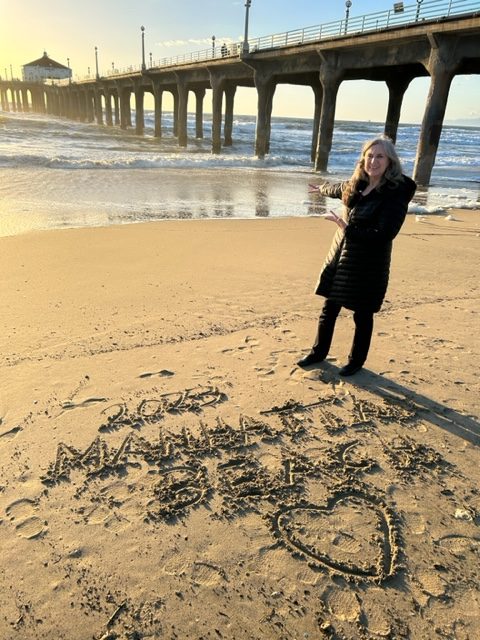
Today we celebrated under the Marquee…him saying he wanted me to “see my name in lights”.  I am incredibly blessed by this man.  After 40 years, he is still my best friend. What an amazing adventure we have had together.


“T” is For Trip Insurance-ABC Travel (General tips)


I have a love/hate relationship with insurance.  I love having it when I need it, I hate paying the extra when I don’t.  However, insurance is something you hope you never need to use, but you get it anyway.

It seems there are insurance plans for everything….your car, your home, your teeth, and your health… But oftentimes people forget that their normal insurance policies typically won’t cover stolen items or accidents/health issues which occur overseas. This is where travel insurance comes in.

Actually, there are many reasons for taking out travel insurance.  Seasoned travelers are well aware that flights, hotel reservations, car rentals, cruises, land excursions and medical expenses are often not covered in the event of a trip interruption, illness, injury or even death.  Let’s not forget about the large numbers of travelers who found themselves stranded when a global pandemic broke out and the world came to a halt.

More commonly someone suddenly falls ill or is injured before leaving on a trip or while abroad. Maybe there is an unexpected job loss or a death in the family and the trip needs to be cancelled.   Without insurance, you are likely stuck with the cost of your ticket and you may find yourself on the hook for any hotel and car reservations you have made.  These expenses can really add up.

In a different scenario, maybe you made your first flight, but perhaps the plane sat on the tarmac or the flight was rerouted due to weather.  Perhaps this caused you to miss your connection or even to  miss the departure of your cruise.

If you have “missed connection coverage” on your travel insurance, you will have the option of taking another flight to the next port-of-call, or taking the next available flight to your destination,  You might even be able to stay in a nice hotel while waiting.  Without trip insurance, you may be stuck.

Imagine that you are on your dream vacation when a storm damages the area.  Hurricanes, tornadoes, floods, blizzards and more can all disrupt your plans and/or cause damage to your property.  Travel insurance can protect you during these times.

Let’s say you fall or become ill during your trip.  Maybe you require emergency dental care or surgery.  Without travel insurance, you will be paying out of pocket for these expenses.  Many health and dental plans will not cover expenses out of network and even fewer emergencies may be covered when you are out of the country.

In a worst case scenario, you or your partner dies while on vacation, there will be expenses to get the body home.  Since preparations must be made to move a body, these are likely more significant than booking a seat on the next flight.

Most people think of travel insurance as a way to cover their expenses should they need to cancel, however travel insurance may offer so much more:    It may pay for replacement clothing and supplies if your luggage is delayed;  it may reimburse you for lost luggage;   It may cover medical expenses if you are injured or fall ill;   If your trip is cancelled or interrupted for any reason, your trip insurance may provide some protection and/or cover all or at least part of the associated expenses;   If you injure someone while driving a rental vehicle, your travel insurance may offer third party liability;  If you are the victim of a hotel/motel burglary, or you have items stolen while on a train (or at the beach, or while on tour or….) your insurance may replace your valuables;   If you have a death  or dismemberment while traveling, your policy may provide repatriation and/or offer liability coverage;  If political unrest suddenly breaks out and repatriation is required, you policy may provide for emergency evacuation.

Like most insurances, a small investment up front can protect you for most disruptions while offering peace of mind while you travel.

In general, the more complicated and/or expensive the itinerary, the more beneficial it is to have insurance.

For most international travel it is worth taking out insurance.

The more challenging your health history, the more beneficial it is to have additional insurance.

Trip insurance is usually less expensive the further out it is purchased.  Sometimes there are incentives to purchasing within days of finalizing your plans (such as covering pre-existing health conditions).

Always read the fine print to understand what your insurance will and won’t cover and the terms for each portion of your policy. Not all policies cover everything,

Always check with your existing policies (homeowners, auto, medical and life) to see what coverage you may already have.

Some credit cards offer additional protections based on your status.

If you will be doing high risk adventures such as scuba diving or jumping from planes, you may consider adding accident insurance to your travel insurance.

It can be overwhelming to choose a travel insurance.  There are many insurance companies to choose from and depending on your itinerary, activities, health and expenses, you may need different coverage.  We like using the website www.insuremytrip.com to help narrow down which policy will best suit for our needs.


“B” is for Bucket List Goals-ABC Words & Phrases

What is a Bucket List?  It is a list of all the things you hope to do in your lifetime.   Since we are starting our Pacific Island Adventure in a few days, I thought I would make a list of the things we hope to do while we travel around the the Southern Hemisphere.

Of course we used the alphabet to design our Bucket List,  because we love exploring “one letter at a time”!  Be sure to check back to see if we fulfilled our mission. This is just a small sampling of what we plan to explore on our Pacific Island Adventure.  Here are our goals so far:

A-Admire the ARCHITECTURE of the Sydney Oprah-house

B-Photograph the colorful BUSES of American Samoa

C-Complete a CIRCLE ISLAND TOUR of Papeete, Tahiti

D-DARE TO DRIVE the streets of Los Angeles

E-Cross the EQUATOR

F-Feel the freshness of a FERN GROTTO in Kauai, Hawaii

G-Gaze at GLOWWORMS in Bay of Islands, New Zealand

H- Play at HOBBINGTON & HOT SPRINGS in Tauranga, New Zealand

I-Experience the ceremony of crossing the INTERNATIONAL DATE LINE

J-

K-Kiss the KIWIS, KANGAROOS & KOALAS in Sydnee, Australia

L-

M- Marvel at the MOSSMAN GORGE & the Daintree Rainforest in Australia

N-Capture the NATURAL BEAUTY of New Plymouth, Australia

O-Get OFF THE BEATEN PATH in Moorea, Tahiti

P-Play all day at the POLYNESIAN CULTURAL CENTER of Honolulu, Hawaii

Q- Sail on the QUEEN CHARLOTTE SOUND in Picton, New Zealand

R-Marvel at the ROAD TO HANA in Maui, Hawaii

S-Take in as many SUNRISES and SUNSETS as possible.

T-Travel by TRAIN in Cairnes, Australia

U-Get UP in the air in Kauai, Hawaii

V-View the sunrise over a VOLCANO in Maui, Hawaii

W-Witness one of the WONDERS OF THE WORLD (Great Barrier Reef) in Port Douglas, Australia

X the International Dateline

Y-Say YES again, as we renew our vows

Z-ZIPLINE above a forest in Auckland, New Zealand

“X” is For Xenomania-ABC Words

X is often one of my more difficult letters to represent when we are designing an ABC Adventure.  I was so excited when I realized there are over 400 “X” words to explore!  I was even more excited to find the word “Xenomania” as one of them.

Xenomania is found in the Urban dictionary.  It is defined as “a passion for all things foreign and the customs associated.”  This seemed really fitting to begin a new year.

Since our mission for this year is to stretch ourselves, we will soon be setting out on our Pacific Island Adventure.

We also needed an “X”, to represent our purpose.

Travel opens our minds to the differences between people. What better way for us to discover the Southern Hemisphere than to allow ourselves a full immersion in cultures and customs!  We are excited to share the journey with you.   In the coming days we will be exploring new foods, seeing new sights and fully embracing all things foreign.  We plan to become “Xenomaniacs”!   Tomorrow I will share the Bucket List of goals we have created for this trip.

“G” is For Getaway-ABC Relationships

It’s snowing in our part of the world.  Winter is my least favorite time of year.  This sounds like the perfect time for us to “get away”.

  • Where should we go?  Somewhere warm.
  • What do we want to see?  Something exotic and culturally different.

These were the criteria we used for planning our next adventure.

The ability to get away and travel has been hard for the past couple of years.  With the shutdowns caused by a Pandemic, the regulations around Covid and the subsequent supply chain and employee shortages, it has seemed easier to just stay home.

We love to travel.  Even during our early marriage, when we had no money, we  prioritized getting away.  For nearly each of the 40 years we have been married, we have traveled “somewhere”.

It has always been Alan’s desire to visit New Zealand and Australia.  It was suppose to be his retirement gift, but that was two years ago, before the world shut down.

Now that things are opening up again, I have begun to dream.

When I found a super deal on a Pacific Island Cruise, I knew immediately that we would be booking it. At 29 days, this would be our longest cruise to date. We added on an extra couple of weeks of land exploration and suddenly realized we would be going on a two month journey.  This was the longest we have ever been away from home and our family.

There were times that we questioned our own sanity about getting on a cruise ship (these saw some of the greatest challenges during the outbreak) but as the snow began to pile up, we grew more and more excited to travel to somewhere warm and exotic.  Part of the travel experience is taking risks and overcoming challenges.

Vacations are a way to reset.  Did you know there is actually a National “Plan For Vacation Day?”  It is January 28th.  It is humorous to me to realize that vacations are so important that there has been a full day set aside, to do nothing but plan for them!  This trip has taken me six months to prepare for!

Vacations are so important that Alan and I prioritize them as part of our life.  This is a big reason we became ABC Explorers.

Maybe your vacation will be to stay close to home, or perhaps you will visit someplace far away.  Maybe you will camp, or travel by train.   One thing is for sure, travel will have an impact on you.  Here are a few things we have found to be true through our experiences:

  1. Getting away breaks up the monotony of our days.  Routine can lead to predictable (and boring) results and relationships.  “All work and no play makes Jack a dull boy (the same is true for Jill).
  2. Travel gives us something to dream about, to aspire to save for.  It gives purpose to earning money.
  3. Travel creates stories.
  4. Travel helps us to bond with family and form lasting memories.  When days are busy with school activities, work responsibilities and day to day chores, there is little time to really “see” each other or to spend quality time together.
  5. Traveling is a great way to make new friends.  Travelers often have a lot in common.  The bonus is you then have an excuse for visiting new people and places.
  6. Travel gives you photos. Photos capture a tiny bit of life.  They allow you to revisit your memories over and over.  Remember, without a photo, it never happened!
  7. Travel allows us to be creative in “how” we experience the world…we can sail, fly, or ride a train.  You can go by tuk tuk or ride an elephant.  You could choose to visit art galleries or hike a mountain.  Our journey is really only limited by our imaginations.
  8. Travel allows us broad introspection as we experience different cultures and traditions. We are more open to the differences in people as we understand the world which they live in.
  9. Many parts of the world are impoverished, yet I have often found the people to be extremely welcoming and happy. We can return from a vacation with a great appreciation for what we have.
  10. History, geography and anthropology come to life as one travels.
  11. Travel allows the mind, body and soul to rest.  Working can be very stressful.  Sometimes we don’t even realize how much pressure we are under.  Stress leads to illness.  Sometimes you just need a moment to let some steam off.
  12. Travel can allow you experiences you could never get at home.  I do not live by oceans.  I do not have penguins or elephants nearby.  I do not have mountains to ski or climb.  The USA is a young country, there are few monuments or buildings which date back to the period of the Roman’s or earlier.
  13. Travel allows us to learn new languages. Communication is universal, language is our only barrier.  There may be great humor and humbling moments in learning to ask where a bathroom is.
  14. You don’t have to go far to “get away”.  In fact there is always plenty to do, see and discover, even in your own back yard.  Much of the time, this is an unexplored place.
  15. Life is short.  We have known so many elderly people who wish they had seen and experienced more.  They waited too long until they “had time”, then found they were unable to travel due to illness (or the loss of a partner).  There are only two things guaranteed in this life…taxes and death.  Travel while you can.

So what is stopping you from designing your next adventure?  Isn’t time to “Get Away”?

Continue checking back often as we get ready to set sail on our Pacific Island Adventure!